
Enough Already!: America’s Breaking Point with the U.S. Congress

 Amazon Music
 Apple Podcasts
 Spotify
 iHeartRadio
 Youtube Music
 TuneIn
 Castro
 Audible
 RSS Feed
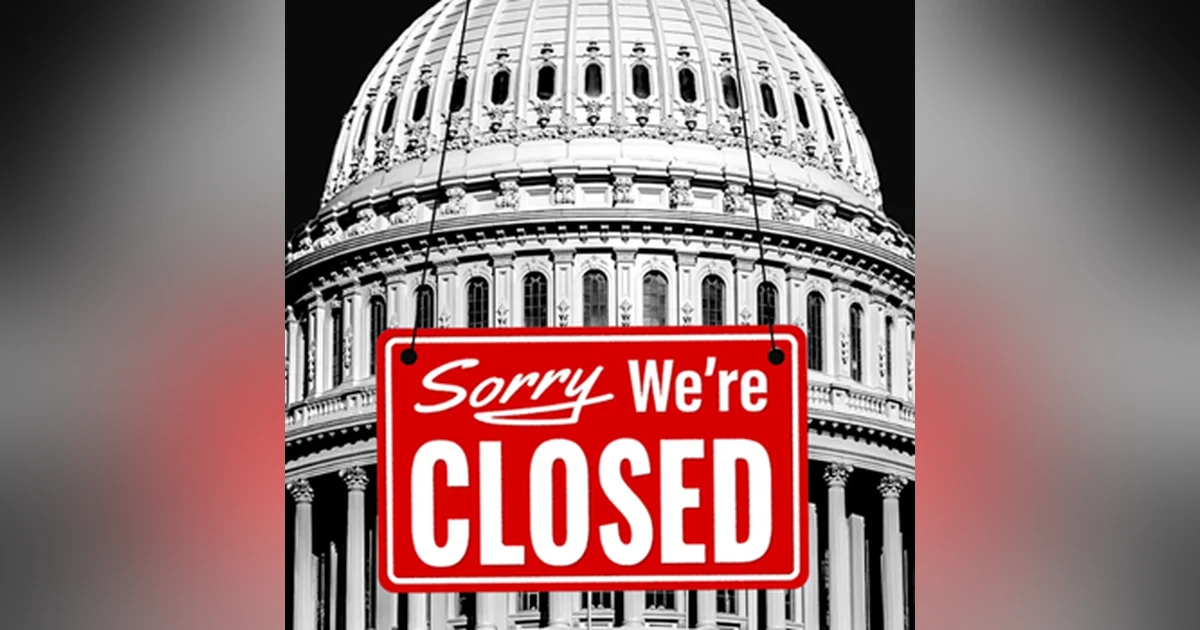
 Congress is historically dysfunctional right now — by nearly every measurable standard, from shutdown length to laws passed to member departures.
Supporting links
1. Americans, Frustration with Congress and the Elections [GALLUP]
2. House retirement wave signals deep institutional frustration [Brookings]
3. Every 50 Years, America Falls Apart. Then Celebrates Anyway [Imperfect Union]
4. Congressional frustration fuels record exodus [YouTube]
5. 250th Birthday, Dissatisfaction With Democracy Is Widespread [PEW Research]
6. War Powers Resolution [Wikipedia]
Contact That's Life, I Swear
- Visit my website: https://www.thatslifeiswear.com
- Twitter at @RedPhantom
- Bluesky at @rickbarron.bsky.social
- Email us at https://www.thatslifeiswear.com/contact/
Episode Review
- Submit on Apple Podcast
- Submit on That's Life, I Swear website
Other topics?
- Do you have topics of interest you'd like to hear for future podcasts? Please email us
Interviews
- Contact me here https://www.thatslifeiswear.com/contact/, if you wish to be a guest for a interview on a topic of interest
Listen to podcast audios
- Apple https://apple.co/3MAFxhb
- Spotify https://spoti.fi/3xCzww4
- My Website: https://bit.ly/39CE9MB
Other
- Music and/or Sound Effects are cour...
⏱️ 17min read
Hi everyone, and welcome to my podcast, That’s Life, I Swear. I’m your host, Rick Barron
Americans aren't angry at Congress anymore. Anger requires a level of surprise. What they feel now is something colder — the settled, bone-deep resignation of people who have watched their government break its own records for failure so many times that the records have stopped meaning anything.
Welcome to That's Life, I Swear. This podcast is about life's happenings in this world that conjure up such words as intriguing, frightening, life-changing, inspiring, and more. I'm Rick Barron your host.
That said, here's the rest of this story
America to Congress: Enough Already
Americans are exhausted. Not the mild, grumbling fatigue of voters who gripe about politicians between elections and then go about their lives. This is something deeper. It’s an ongoing grinding weariness with a Congress that has broken nearly every record worth breaking and set new ones that nobody wanted.
The numbers tell a grim story. A recent Gallup poll found that just 10% of Americans approve of how Congress is doing its job. That means nine out of every ten people in this country — Republicans, Democrats, independents, the politically obsessed and the perpetually disengaged alike — look at the institution that is supposed to represent them and see something they don't like. At minus 76 percentage points net approval, Congress isn't merely unpopular. It has become a symbol of everything voters believe is broken about Washington.
And yet, nothing changes. Decade after decade, shutdown after shutdown, the chaos compounds.
The latest chapter began promisingly enough, at least by the dismally low standards Washington now sets for itself. The House passed a measure to reopen most of the Department of Homeland Security after it had been closed for 76 days. Seventy-six days! In a functioning democracy, that alone would be a scandal worthy of outrage, resignations, and wholesale reconsideration of how the people's business gets done.
Instead, lawmakers congratulated themselves on threading a needle that shouldn't have required threading in the first place. The celebration was short-lived. The bill didn't solve anything fundamental. It didn't repair the fractures in the Republican caucus, didn't ease the hostility between the House and the Senate, and didn't give ordinary Americans any reason to believe their government is capable of sustained, responsible governance.
"You lose majorities by overreach and dysfunction," said Rep. Tom Cole, the Oklahoma Republican who chairs the House Appropriations Committee. "And right now we don't look as functional as we need to look."
That is perhaps the most understated assessment of Washington's current condition since someone described the Titanic as having "encountered some difficulty."
A Record Nobody Wanted
The dysfunction isn't theoretical. It has teeth. Last year, Congress presided over the longest full government shutdown in American history — 43 days during which federal workers went without paychecks, national parks went unstaffed, and government services that millions of Americans depend on were suspended. Forty-three days. The previous record was 35 days, and that one was considered a catastrophe. This one was treated as a negotiating tactic.
The DHS partial shutdown that just ended ran 76 days of its own, making it the longest partial shutdown on record. At some point, the records become less impressive than they are indicating. The United States government, the most powerful governing institution in the history of human civilization, cannot keep its own lights on.
Legislation isn't faring much better. Through late April, the current Congress has enacted roughly 90 laws — an anemic output that trails almost every recent predecessor. The previous Congress, which itself was widely condemned as one of the least productive in modern memory, still managed to pass 274 laws. The one before that passed more. And the one before that. Trust me when I say the trend line is not ambiguous.
The practical effect of all this legislative paralysis falls hardest on ordinary people. Some examples:
1. Farmers waiting on the farm bill.
2. Communities dependent on federal grants that get frozen in continuing resolution limbo.
3. Veterans navigating a VA bureaucracy that operates on temporary funding patches.
These are not abstract policy concerns. They are real, daily consequences borne by people who have very little say in whether their elected representatives can get out of their own way.
America to Congress: Enough Already
The Executive Branch Fills the Void
When Congress abdicates, someone else steps in. In this case, it's the White House.
President Trump has issued more than 250 executive orders since returning to office — more than he signed during his entire first term, and more than the four-year total of any president since Jimmy Carter. On one level, that's simply a president doing what presidents do when Congress won't act. On another level, it represents a structural shift in how this country is actually governed, one with implications that should alarm anyone who believes in the constitutional design of the separation of powers.
Let me give you a few.
The Constitution gives Congress the authority to levy taxes and declare war. Yet the Trump administration has sidestepped Congress on tariffs, reshaping the global trading system through executive action.
Trump has taken military actions without the statutory congressional approval that the War Powers Act requires. Most recently, when a 60-day deadline to seek congressional authorization for military activity in Iran loomed, the White House announced it would simply reset the clock — treating a legal requirement as a technicality to be managed rather than a check to be respected. Seriously?!
Congress, for its part, has largely acquiesced. Its members complain loudly in interviews and on social media, but the institutional response — the kind of assertive, bipartisan pushback that would actually constrain executive overreach — has been slow to materialize. The silence of a
co-equal branch speaks volumes, and what it says is not reassuring. It’s the sound of crickets on steroids!
The Human Cost of the Chaos
Back home, people are paying attention. Maybe not to the procedural specifics of which faction blocked which bill, or which chamber is currently blaming the other for the latest impasse. But they feel it. Here’s a few:
1. Small business owners who can't get answers from federal agencies operating on emergency funding.
2. Parents of service members deployed without formal congressional authorization.
3. Local governments are waiting on federal infrastructure dollars that got swept up in yet another continuing resolution.
None of these people voted for gridlock. None of them elected their representatives, hoping for a government that breaks its own shutdown records and can't pass a farm bill without a monthlong fight.
What makes the public's frustration particularly acute is the sense that the people responsible for the chaos don't experience its consequences. Members of Congress still get paid during shutdowns. Their healthcare doesn't get disrupted. They don't wait on line at a social services office. The distance between the governed and the governing has rarely felt wider.
Former Rep. Fred Upton, a Republican from Michigan who served as a committee chairman before retiring in 2023, put it with uncomfortable bluntness: "It's just a mess. I mean, both sides, we just shake our heads at how things have gone off the deep end. You talk to any former member, and they're like, 'I'm so glad we're gone.'"
Pause on that for a moment, will you? The people who used to hold the institution's most powerful positions are relieved to have escaped it. That's not a healthy sign for any organization, let alone the legislative branch of the world's oldest constitutional democracy.
America to Congress: Enough Already
The Blame Game at Full Volume
Inside the Capitol, the finger-pointing has reached a kind of operatic intensity. House Republicans are furious at Senate Republicans for passing bills without consulting them and then demanding action on a timetable driven by Senate priorities. Senate Republicans are exasperated by the House's inability to hold together even a narrow majority. Senate Democrats look across the aisle and see chaos, while their Republican colleagues remind anyone who will listen that it was Senate Democrats who triggered last year's record-long shutdown to fight cuts to healthcare spending — a fight they eventually abandoned with little to show for it.
"We just do what we can," Senate Majority Leader John Thune said when asked how the Senate manages when the House is in disarray. It was not a rousing declaration of institutional purpose.
Rep. Byron Donalds of Florida, a member of the Freedom Caucus, aimed his frustrations squarely at the Senate. "The Senate doesn't do anything, and then they basically jam us with some BS that nobody wants to do — and they do it at the 11th hour." He also pushed back on using the number of laws passed as a yardstick for congressional performance, arguing that quality matters more than quantity.
That's a defensible position in theory. In practice, however, a Congress that can't fund the government on time, that lurches from shutdown to shutdown, that requires nine-hour votes left open while leadership scrambles to find a majority — that Congress is failing on both quality and quantity simultaneously.
Sen. Chris Van Hollen of Maryland, a Democrat who spent years in the House, didn't spare his own chamber while describing the House's troubles. "Look, the Senate is no thing of beauty. Don't get me wrong," he said. "But what you're seeing in the House, in addition to essentially being a rubber stamp to Donald Trump, is complete chaos."
America to Congress: Enough Already
The Exodus Speaks for Itself
Perhaps the most telling sign of Congress's condition is who is choosing to leave it.
More than one in eight House members have announced they won't seek re-election — the highest voluntary departure rate since the early 1990s. Three members didn't even wait for the next election, resigning last month rather than face potential expulsion proceedings. Eleven senators have announced plans to leave after their current terms.
These are not marginal members, backbenchers who couldn't get a bill through committee and decided to cut their losses. Some are experienced legislators with committee assignments, institutional relationships, and the kind of seniority that takes decades to build. They are leaving anyway. That choice — to walk away from power rather than fight for it — tells its own story about what it has become.
Thirty years ago, Congress last managed to pass all 12 annual government funding bills on time before the end of the fiscal year. Thirty years. Three decades of drift, delay, continuing resolutions, comprehensive packages, and brinkmanship have normalized a governing model built on perpetual crisis management rather than genuine legislating.
"We've normalized shutting down the government," said former Rep. Charlie Dent, a Pennsylvania Republican. "Both sides have done it now."
He's right. And that normalization is perhaps the most dangerous thing of all — because a country that stops being shocked by its government's failure has, in some quiet way, started accepting it.
Rep. Cole offered a warning to his own colleagues that sounds less like optimism than a last appeal to self-preservation. "You can either be part of a functional majority and get almost everything you want, or you can hold out and get nothing and be in the minority next time," he said. "I guess we can all get to vote 'no' together then — that'll be exciting."
The American people, watching from the outside, are not excited. They are tired.
America to Congress: Enough Already
What can we learn from this story? What's the takeaway?
Congress is historically dysfunctional right now — by nearly every measurable standard, from shutdown length to laws passed to member departures.
There are several layers of takeaway here, from the immediate political to the deeper structural:
But the deeper takeaway is more unsettling.
1. Dysfunction has been normalized. The most dangerous line in the entire piece may be Charlie Dent's: "We've normalized shutting down the government." When crisis becomes routine, institutions lose the shame mechanism that once corrected bad behavior. Nobody resigns over a shutdown anymore. Nobody faces real consequences.
2. The checks and balances are quietly eroding. Congress's inability to govern isn't just an inconvenience — it creates a vacuum. And vacuums get filled. In this case, by executive orders, by tariff actions taken without congressional approval, by military operations that sidestep the War Powers Act. The story isn't really about a dysfunctional Congress in isolation. It's about what happens to the constitutional order when one branch stops doing its job.
3. Slim majorities have become ungovernable. The math matters. A 218-212 House majority means any small faction holds veto power. That structural reality rewards obstruction and punishes compromise, almost regardless of who's in charge.
4. The people suffering are outside the building. Members still get paid during shutdowns. They don't wait at social services offices. The human cost lands on farmers, veterans, federal workers, and local governments — the very people Congress is supposed to serve. Note: At the time of this recording, the U.S. Senate had passed a resolution that it would not get paid during a shutdown.
The ultimate takeaway may be this: a democracy doesn't collapse all at once. It degrades gradually, through accumulated small failures that each get normalized, until the baseline of acceptable governance quietly shifts downward — and fewer and fewer people even notice it happening.
Well, there you go, my friends; that's life, I swear
For further information regarding the material covered in this episode, I invite you to visit my website, which can be found on Apple Podcasts, for show notes and the episode transcript.
As always, I thank you for the privilege of you listening and your interest.
Be sure to subscribe here or wherever you listen to podcasts so you don't miss an episode.
See you soon.


