
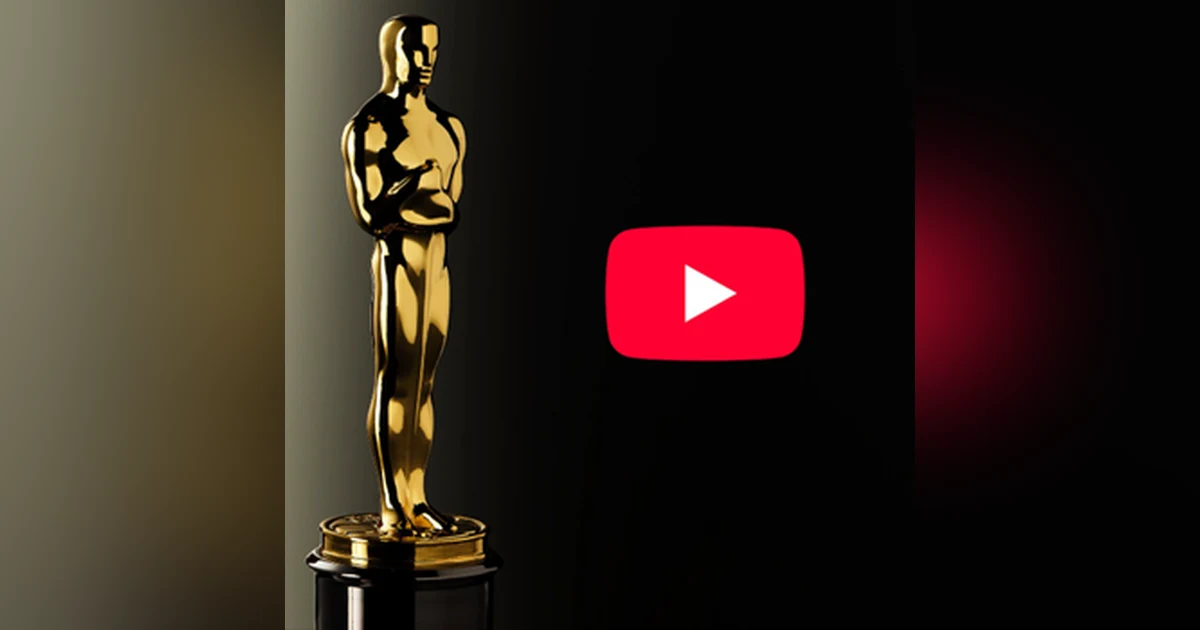
And For Best Picture, The Oscar Goes To: YouTube!

 Amazon Music
 Apple Podcasts
 Spotify
 iHeartRadio
 Youtube Music
 TuneIn
 Castro
 Audible
 RSS Feed
 Learn how this is a story about institutions that define culture, and don’t stand still. The Oscars’ pivot to YouTube shows that legacy alone doesn’t guarantee relevance — adaptation does. To remain meaningful, even icons must loosen their grip on the past and follow their audience into the future.
Supporting links
1. YouTube Statistics 2025 [GMI]
2. YouTube [Wikipedia]
3. Why The Academy Awards Is Losing It's Audience [YouTube]
4. OSCARS [ Oscars org]
5. OSCARS [Social]
6. Streaming Television [Wikipedia]
Contact That's Life, I Swear
- Visit my website: https://www.thatslifeiswear.com
- Twitter at @RedPhantom
- Bluesky at @rickbarron.bsky.social
- Email us at https://www.thatslifeiswear.com/contact/
Episode Review
- Submit on Apple Podcast
- Submit on That's Life, I Swear website
Other topics?
- Do you have topics of interest you'd like to hear for future podcasts? Please email us
Interviews
- Contact me here https://www.thatslifeiswear.com/contact/, if you wish to be a guest for a interview on a topic of interest
Listen to podcast audios
- Apple https://apple.co/3MAFxhb
- Spotify https://spoti.fi/3xCzww4
- My Website: https://bit.ly/39CE9MB
Other
- Music and/or Sound Effects are cour...
⏱️ 15 min read
The Oscars will be streaming in 2029!
You heard right, the Oscars are leaving broadcast TV. The Academy signed an exclusive streaming deal with YouTube in 2025, ending a nearly 50-year run on ABC. Today, we explain why the Academy made the move, how YouTube has quietly become the biggest force in television viewing, and whether this gamble can reverse years of declining Oscar ratings.
Welcome to That's Life, I Swear. This podcast is about life's happenings in this world that conjure up such words as intriguing, frightening, life-changing, inspiring, and more. I'm Rick Barron your host.
That said, here's the rest of this story
Hollywood's Leap Into the Digital Age
YouTube is the world’s biggest digital campfire—a place where billions of people gather to tell stories, show off talents, teach strangers, argue passionately, fall down laughing, and occasionally change the world. To me, YouTube is a global curiosity gathering, where everyone holds a different human obsession—from how to fix a leaky faucet to why cats insist on sitting on keyboards.”
That said I was stunned when hearing the news of a business decision that would have seemed unthinkable just a decade ago
What was that business decision? It was the Academy of Motion Picture Arts and Sciences announcing in December of 2025 that it will abandon traditional broadcast television entirely and partner exclusively with YouTube to stream the Academy Awards ceremony beginning in 2029. This five-year arrangement, extending through 2033, represents far more than a simple change of venue—it's a seismic acknowledgment that the entertainment industry has fundamentally shifted.
The partnership terminates a relationship with ABC that stretches back to 1976, when Gerald Ford occupied the White House and "Rocky" captured America's imagination. For generations of viewers, the Oscars meant gathering around the television set on ABC, making the ceremony synonymous with traditional broadcast television itself. Well, that era now has an expiration date: the 100th Academy Awards in 2028, which will serve as both a centennial celebration and a farewell to conventional broadcasting.
The Numbers Behind the Decision
Understanding this dramatic pivot requires examining the stark reality facing both the Academy and ABC. The Oscars, once an unstoppable ratings juggernaut, have experienced a steep decline in viewership that reflects broader transformations in how audiences consume content.
At its peak in 1998—the year "Titanic" swept the ceremony—the Academy
Awards broadcast attracted an astounding 57 million viewers. Fast forward to March of this 2025, and that number dropped to 19.7 million, representing a 65 percent drop from peak viewership.
The COVID-19 pandemic accelerated this decline catastrophically, with the 2021 ceremony hitting only 10.4 million viewers. While recent years have shown modest recovery, with this year's broadcast edging up slightly from the previous ceremony, the path remains unmistakably downward. These aren't just disappointing numbers—they represent an existential crisis for both broadcaster and Academy alike.
ABC's financial arrangement had involved paying approximately $100 million annually for broadcast rights, while generating roughly $140 million through advertising revenue. A portion of those ad dollars flowed back to the Academy, creating a mutually beneficial ecosystem. However, as ratings slumped, ABC responded by increasing commercial inventory during broadcasts, attempting to maintain profitability despite fewer eyeballs. Even with diminished audiences, the Oscars remained the entertainment industry's advertising crown jewel, surpassing the Grammys, Emmys, and even the Macy's Thanksgiving Day Parade in advertising expenditure.
The Negotiation That Changed Everything
Behind closed doors, negotiations between ABC and the Academy revealed incompatible differences about the ceremony's future and financial value. ABC initiated discussions for contract renewal, but the network's position was clear: declining viewership justified either maintaining current payment levels or potentially reducing them. The Academy, conversely, sought a fee increase, pointing to the show's continued status as premium live content despite audience erosion.
This standoff proved insurmountable because of what the Oscars represent to the Academy's operational structure. The ceremony isn't merely a showcase event—it generates approximately 60 percent of the organization's annual revenue. That funding supports year-round activities including film preservation, educational programs, museum operations, and various initiatives celebrating cinema history. Accepting a reduced rights fee could jeopardize these core mission activities.
Creative disagreements compounded financial tensions. ABC executives had long advocated for dramatically streamlining the broadcast by reducing the 24 award categories, arguing this would create a more viewer-friendly experience. The Academy experimented cautiously with this approach several years ago, removing certain categories from the main broadcast. The resulting backlash from members was fierce and immediate. Artists and their advocates viewed the changes as disrespectful and demeaning. This experience made the Academy extremely hesitant about further modifications.
Ultimately, the Academy accepted a smaller direct rights fee from YouTube than ABC had been paying. However, Academy leadership believed the overall package provided superior value through multiple dimensions beyond pure cash payment.
YouTube's Irresistible Value Proposition
What made YouTube's offer compelling despite the lower upfront payment? The answer lies in understanding YouTube's dominant position in the evolving media landscape. According to Nielsen data, YouTube now commands 13 percent of all television viewing time in the United States—the largest share of any streaming platform, surpassing even Netflix's 8 percent. This data point reveals something crucial: YouTube has surpassed its origins as merely a website for watching videos on computers and phones. It now dominates actual television sets in living rooms across America.
Bill Kramer, the Academy's chief executive, and Lynette Howell Taylor, the organization's president, emphasized that the partnership would "expand access to the work of the academy to the largest worldwide audience possible."
This global reach proved particularly attractive. While ABC's broadcast primarily served American audiences, YouTube's platform reaches over two billion users globally, offering simultaneous access across televisions, computers, tablets, and smartphones without geographic restrictions.
A footnote here, there are currently 8.2 billion people in the world.
The deal encompasses far more than simply streaming the ceremony itself. YouTube committed to featuring year-round Academy content, including programming from events like the Governors Awards, which recognize lifetime achievement each fall. The Academy envisions an expanded Oscar channel featuring red-carpet coverage, behind-the-scenes content, filmmaker interviews, and historical retrospectives—creating ongoing engagement rather than a single annual broadcast.
Perhaps most significantly, Google agreed to undertake a massive digitization project of the Academy's archives, which contain over 52 million film-related items. This treasure trove of cinema history includes photographs, scripts, costumes, production documents, and countless other artifacts. "We will be able to celebrate cinema, inspire new generations of filmmakers and provide access to our film history," Kramer and Taylor stated, viewing this preservation commitment as invaluable for the Academy's educational mission.
The partnership also grants the Academy substantially greater control over sponsorship arrangements, allowing them to negotiate directly with brands rather than working through network intermediaries. This autonomy could prove financially advantageous while ensuring sponsors align with the Academy's values and image.
The Broader Industry Context
This announcement doesn't exist in isolation—it represents the culmination of trends reshaping entertainment distribution. The Oscars were actually the last major awards ceremony to embrace livestreaming, having only simulcast on Hulu in 2025 (an effort plagued by technical glitches, I may add). Other prestigious ceremonies moved earlier: the Screen Actors Guild Awards, recently rebranded as the Actor Awards, began streaming live on Netflix in 2024.
Meanwhile, ABC strengthened its position in the awards show ecosystem through other means. The network announced late last year it had secured exclusive rights to the Grammy Awards under a decade-long deal beginning in 2027, agreeing to pay approximately $50 million annually. The most recent Grammys attracted 15.4 million viewers, down 9 percent from the previous year but still representing significant audience reach.
YouTube's growing ambitions in premium live programming extend beyond awards shows. The platform has held rights to NFL Sunday Ticket since 2023 and, in 2025, streamed a Week 1 National Football League game from Brazil that drew over 18 million viewers. These moves have sparked industry speculation that YouTube might pursue broader NFL rights when current media deals potentially come up for renegotiation. NFL games remain American television's most valuable programming, considered essential for major media companies.
What This Means Going Forward
There are business lessons to learn here. This historic shift teaches us several crucial lessons about entertainment's future
- First, audience behavior has fundamentally and irreversibly changed. Viewers, particularly younger demographics, have abandoned appointment television in favor of on-demand streaming and mobile viewing. Traditional broadcast networks can no longer assume their legacy advantages guarantee continued dominance.
- Second, global reach increasingly trumps domestic audience concentration. ABC could deliver millions of American viewers, but YouTube offers billions of potential viewers worldwide, reflecting how entertainment has become truly borderless in the digital age.
- Third, value now extends beyond simple rights fees. The YouTube deal encompasses content creation, archive preservation, technological infrastructure, and year-round engagement opportunities—a holistic partnership rather than a transactional broadcast arrangement.
- Fourth, even the most tradition-bound institutions must adapt or risk irrelevance. The Academy, Hollywood's most conservative organization, chose radical change over gradual decline. This decision signals to the entire entertainment industry that no legacy partnership is sacred when audience needs evolve.
Finally, we're witnessing the complete redefinition of what constitutes "television." YouTube streams are watched on television sets, but they're not television in any traditional sense. The lines between platforms have blurred beyond recognition, and the Oscars' migration merely acknowledges what viewers already knew: the future isn't about where you watch, it's about how conveniently and accessibly you can watch.
As Neal Mohan, YouTube's CEO, noted, the partnership aims to "inspire a new generation of creativity and film lovers while staying true to the Oscars' storied legacy." Whether this ambitious goal succeeds remains to be seen when the curtain rises on the 101st Academy Awards in 2029, marking not just another ceremony but the beginning of entertainment's
What can we learn from this story? What's the takeaway?
Younger audiences don’t “tune in” — they stream.
The shift reflects a broader truth: younger viewers don’t organize their lives around appointment TV. They expect content to live on platforms they already use, on devices they already own. As Nielsen data shows, YouTube now commands a larger share of TV viewing time than Netflix, underscoring how deeply habits have changed.
Distribution matters as much as content.
The Academy of Motion Picture Arts and Sciences didn’t abandon prestige; it abandoned an assumption — that broadcast television is still the natural home for mass cultural moments. By partnering with YouTube, the Oscars are betting that reach, flexibility, and global accessibility matter more than tradition.
Well, there you go, my friends; that's life, I swear
For further information regarding the material covered in this episode, I invite you to visit my website, which can be found on Apple Podcasts, for show notes and the episode transcript.
As always, I thank you for the privilege of you listening and your interest.
Be sure to subscribe here or wherever you listen to podcasts so you don't miss an episode.
See you soon.


