
Book Review from Rick’s Library: 1929 by Andrew Ross Sorkin

 Amazon Music
 Apple Podcasts
 Spotify
 iHeartRadio
 Youtube Music
 TuneIn
 Castro
 Audible
 RSS Feed
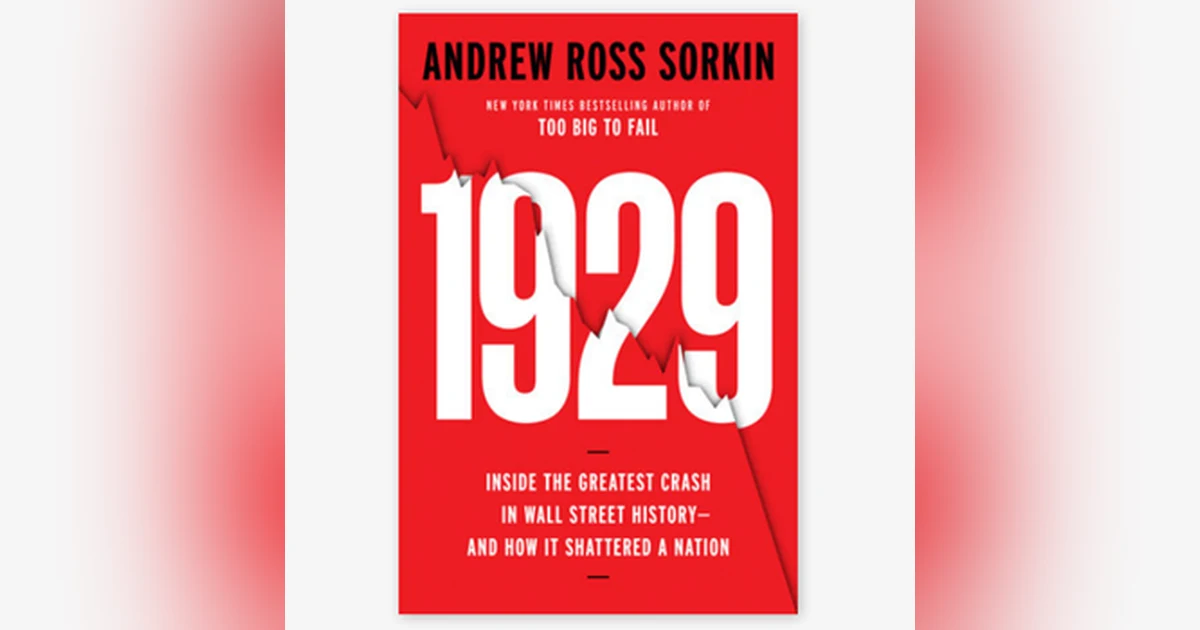
 Learn about the most devastating financial collapse in history—the Great Crash of 1929—through the lens of Andrew Ross Sorkin’s electrifying new book, 1929: Inside the Greatest Crash in Wall Street History—and How It Shattered a Nation.
supporting links
1. Wall Street crash of 1929 [Wikipedia]
2. Andrew Ross Sorkin [Wikipedia]
3. Applying lessons from the Wall Street crash of 1929 to today's market [60 Minutes]
4. Sorkinsays [Instagram]
Contact That's Life, I Swear
- Visit my website: https://www.thatslifeiswear.com
- Twitter at @RedPhantom
- Bluesky at @rickbarron.bsky.social
- Email us at https://www.thatslifeiswear.com/contact/
Episode Review
- Submit on Apple Podcast
- Submit on That's Life, I Swear website
Other topics?
- Do you have topics of interest you'd like to hear for future podcasts? Please email us
Interviews
- Contact me here https://www.thatslifeiswear.com/contact/, if you wish to be a guest for a interview on a topic of interest
Listen to podcast audios
- Apple https://apple.co/3MAFxhb
- Spotify https://spoti.fi/3xCzww4
- My Website: https://bit.ly/39CE9MB
Other
- Music and/or Sound Effects are cour...
⏱️ 12 min read
October 29th, 1929. Not too many people today recall that date. In a single morning, euphoria turned into panic. Fortunes vanished. Banks failed. And America—so sure of its endless prosperity—fell into the abyss.
This wasn’t just the day the market crashed. It was the day confidence itself died.
Andrew Ross Sorkin’s electrifying new book, 1929: Inside the Greatest Crash in Wall Street History—and How It Shattered a Nation, shares with us the happenings regarding the most devastating financial collapse in history.
Sorkin takes us far beyond the numbers and ticker tape—into the feverish psychology, unchecked greed, and blinding optimism that fueled the Roaring Twenties and set the stage for ruin. He resurrects the men and women who believed they’d reinvented prosperity forever… until the music stopped.
We’ll learn what the Great Crash still teaches us about the financial world we live in today, serving as a cautionary tale to navigate the potential pitfalls.
There is one question that haunts Sorkin’s book—and our own time. In simple terms, it is very chilling: What if it happens again?
Welcome to That's Life, I Swear. This podcast is about life's happenings in this world that conjure up such words as intriguing, frightening, life-changing, inspiring, and more. I'm Rick Barron, your host.
1. Abstract of the Book
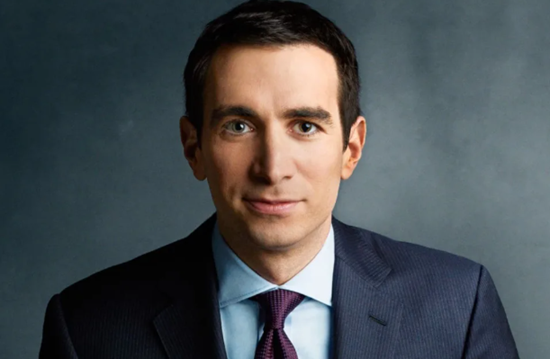
Book author: Andrew Ross Sorkin. Courtesy of StreamDiag
Andrew Ross Sorkin's book, 1929, delivers an immersive, electrifying account of the most pivotal market collapse in history, exploring the psychological and structural forces that led to the Great Crash. Sorkin’s research work for this book took eight years to complete, and his narrative approach brings the events to Life, keeping the reader engaged and informed.
The book examines the seductive illusion that "this time is different," a dangerous refrain that echoed through the Roaring Twenties. Sorkin weaves together the stories of:
1. Power brokers
2. Everyday investors
3. Skeptical economists
4. Government officials
who watched helplessly as the financial system spiraled toward catastrophe. The narrative captures the hubris and optimism that preceded the crash, the panic that gripped Wall Street when the market began its devastating plunge in October 1929, and the profound social and economic upheaval that followed.
What distinguishes this work from other histories of the period is Sorkin's intimate, almost minute-by-minute reconstruction of key moments during the crisis. He brings to light the disregarded alarm bells, the financiers who fell from grace, and the skeptics who foresaw the disaster but were dismissed until it was too late.
The book doesn't simply chronicle events; it explores the psychology of boom and bust, the dangerous overload of leverage and overconfidence, and the systemic vulnerabilities that can transform a market correction into a civilization-altering catastrophe. More than just a historical account, 1929 serves as a crucial blueprint for understanding financial crises and their enduring relevance to contemporary markets.
2. About the Author
Andrew Ross Sorkin, born February 19, 1977, is an American journalist and author who serves as a financial columnist for The New York Times and co-anchor of CNBC's Squawk Box. He founded and edits DealBook, a financial news service that has become one of the most influential sources of business and economic journalism since its launch in 2001. Sorkin began writing for the Times as a teenage contributor and became one of the youngest full-time reporters at the paper while still in college at Cornell University.
Sorkin's breakthrough as an author came with Too Big to Fail: The Inside Story of How Wall Street and Washington Fought to Save the Financial System—and Themselves (2009), which chronicled the 2008 financial crisis with unprecedented access and narrative power. The book became a New York Times bestseller and was adapted into an HBO film. His work has fundamentally shaped how:
1. Financial crises are understood and communicated to broader audiences
2. Moving beyond dry economic analysis to capture the human drama
3. Institutional failures
4. High-stakes decision-making that defines these watershed moments
Beyond his journalism and writing, Sorkin has expanded into entertainment as a co-creator and executive producer of Showtime's hit series Billions, which explores the world of hedge funds and financial prosecutions. His daily presence on CNBC's "Squawk Box" has made him one of the most recognizable voices in business media, where he interviews CEOs, policymakers, and financial leaders.
Throughout his career, Sorkin has earned numerous awards for his reporting, including a:
2. Society of American Business Editors and Writers Award.
His unique ability to combine investigative rigor with compelling storytelling has established him as perhaps the preeminent historian of modern financial history, making him the ideal author to tackle the market crash of 1929.
3. What Drew My Interest in Reading This Book
My fascination with 1929 stems from several interests that made this book feel essential rather than optional reading.
First, there's the undeniable relevance of understanding financial crises in our current era. We live in a time of:
1. Extraordinary market volatility,
2. Unprecedented monetary policy interventions,
3. Recurring debates about asset bubbles in everything from technology stocks to cryptocurrencies to real estate.
The seductive illusion that "this time is different" resonates powerfully in our contemporary moment, where every generation seems to convince itself that modern financial engineering has somehow transcended the boom-bust cycles that have plagued markets for centuries. Understanding how similar delusions played out in 1929 offers a sobering perspective on our own times.
Second, Andrew Ross Sorkin's track record as an author and journalist gave me confidence that this wouldn't be another dry economic history. His work on Too Big to Fail demonstrated his remarkable ability to transform complex financial mechanisms and institutional dynamics into gripping narrative drama without sacrificing accuracy or insight.
I was curious to see how he would apply that same narrative approach to events nearly a century old, reconstructing the psychology and decision-making of historical figures with the same intimacy he brought to contemporary subjects. The fact that he spent eight years researching and writing this book suggested a level of commitment and thoroughness that promised something genuinely revelatory.
Third, I've always been intrigued by history, so the 1920s were a period of profound social and economic transformation, such as:
1. The rise of consumer culture,
2. The power of stock ownership,
3. The expansion of credit,
4. The optimistic belief in perpetual prosperity.
The parallels to our own era of technological disruption, retail investing, and financial power are striking. I wanted to understand not just what happened when that world collapsed in 1929, but why it happened—what specific mechanisms of human psychology, market structure, and regulatory failure combined to produce such a catastrophic outcome.
4. What Can We Learn from This Book? What's the Takeaway?
For me, the most profound lesson from 1929 is the recognition that financial crises are not simply technical failures or the result of unpredictable events.
The book calls out how:
1. Alarm bells are consistently disregarded in boom times,
2. How skeptics are dismissed as pessimists or party-poopers,
3. How the momentum of rising markets creates its own validation until suddenly it doesn't.
This pattern recognition is invaluable for contemporary investors, policymakers, and citizens trying to navigate our own volatile financial landscape.
A critical takeaway is understanding the social and political consequences of financial collapse. The 1929 crash didn't just wipe out individual fortunes—it shattered faith in institutions, destroyed social mobility, and created the conditions for political extremism and radical policy experiments. The book serves as a reminder that financial stability is not merely an economic concern but a prerequisite for social cohesion and democratic resilience. When millions of ordinary people see their savings go up in dust and their financial prospects collapse, the reverberations extend far beyond Wall Street into every aspect of national life.
The book offers crucial insights into the dangers of leverage, speculation, and the power of complex financial instruments when not adequately understood or regulated. The parallels to our own era, where options trading, leveraged ETFs [exchange-traded fund], and cryptocurrency derivatives are accessible to millions of retail investors through smartphone apps, are impossible to ignore. Sorkin's work provides a blueprint for recognizing the warning signs of systemic fragility before crisis strikes.
Most importantly, 1929 challenges the comforting notion that modern financial engineering, sophisticated risk management, and central bank intervention have made devastating crashes obsolete.
While our tools and institutions have evolved, the fundamental dynamics of fear, greed, herding behavior, and overconfidence remain constant across generations. The book doesn't preach doom or advocate for avoiding markets entirely. Still, it does argue for humility, diversification, and a clear-eyed recognition that extraordinary returns often come with exceptional—and sometimes invisible—risks.
For anyone participating in financial markets, managing investments, or simply trying to understand the economic forces shaping our world, these lessons are not merely historical curiosities but urgent, practical wisdom for navigating an uncertain future.
Well, there you go, my friends. That's life, I swear.
For further information regarding the material covered in this episode, I invite you to visit my website, which can be found on Apple Podcasts, for show notes and the episode transcript.
As always, I thank you for the privilege of you listening and your interest.
Be sure to subscribe here or wherever you listen to podcasts so you don't miss an episode.
See you soon.


