
Book Review from Rick’s Library: Apple:The First 50 Years by David Pogue

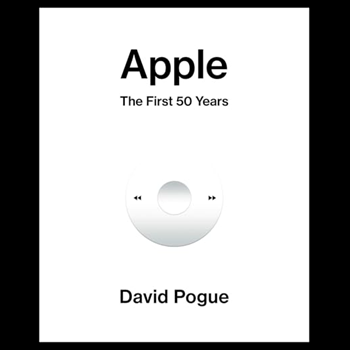
Send us Fan Mail The central lesson of Apple: The First 50 Years by David Pogue’s book, reminds us that the future isn’t something that happens to us, it’s something that gets built, one idea at a time. supporting links 1. Apple: The First 50 Years [Amazon] 2. Macintosh [Apple website] 3. Mac [Wikipedia] 4. Make Something Beautiful [Steve Jobs Archive] 1984 (commercial) {Wikipedia] Contact That's Life...

 Amazon Music
 Apple Podcasts
 Spotify
 iHeartRadio
 Youtube Music
 TuneIn
 Castro
 Audible
 RSS Feed
 The central lesson of Apple: The First 50 Years by David Pogue’s book, reminds us that the future isn’t something that happens to us, it’s something that gets built, one idea at a time.
supporting links
1. Apple: The First 50 Years [Amazon]
2. Macintosh [Apple website]
3. Mac [Wikipedia]
4. Make Something Beautiful [Steve Jobs Archive]
1984 (commercial) {Wikipedia]
Contact That's Life, I Swear
- Visit my website: https://www.thatslifeiswear.com
- Twitter at @RedPhantom
- Bluesky at @rickbarron.bsky.social
- Email us at https://www.thatslifeiswear.com/contact/
Episode Review
- Submit on Apple Podcast
- Submit on That's Life, I Swear website
Other topics?
- Do you have topics of interest you'd like to hear for future podcasts? Please email us
Interviews
- Contact me here https://www.thatslifeiswear.com/contact/, if you wish to be a guest for a interview on a topic of interest
Listen to podcast audios
- Apple https://apple.co/3MAFxhb
- Spotify https://spoti.fi/3xCzww4
- My Website: https://bit.ly/39CE9MB
Other
- Music and/or Sound Effects are cour...
⏱️ 13 min read
What does it take to change the way the world listens to music, talks to each other, works, creates, and even thinks?
Today, we explore the remarkable journey of Apple, a company that started in a garage and grew into a global force shaping everyday life.
Through the lens of David Pogue’s Apple: The First 50 Years, we’ll uncover the bold ideas, dramatic setbacks, and iconic breakthroughs that defined a half-century of innovation. This isn’t just the story of products—it’s the story of vision, risk, and the relentless pursuit of what’s next.”
Ready to begin? Let’s turn the page.
Welcome to That's Life, I Swear. This podcast is about life's happenings in this world that conjure up such words as intriguing, frightening, life-changing, inspiring, and more. I'm Rick Barron, your host.
That said, here's the rest of this story
1. Abstract of the Book
Apple: The First 50 Years by David Pogue is both a celebration and a critical chronicle of one of the most influential companies in modern history: Apple Inc.. Spanning from a scrappy garage startup to a trillion-dollar global powerhouse, the book captures the company’s defining moments, cultural impact, and relentless pursuit of innovation.
Pogue guides readers through the early days of Steve Jobs and Steve Wozniak, whose improbable partnership birthed the Apple I and Apple II—machines that helped ignite the personal computing revolution. From there, the narrative expands into Apple’s rise, fall, and resurrection: the ousting of Jobs, the company’s near collapse in the 1990s, and the astonishing comeback fueled by products like the iMac, iPod, iPhone, and iPad.
What makes this book especially engaging is its blend of narrative storytelling and visual richness. It’s not just a timeline—it’s a curated experience, filled with design evolution, marketing genius, and the cultural ripple effects of Apple’s products. Pogue explores how Apple didn’t just build devices—it reshaped industries: music, film, publishing, communication, and even how we think about creativity itself.
Yet the book doesn’t shy away from complexity. It acknowledges Apple’s missteps—failed products, internal conflicts, and criticisms about control and ecosystem lock-in. It also raises subtle questions about the cost of innovation: What do we gain in convenience, and what do we surrender in autonomy?
Ultimately, Apple: The First 50 Years is less about machines and more about mindset. It tells the story of a company that dared to think differently—and in doing so, changed the way the world interacts with technology. It’s a portrait of ambition, reinvention, and the enduring power of design to shape human behavior.
2. About the Author
David Pogue is one of the most recognizable and trusted voices in technology journalism, known for his ability to translate complex innovations into accessible, often humorous storytelling. Over decades of writing, speaking, and broadcasting, Pogue has carved out a unique niche: he is both a critic and a cheerleader, a skeptic and an enthusiast.
Pogue first gained widespread recognition as the longtime personal technology columnist for The New York Times, where his reviews of gadgets and software reached millions of readers. His work stood out not just for its clarity, but for its personality—he brought wit, relatability, and a sense of curiosity to topics that might otherwise feel intimidating. Later, his presence expanded into television and digital media, including CBS News and Yahoo Tech, where he continued to bridge the gap between innovation and everyday users.
What makes Pogue particularly well-suited to write about Apple is his long-standing relationship with the company’s ecosystem. He has reviewed Apple products since their early days, attended product launches, and observed firsthand the company’s evolution from niche player to global giant. He understands not just what Apple makes but why it matters—and how those products feel to use.
As an author, Pogue is prolific. He has written or co-written dozens of books, including bestselling “Missing Manual” guides that help users navigate everything from macOS to iPhones. His writing style is approachable without being simplistic, authoritative without being dry. He has a gift for storytelling that transforms technical history into something vivid and human.
In Apple: The First 50 Years, Pogue brings all these strengths together. He writes not as an outsider looking in, but as a seasoned observer who has watched Apple’s story unfold in real time. His perspective is informed, balanced, and deeply engaged, making him an ideal guide through one of the most consequential business stories of our time.
3. What Drew My Interest in Reading This Book?
What drew me to Apple: The First 50 Years was not just the story of a company—it was the story of a transformation I’ve lived through. Like many of us, I’ve watched Apple Inc. evolve from a name associated with niche computers into a force that quietly—and then completely—reshaped daily life. This book promised something deeper than headlines: a chance to understand how that transformation happened.
I was especially intrigued by the human drama behind the technology. The mythology of Steve Jobs is well known, but I wanted to go beyond the legend and explore the ecosystem of people, decisions, risks, and failures that built Apple over five decades. What happens inside a company that repeatedly bets on the future—and sometimes gets it wrong before getting it spectacularly right?
Another layer of interest came from curiosity about innovation itself. Apple has long been seen as a company that doesn’t just follow trends—it creates them. From the iPod changing how we listen to music to the iPhone redefining communication, Apple’s products often feel less like tools and more like turning points. I wanted to understand the thinking behind those leaps.
There’s also a personal dimension. Many of us measure time in Apple products: the first computer, the first smartphone, the device that changed how we work, create, or connect. This book felt like an opportunity to revisit those moments—not just as a user, but as a participant in a larger cultural shift.
Finally, I was drawn by David Pogue’s voice. His reputation for making technology engaging, understandable, and even entertaining made this feel less like a corporate history and more like a guided tour through innovation.
In the end, what pulled me in was a simple but powerful question: How does a company go from a garage experiment to shaping the rhythm of everyday life? This book sets out to answer that—and that’s a journey worth taking.
On a personal note, my draw to this book was the section on the Macintosh's creation.
Why?
Well, I was very fortunate to have worked at Apple, but even more so to have joined when Macintosh was on the cusp of being introduced to the world.
I was one of six newly hired supervisors to work in a factory in Fremont, California, where the Macintosh was being assembled. The Macintosh would be introduced on January 24, 1984, with a commercial during the Super Bowl 18 football game.
When I joined Apple, the launch of the Macintosh was but four months away. About two weeks before the launch, the factory workers were invited to breakfast with Steve Jobs. During that meeting, Steve ran the infamous 1984 commercial for us. We all stood up and applauded for about 2 minutes.
As a thank-you to the factory assembly team, we were all given a free Macintosh, along with the only two pieces of software available at the time: MacWrite and MacPaint. That was back in 1984. I still have that Macintosh today.
4. What Can We Learn From This Book? What’s the Takeaway?
The most powerful lesson from Apple: The First 50 Years is that innovation is rarely a straight line—it’s a cycle of bold vision, painful missteps, and relentless iteration. Apple Inc. didn’t succeed because it always got things right; it succeeded because it kept moving, adapting, and refining its ideas until they resonated.
One key takeaway is the importance of vision paired with execution. Steve Jobs famously believed in building products people didn’t yet know they needed. But vision alone wasn’t enough—Apple’s success came from obsessive attention to detail, design, and user experience. The lesson here is clear: big ideas matter, but how you bring them to life matters even more.
Another insight is the role of simplicity. Apple consistently focused on making complex technology feel intuitive. Whether it was the click wheel of the iPod or the touchscreen interface of the iPhone, the company prioritized ease of use. This reinforces a broader principle: the best innovations don’t overwhelm—they empower.
The book also highlights resilience. Apple came close to failure in the 1990s, yet managed one of the most remarkable turnarounds in business history. That resilience wasn’t accidental—it was driven by a willingness to rethink strategy, embrace change, and take calculated risks.
There’s also a cautionary layer. Apple’s tightly controlled ecosystem raises questions about openness, competition, and user choice. The takeaway isn’t just admiration—it’s reflection. Progress often comes with trade-offs, and understanding those trade-offs is part of being an informed participant in the digital world.
Ultimately, the book teaches that innovation is as much about mindset as it is about technology. It’s about curiosity, courage, and the willingness to challenge assumptions. Apple’s story reminds us that the future isn’t something that happens to us—it’s something that gets built, one idea at a time.
Well, there you go, my friends, that's life, I swear.
For further information regarding the material covered in this episode, I invite you to visit my website, which can be found on Apple Podcasts, for show notes and the episode transcript.
As always, I thank you for the privilege of you listening and your interest.
Be sure to subscribe here or wherever you listen to podcasts so you don't miss an episode.
See you soon.


