
The Mountain’s Verdict: You have only 10 minutes to live
This story teaches us that risk can be managed, but never eliminated. Supporting links 1. 2026 Lake Tahoe avalanche [Wikipedia] 2. How to Survive an Avalanche [WikiHow] Contact That's Life, I Swear Visit my website: https://www.thatslifeiswear.com Twitter at @RedPhantom Bluesky at @rickbarron.bsky.social Email us at https://www.thatslifeiswear.com/contact/Episode Review Submit on Apple PodcastSubmit on That's Life, I Swear websiteOther t...

 Amazon Music
 Apple Podcasts
 Spotify
 iHeartRadio
 Youtube Music
 TuneIn
 Castro
 Audible
 RSS Feed
 This story teaches us that risk can be managed, but never eliminated.
Supporting links
1. 2026 Lake Tahoe avalanche [Wikipedia]
2. How to Survive an Avalanche [WikiHow]
Contact That's Life, I Swear
- Visit my website: https://www.thatslifeiswear.com
- Twitter at @RedPhantom
- Bluesky at @rickbarron.bsky.social
- Email us at https://www.thatslifeiswear.com/contact/
Episode Review
- Submit on Apple Podcast
- Submit on That's Life, I Swear website
Other topics?
- Do you have topics of interest you'd like to hear for future podcasts? Please email us
Interviews
- Contact me here https://www.thatslifeiswear.com/contact/, if you wish to be a guest for a interview on a topic of interest
Listen to podcast audios
- Apple https://apple.co/3MAFxhb
- Spotify https://spoti.fi/3xCzww4
- My Website: https://bit.ly/39CE9MB
Other
- Music and/or Sound Effects are cour...
⏱️ 14 min read
The mountain doesn’t argue. It doesn’t negotiate. It doesn’t care how prepared you are.
It simply decides.
On a blinding winter morning, in February of 2026, near Lake Tahoe, fifteen experienced backcountry skiers heard a single word slice through the silence — “Avalanche!” What followed was not a fight for survival so much as a race against inevitability: a wall of snow moving at highway speed, a shrinking pocket of air, and a cruel equation — twelve buried, three left to dig.
In the end, even training, experience, and professional guidance weren’t enough to tip the balance.
Nine lives were lost.
And what remains is not just a tragedy but a haunting question: when nature delivers its verdict in seconds, what—if anything—can humans truly control?
This is their story.
Welcome to That's Life, I Swear. This podcast is about life's happenings in this world that conjure up such words as intriguing, frightening, life-changing, inspiring, and more. I'm Rick Barron, your host.
That said, here's the rest of this story
The Mountain's Verdict
The moment one skier screamed the word, the fate of fifteen people changed forever.
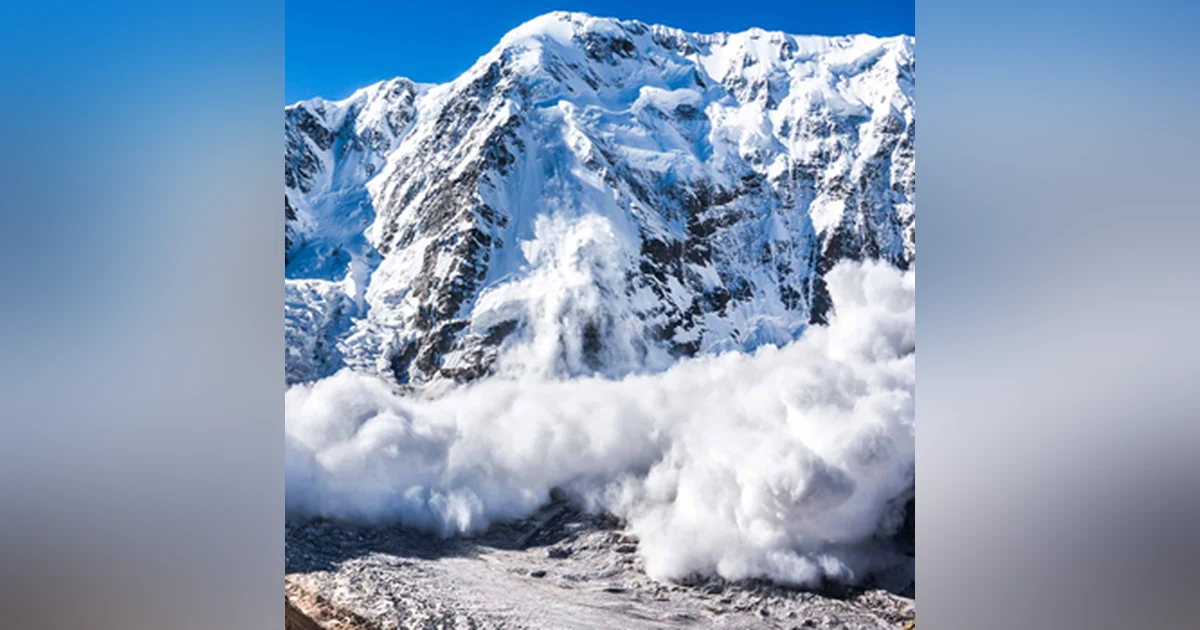
That single shouted warning — "Avalanche!" — may have bought the group no more than a few seconds of awareness before a churning wall of snow, moving at speeds approaching 100 miles per hour, consumed everything in its path. What followed near Lake Tahoe in February of 2026 became the deadliest avalanche California had ever recorded, claiming nine lives and leaving rescuers, scientists, and the broader outdoor community grappling with questions that the mountain itself may never fully answer.
The sheer violence of an avalanche is difficult to comprehend until you study what it does to the human body and the landscape surrounding it. Snow, a substance most associated with childhood joy and quiet winter mornings, transforms under the right conditions into something almost unrecognizable — a crushing, suffocating force that buries everything in its path beneath frozen tonnage. The fifteen backcountry skiers caught beneath Perry's Peak on February 17th encountered that force without mercy.
When the snow finally settled, three skiers remained above the surface. Twelve did not.
What those three survivors faced in the immediate aftermath was not simply a rescue operation — it was a desperate, time-pressure confrontation with physics and biology. Avalanche experts are unambiguous about the window that exists between burial and death: roughly ten minutes. After that, the odds of pulling someone out alive begin collapsing as rapidly as the snowpack that buried them.
"It's really difficult to even get one person out of the snow in 10 minutes," said Wendy Antibus, education coordinator for the Sierra Avalanche Center.
With twelve people buried and only three individuals capable of responding, the arithmetic was brutal from the very first moment.
The three survivors would have immediately understood what needed to happen. First, a rapid assessment of whether further avalanche danger existed — because a second slide can and does kill rescuers who linger too long in a runout zone. Then came urgent calls for outside help using cell phones or satellite communication devices. And then, without hesitation, the search itself had to begin.
To locate the buried, the survivors would have switched their avalanche transceivers from transmit to receive mode, using the directional signals and estimated distances the beacons broadcast to close in on their companions. Collapsible probe poles followed — rigid, thin rods jabbed repeatedly into the snow to pinpoint a precise burial location before any digging begins. Every step in that sequence takes time. Time that avalanche victims cannot afford.
"This is all in seconds," said Robert Rice, an associate professor at UC Merced and a former avalanche forecaster, describing the mental and physical sprint that survival demands of everyone involved.
The Sierra Avalanche Center's initial occurrence report confirmed that three of the buried skiers were successfully recovered by their companions before outside rescuers arrived. Three lives pulled back from beneath the snow by hands and shovels and sheer will. But the scale of what remained — nine more people still under the mountain — was beyond what three survivors with collapsible shovels could overcome, no matter how capable or composed they were.
An avalanche does not simply bury a person the way sand buries a sandcastle. It compresses. It consolidates. Snow in motion generates friction and heat, causing partial melting along its surface layers; once the slide halts, that moisture refreezes, transforming loose powder into something far closer to concrete than anything that falls gently from the sky. Digging through it is a physical battle.
"The collapsible shovels backcountry skiers carry are sturdy," Wendy Antibus acknowledged, but the act of excavating a buried person can be pretty exhausting — and exhaustion is the enemy of speed.
For those entombed beneath the surface, the experience was one of compounding physiological terror. The avalanche's violence alone — its twisting, tumbling, blunt-force momentum — can kill before the snow ever stops moving.
"You may just die of trauma before you ever stop moving," said Andy Anderson, an avalanche forecaster with the Tahoe National Forest Sierra Avalanche Center. "But if you survive the ride, then you have some air, and as you breathe, you create a mask of ice around your face, which then limits the amount of air you have, and you end up rebreathing carbon dioxide and being deprived of air."
Survival in the burial zone is measured not in hours but in exhales. Every breath a buried person draws depletes the small air pocket around them and replaces it with carbon dioxide. The mountain is patient. It does not hurry. It simply waits while oxygen turns into poison.
The group had been returning from a three-day excursion to the remote Frog Lake huts when the slide struck at approximately 11:30 am in the morning. Near-whiteout conditions made the terrain especially treacherous for the rescue teams who eventually reached the scene that evening, discovering six survivors — the original three plus the three they had managed to pull from the snow — alongside the remains of three victims the survivors had been able to locate. Severe weather and ongoing avalanche hazard prevented recovery operations for the remaining victims for several days.
The bodies of all nine victims were ultimately recovered on Friday and Saturday following deliberate avalanche mitigation work. Six of the nine were women, described by their families as accomplished skiers whose bond had been forged through a shared devotion to the outdoors. The remaining three were professional guides employed by Blackbird Mountain Guides, the outfitter that led the expedition.
Investigators later determined the slide measured approximately 400 feet and was classified as a soft-slab avalanche — a type typically composed of recently fallen, less-consolidated snow. Robert Rice explained that such an event involves either the fresh snow itself releasing, or a weaker structural layer buried beneath it giving way and sending everything above it downslope. The slope beneath Perry's Peak, a steep eastern face of Castle Peak scattered with trees except where the white face opens up, provided exactly the terrain geometry that allows slides of this nature to form and accelerate.
On the classification scale for destructive potential, the slide was rated 2.5 — straddling the range between a Class 2 event, capable of burying people entirely, and a Class 3, capable of destroying structures or cutting down trees.
"This is a small enough area, and probably the visibility was bad that day," Wendy Antibus said. "I doubt they had much time to react. Maybe they heard a noise, and then all of a sudden there's an avalanche there."
That description encapsulates one of the most disorienting truths about avalanche danger: the warning and the catastrophe often arrive as a single event. There is no graceful interval in which to deliberate or reposition. The mountain presents its verdict and executes it at the same time.
Backcountry guides in the United States are evaluated, at a minimum, on their ability to locate and excavate two buried transceivers within seven minutes. Most experienced skiers on guided trips will have completed some level of avalanche education and practiced rescue scenarios as a group early in their journey. This group almost certainly had. The guides leading them were professionals. The skiers themselves were described as highly skilled.
None of it was enough to change the ratio: twelve people under the snow, three people above it.
The investigation into what happened continues. The Nevada County Sheriff's Office and California's Division of Occupational Safety and Health are each conducting independent inquiries. But the evidentiary record the mountain might have provided has largely been erased. Continued storms buried the avalanche zone beneath fresh snow in the days that followed, obscuring the layered snowpack profile that would have revealed precisely which structural failure triggered the slide.
"It kept storming for a few days after the avalanche, and so all of that stuff has been buried by new snow and no longer exists, basically," Andy Anderson said. "We can't tell which layer broke — it's just filled back in with snow."
The investigators have not yet spoken with any survivors. No pre-avalanche photographs of the slope exist. The pit profile — the cross-sectional examination of the snowpack that would have identified the weak layer responsible — was washed away before anyone could study it.
"We may not ever get that detail of information," Andy Anderson said, "simply because the storm erased it."
What remains, beyond grief and unanswered questions, is a reckoning with what this tragedy exposes about wilderness travel at its most unforgiving. These were not casual weekend visitors who wandered carelessly into hazardous terrain. They were experienced, equipped, guided, and trained. They operated within the norms of responsible backcountry recreation, and the mountain consumed them anyway.
An avalanche does not evaluate credentials before releasing. It does not distinguish between a first-time skier and a seasoned guide. It does not slow for good intentions or pause to consider preparation. When the snowpack fractures and the slab begins its descent, it becomes one of nature's most indiscriminate forces — fast, heavy, cold, and completely indifferent to everything beneath it.
The survivors of this catastrophe managed to save three lives in the immediate chaos that followed. That represents genuine courage enacted under extreme duress. But the mountain's toll — nine people who went into the backcountry on a clear trip and did not return — stands as a sobering reminder that in the wilderness, risk is never fully negotiated away. It is only ever borrowed against.
The storm that buried the evidence has moved on. The mountain remains.
What can we learn from this story? What's the takeaway?
This story teaches us that: Risk can be managed but never eliminated.
For anyone drawn to wild places, the lesson isn’t to stay away—but to carry a healthy humility. The mountains don’t negotiate. They don’t care how skilled you are, how prepared you feel, or how many times you’ve done it before.
And sometimes, the hardest truth to accept is this: survival can come down to seconds, positioning, and sheer chance.
Well, there you go, my friends; that's life, I swear
For further information regarding the material covered in this episode, I invite you to visit my website, which can be found on Apple Podcasts, for show notes and the episode transcript.
As always, I thank you for the privilege of you listening and your interest.
Be sure to subscribe here or wherever you listen to podcasts so you don't miss an episode.
See you soon.


