
The World Cup’s Other Hydration Break= Beer Run
The real lesson here isn't about World Soccer rules, marketing gimmicks, or even alcohol; it's about how people instinctively turn any structured pause into a personal challenge. . Supporting links 1. World Cup Soccer [Wikipedia] 2. World Cup 'Hydration Break' Turns Into High-Speed Beer Runs [SE Daily] 3. Boston Bars Were Left Short On Beer [Operation Sports] 4. Why are there hydration breaks at the 2026 Wor...

 Amazon Music
 Apple Podcasts
 Spotify
 iHeartRadio
 Youtube Music
 TuneIn
 Castro
 Audible
 RSS Feed
 The real lesson here isn't about World Soccer rules, marketing gimmicks, or even alcohol; it's about how people instinctively turn any structured pause into a personal challenge.
.
Supporting links
1. World Cup Soccer [Wikipedia]
2. World Cup 'Hydration Break' Turns Into High-Speed Beer Runs [SE Daily]
3. Boston Bars Were Left Short On Beer [Operation Sports]
4. Why are there hydration breaks at the 2026 World Cup [ESPN]
Contact That's Life, I Swear
- Visit my website: https://www.thatslifeiswear.com
- Twitter at @RedPhantom
- Bluesky at @rickbarron.bsky.social
- Email us at https://www.thatslifeiswear.com/contact/
Episode Review
- Submit on Apple Podcast
- Submit on That's Life, I Swear website
Other topics?
- Do you have topics of interest you'd like to hear for future podcasts? Please email us
Interviews
- Contact me here https://www.thatslifeiswear.com/contact/, if you wish to be a guest for a interview on a topic of interest
Listen to podcast audios
- Apple https://apple.co/3MAFxhb
- Spotify https://spoti.fi/3xCzww4
- My Website: https://bit.ly/39CE9MB
Other
- Music and/or Sound Effects are cour...
⏱️ 12 min read
Hi everyone, and welcome to my podcast, That’s Life, I Swear. I’m your host, Rick Barron
The 2026 World Cup was introduced to the Hydration Break.
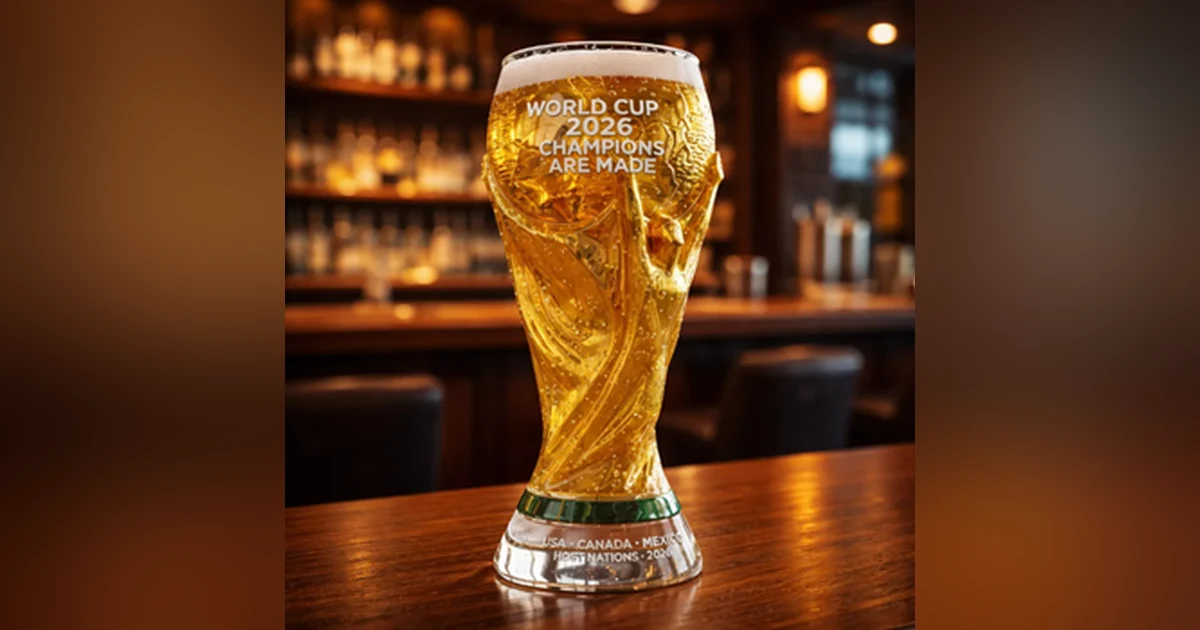
The controversial, 180-second pauses in action may have turned the 2026 World Cup into the booziest tournament in history.
Somewhere in a FIFA conference room, an executive in a crisp suit had decided that millionaire athletes sprinting in summer heat needed a mandatory water break.
What nobody in that room anticipated was that thousands of fans in the stands heard "hydration break" and interpreted it as a personal athletic challenge of their own — one measured not in milliliters of water, but in pints of beer consumed before a stadium clock hit zero.
Welcome to That's Life, I Swear. This podcast is about life's happenings in this world that conjure up such words as intriguing, frightening, life-changing, inspiring, and more. I'm Rick Barron your host.
That said, here's the rest of this story
A Loophole Wearing a Lifeguard's Whistle
FIFA's official line was that these three-minute pauses, dropped into the middle of each half, existed purely to protect players from dangerous heat. That was a noble sentiment, and also a slightly funny one given that several of the tournament's venues had roofs, air conditioning, and the climate control of a luxury mall. Players inside those buildings were about as endangered by heat as a penguin in a meat locker.
But intent mattered less than outcome, and the outcome was glorious chaos. Soccer purists called the breaks an insult to the sport's rhythm, a sponsor-driven intermission dressed up as medical concern. But hold on, an entirely different demographic quietly declared the hydration break the single greatest rule change in the sport's history: people holding beer tickets.
Turning a Bathroom Break Into an Olympic Event
What emerged from this loophole was a strange, unofficial sport-within-a-sport. Call it competitive beer logistics. The moment a referee's whistle signaled the break, sections of crowds transformed from passive spectators into something resembling a relay team that had skipped all its practices but still really wanted the gold medal.
The format was simple and brutal: 180 seconds. That was the entire window to abandon your seat, navigate a concrete maze of strangers, locate a vendor, complete a transaction, and sprint back before the ball was back in play. Fans started treating it like a personal decathlon, complete with self-imposed rules, trash talk, and post-event analysis that would have made an Olympic broadcast blush.
Friend groups took this seriously and began assigning roles before kickoff, like it was a heist movie. One story was shared where one person was "on beer duty" for the entire half, responsible for memorizing the fastest concourse route and pre-loading cash so there was no fumbling for a card reader while precious seconds evaporated. Others timed their own runs on phone stopwatches, comparing personal bests between matches the way a runner might brag about shaving four seconds off a 5K. There was apparently a real difference between a "clean" hydration break, where you returned to your seat with time to spare, and a "photo finish," where you were still standing in the aisle when the ball touched off, and your view of the opening pass was blocked by someone's expensive interpretation of a national team jersey.
The two-beer limit per person only sharpened the competitive instincts. With supply capped, fans optimized like overworked logistics managers — sending the fastest walker in the group on the run while everyone else held seats, or staggering bathroom trips and beer runs across separate breaks to avoid bottlenecks. Somewhere out there, a supply-chain consultant could have watched grown adults solve the exact problems they get paid six figures to fix, except the stakes were a lukewarm domestic lager instead of quarterly earnings.
Power Rankings of Hydration-Break Strategy
As with any emerging sport, technique developed quickly among stadium regulars. At the bottom sat what were called the "Panickers” fans who waited until the whistle actually blew before deciding what they wanted, then spent forty precious seconds standing at the counter squinting at a menu they'd had two hours to study. One tier up was the "Sherpas," who carried everyone's order memorized and executed with grim efficiency, accepting cash from four different friends mid-jog without ever breaking stride.
At the top of the pyramid were the self-appointed "Closers" — the rare fan who returned to their row with drinks in hand and seconds to spare, settled in, and didn't even look winded, as if they hadn't just power-walked the length of two football fields balancing three cups.
Naturally, stories got passed around sections like campfire tales: the guy who supposedly made it there and back in ninety seconds flat, the group that got separated and had to communicate by text mid-run, the unfortunate soul who tripped on a stair, lost an entire beer, and had to decide in real time whether dignity or hydration mattered more. Spoiler: hydration won.
The Roaming Vendors Were Basically Cheat Codes
Adding another layer to the self-imposed games, many stadiums had something most fans abroad had never experienced: vendors wandering the aisles with coolers strapped to their bodies like overcaffeinated ice cream men. For supporters used to European stadium rules, where you couldn't so much as glance at a beer within view of the pitch, this was the equivalent of discovering a cheat code in a video game they'd played for twenty years.
This created its own subcategory of bragging rights. Fans who managed to flag down a roaming vendor without ever standing up started treating it as the platinum achievement of hydration-break culture — the beer equivalent of catching a foul ball without spilling your nachos.
Why run a sprint when you could simply raise a hand and let victory come to you? Some fans even started ranking sections of the stadium by vendor frequency, the way real estate agents rank neighborhoods by school districts, quietly relocating seats between matches based purely on foot-traffic patterns of a man with a cooler.
Stadium Staff Had Seen Things
Spare a thought for concession workers, who effectively became referees in a sport nobody told them they were playing. Vendors described shifts that flipped from dead silence to controlled mayhem in the space of a single whistle, watching a sleepy concourse turn into a stampede the instant the clock started. Some started treating the rush itself with sporting respect, mentally clocking which customers moved with purpose and which ones wandered up still deciding what they wanted, as if the break was starting later for one group than the other.
A few workers reportedly began their own version of the game, competing to see how fast they could process an order, swapping tips on faster card-tap setups and pre-pouring cups during the lull right before a break, the way a sprinter might stretch before the gun went off. Nobody was officially timing them, but everybody seemed to know who the fastest pourer on shift was, and that person carried themselves accordingly.
A Tournament-Wide Drinking Renaissance
All of this unfolded against the backdrop of what may have been the thirstiest World Cup on record. After the last edition's stadiums went dry almost overnight, this tournament swung hard in the opposite direction, hosted largely in venues built for a different sport that had never had a complicated relationship with beer sales.
Entire host cities reported being swarmed by traveling supporters with legendary stamina. Pubs ran through inventory like it was last call on New Year's Eve, and at least one city extended bar hours deep into the morning just to keep up with demand. Visiting fans, by various accounts, treated the local hospitality industry less like a sightseeing stop and more like an all-you-can-drink buffet with a strict time limit, and local bartenders began referring to certain traveling supporter groups the way meteorologists discuss incoming weather systems — with a mix of dread and professional respect.
Not Everyone Played the Game
To be fair, not every fan weaponized the break for beverage purposes. A small, noble minority actually used those three minutes the way FIFA intended — for water, for the restroom, for catching their breath after standing through a tense first half.
These fans reported a kind of quiet relief, a small luxury previously unavailable to anyone terrified of missing a goal during a bathroom trip. It was a low bar for gratitude, but in a 90-minute match where one moment could decide everything, even a guilt-free trip to the restroom counted as a win — even if, by halftime, they were the only ones in their row who hadn't started comparing personal-best sprint times.
What can we learn from this story? What's the takeaway?
The real lesson here isn't about soccer rules, marketing gimmicks, or even alcohol — it's about how people instinctively turn any structured pause into a personal challenge.
Give a crowd a clock and a task, and a meaningful chunk of them will quietly start competing against themselves, their friends, or an invisible scoreboard, even when nothing is actually on the line.
FIFA built a mechanism for player safety; fans repurposed it into a beer-fueled scavenger hunt with bragging rights as the only prize. It's a small, funny reminder that humans will gamify almost anything — even hydration.
Well, there you go, my friends; that's life, I swear
For further information regarding the material covered in this episode, I invite you to visit my website, which can be found on Apple Podcasts, for show notes and the episode transcript.
As always, I thank you for the privilege of you listening and your interest.
Be sure to subscribe here or wherever you listen to podcasts so you don't miss an episode.
See you soon.


