
How 59 Seconds from a Bugle Calls a Community Together

 Amazon Music
 Apple Podcasts
 Spotify
 iHeartRadio
 Youtube Music
 TuneIn
 Castro
 Audible
 RSS Feed
 Learn how John Hersh, an ordinary man with a trumpet, transformed a personal routine into a beloved neighborhood tradition by playing taps at sunset, rain or shine.
Supporting links
1. Sunset observed with Taps [The Sandpaper]
2. History of Taps [AUSA]
3. Bugles Across America[Bugles Across America]
Contact That's Life, I Swear
- Visit my website: https://www.thatslifeiswear.com
- Twitter at @RedPhantom
- Bluesky at @rickbarron.bsky.social
- Email us at https://www.thatslifeiswear.com/contact/
Episode Review
- Submit on Apple Podcast
- Submit on That's Life, I Swear website
Other topics?
- Do you have topics of interest you'd like to hear for future podcasts? Please email us
Interviews
- Contact me here https://www.thatslifeiswear.com/contact/, if you wish to be a guest for a interview on a topic of interest
Listen to podcast audios
- Apple https://apple.co/3MAFxhb
- Spotify https://spoti.fi/3xCzww4
- My Website: https://bit.ly/39CE9MB
Other
- Music and/or Sound Effects are cour...
⏱️ 18 min read
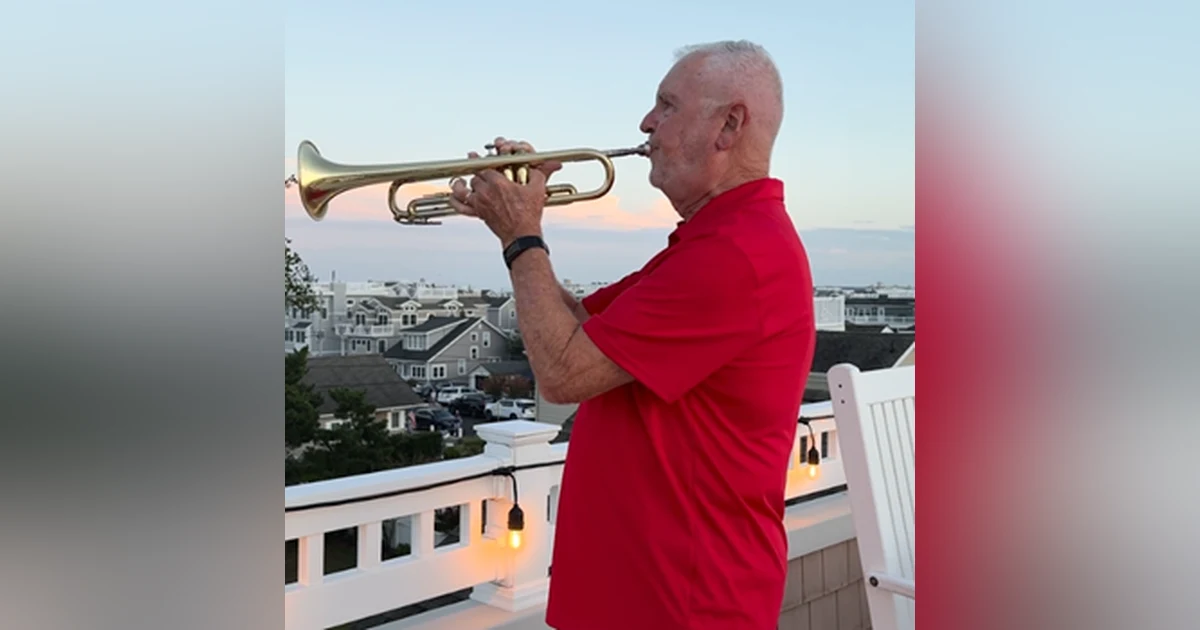
As the sun sets on another summer day, John Hersh is wrapping up his 10th year of rooftop serenades.
When evening descends upon the waters of Barnegat Bay, a sacred ceremony unfolds across Beach Haven Gardens. As the final rays of sunlight surrender to the approaching darkness, the clear notes of a trumpet pierce the evening air, carrying with them the weight of American tradition and the power of collective remembrance.
This is no ordinary musical performance, mind you. This is the daily observance of taps—a ritual that transforms an entire New Jersey shore community into something greater than the sum of its parts. In those precious fifty-nine seconds, as the haunting melody drifts over rooftops and through screen doors, a remarkable transformation occurs: strangers become neighbors, individuals become community, and the sacred act of remembrance binds hearts across all boundaries.
This is the story of John Hersh, the retired teacher whose rooftop ritual of playing taps has become an unexpected tradition of unity, reflection, and silence.
Welcome to That's Life, I Swear. This podcast is about life's happenings in this world that conjure up such words as intriguing, frightening, life-changing, inspiring, and more. I'm Rick Barron your host.
That said, here's the rest of this story
The Evening Trumpet: A Community's Sacred Ritual
This phenomenon speaks to a profound aspect of the American character. Our innate understanding that certain rituals possess the power to unite us in ways that speeches and proclamations never could. When John lifts his trumpet to his lips each evening, he doesn't merely play a song; he conducts a symphony of shared values, collective memory, and patriotic reverence that resonates through every corner of this seaside enclave.
The Power of Sacred Pause
In our hyperconnected age, where digital distractions compete for every moment of our attention, the evening performance of Taps creates something increasingly rare: a communal pause. Cyclists dismount. Joggers halt mid-stride. People step away from their BBQ grills. Even teenagers, typically absorbed in the glow of their smartphones, lift their eyes toward the source of the music. For nearly one precious minute, an entire community stops, listens, and remembers together.
When we pause for taps, we acknowledge that some things transcend our immediate concerns, our personal ambitions, our petty disagreements. We recognize that we are part of something larger:
· a nation built on sacrifice
· a community bound by shared values
· a heritage worth preserving and honoring
The applause that follows each performance speaks volumes about the hunger Americans feel for authentic, meaningful ritual. These are not forced gestures of political correctness but spontaneous expressions of gratitude for a moment of transcendence in an otherwise ordinary day. The community has embraced this ritual because it fulfills a deep need for connection to something greater than themselves.
An Unlikely Conductor of Unity
John Hersh embodies the quintessential American story. A retired school teacher, a Vietnam-era veteran, a devoted family man who discovered his calling not in grand political gestures but in the simple act of musical service to his community. His weathered hands, which once refueled military helicopters and guided young minds in fifth-grade classrooms, now hold the power to unite hearts across every conceivable divide.
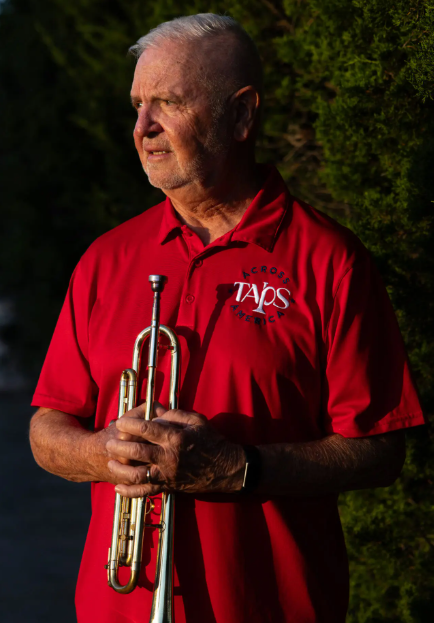
John Hersh with his bugle. Courtesy of the New York Times
There is profound beauty in the ordinariness of John's patriotism. He requires no stage, no amplification system, no formal recognition. Armed with only his childhood trumpet, the same instrument that accompanied him through his formative years in Pennsylvania, he has created something extraordinary from the humblest beginnings. This is democracy in action, patriotism from the ground up, community building at its most authentic.
His story reminds us that American leadership often emerges not from boardrooms or political stages but from the ranks of ordinary citizens who choose to serve their communities in simple, meaningful ways. Hersh wields no political power, commands no armies, controls no vast resources. Yet his influence over his community is profound and enduring because it stems from a genuine love of country and neighbors, rather than personal ambition. To know that the tainted rhetoric of ‘Us vs Them’ doesn’t do any good for all of us.
The Trumpet That Connects Generations
The trumpet John uses is the one he took lessons on as a fourth grader in York County, Pa. At Spring Grove High School, he played in the concert band and marching band, at football games, and in parades.
When John arrived at Millersville University, the music paused. The draft for Vietnam was looming, but he managed to finish his studies before answering the call. Rather than heading overseas, he joined the Pennsylvania National Guard, where his journey wound through bases from Fort Dix in New Jersey to Fort Lee in Virginia, and finally to Fort Indiantown Gap back home in Pennsylvania. For the next six years, his job was steady and unglamorous—keeping helicopters fueled and ready to fly.
The fact that John had to retrain his lips after decades away from the instrument adds another layer of meaning to his ritual. This was not a casual decision, but a deliberate commitment that required practice, patience, and physical dedication. His willingness to invest in this skill demonstrates the seriousness with which he approaches his role as community chaplain, unofficial though it may be.
Sacred Geography: The Beach as Common Ground
Life moved quickly for John. He married, took up teaching in fifth grade, and welcomed two sons. By 1978, he had invested $59,500 in a small bungalow in Beach Haven Gardens. Over the years, he reworked the place twice, and after Hurricane Sandy, he started fresh, constructing a new home topped with a roof deck.
About ten years ago, a familiar sound from his past found its way back to him. He uncovered his old trumpet, still tucked in its original case. Now and then, he had brought it along on school camping trips, sounding “Reveille” at sunrise and closing the evenings with taps. “The kids loved it,” he recalled. “It gave the day a little something extra.
Beach Haven Gardens presents a microcosm of contemporary America, complete with all its passionate divisions and competing loyalties. The community displays its political affiliations proudly—flags and signs declaring allegiances that might otherwise create unbridgeable chasms between neighbors. Trump supporters and progressive activists, Second Amendment advocates and gun control supporters, all coexist in this compact seaside community, their differences as visible as the flags that flutter from their porches.
Yet something remarkable happens each evening when the trumpet sounds. These divisions, while not erased, become temporarily irrelevant. The power of the ritual transcends political affiliation, creating a shared space where all can participate in the act of remembrance without compromising their individual beliefs. This is patriotism at its most inclusive—not demanding conformity of thought but inviting participation in collective reverence for the sacrifices that made such diversity possible.
Memory as Living Force
When John plays taps, he carries with him the memory of Tony Thoman, his childhood neighbor who never returned from Vietnam. This personal connection to loss gives weight and authenticity to his performance that no amount of training or technique could provide. He plays not as an entertainer or even as a patriot in the abstract, but as a friend remembering a friend, a survivor honoring the fallen.
This personal dimension of his ritual illuminates a crucial truth about meaningful patriotism: it must be grounded in authentic relationships, real losses, and real gratitude. John's evening performances are not political theater but genuine acts of remembrance, made powerful by their connection to actual human sacrifice. When he lifts his trumpet each evening, he bridges the gap between past and present, ensuring that the price of freedom remains visible to a new generation.
The story of Tony—young, innocent, forever frozen in time as a teenager with a trumpet—represents thousands of similar stories across American communities. Every town has its Tony Thomans, its young people who answered their country's call and never returned. John's ritual keeps these memories alive not through monuments of stone but through the living breath of music, ensuring that their sacrifice remains present and meaningful rather than abstract and forgotten.
Ritual as Community Architecture
John plays taps every day, rain or shine. A regularly repeated ceremony that strengthens community bonds and reinforces shared values. Unlike the grand civic rituals of Memorial Day or Independence Day, which occur infrequently and often feel distant from daily life, John's evening performance fosters an ongoing, lived patriotism that becomes as natural and expected as the sunset itself.
This daily repetition is crucial to its power. Grand gestures inspire temporarily, but it is the steady rhythm of regular ritual that shapes character and builds community. Children growing up in Beach Haven Gardens will carry the memory of those evening trumpet calls throughout their lives, understanding viscerally that some things are sacred enough to pause for, some memories important enough to honor daily.
The only requirement is the willingness to stop, listen, and remember. This accessibility ensures that the ritual can serve its unifying function across all demographic and political lines.
The Discipline of Daily Devotion
John's commitment to performing taps every evening, regardless of weather or personal convenience, demonstrates the discipline that transforms individual action into a community institution. Rain or shine, holiday or ordinary Tuesday, the trumpet sounds at sunset. This reliability has allowed the community to organize its expectations around the ritual, creating a shared rhythm that structures the end of each day.
The dedication required for such consistency speaks to a particularly American form of civic virtue: the willingness of private citizens to take on public responsibilities without formal authority or compensation. John receives no payment for his performances, no official recognition from government entities, and no tax breaks or special privileges. His reward is the applause of his neighbors and the knowledge that he serves something greater than himself.
Technology Serves Tradition
The detail that John consults Alexa to determine the precise moment of sunset adds a charming contemporary touch to this ancient ritual. Here is tradition embracing technology not to replace human judgment but to enhance it, ensuring that performance occurs at the perfect symbolic moment when day surrenders to night. Yet John maintains final authority, trusting his own eyes when Alexa's calculations don't match the reality of the sun's descent.
This balance between technological assistance and personal judgment reflects a mature approach to modernity. Rather than rejecting new tools or becoming enslaved by them, John uses technology to serve his larger purpose while maintaining human agency and natural observation. The result is a ritual that honors both innovation and tradition, utilizing the best of contemporary capability in service of timeless values.
The Expanding Circle of Influence
What began as one man's personal ritual has evolved into a community institution that now connects Beach Haven Gardens to national movements, such as Bugles Across America. On Memorial Day, John joins with trumpeters across the country in synchronized performance, creating a coast-to-coast moment of remembrance that links his small New Jersey community to the broader American experience.
This expansion demonstrates how local traditions can resonate beyond their immediate boundaries without losing their intimate character. John's evening performances remain deeply personal and community-focused while simultaneously participating in larger conversations about memory, sacrifice, and national identity. The ritual serves multiple scales simultaneously: individual reflection, neighborhood cohesion, and national commemoration.
The pilgrimage John made with his granddaughter to Harrison's Landing, Virginia—the birthplace of Taps during the Civil War—shows how contemporary ritual can connect with historical precedent, creating bridges across time that help current generations understand their place in the ongoing American story. By teaching his granddaughter the history behind the music, John ensures that the ritual will carry forward with full knowledge of its significance.
Weather and Devotion
John's commitment to playing through all weather conditions, taking shelter under a covered stairwell during storms, demonstrates the seriousness with which he approaches his role.
The image of John standing in his makeshift shelter on his porch, trumpet raised against the storm, provides a powerful metaphor for American resilience. Just as the nation has weathered countless storms while maintaining its essential character, so too does this daily ritual continue through whatever challenges the weather presents. The message is clear: some commitments transcend convenience; some duties persist regardless of comfort.
This reliability has allowed the community to internalize the ritual, to expect and depend upon it in ways that create genuine social bonds. When people know they can count on something—whether it's a neighbor's help in crisis or a trumpet call at sunset—trust deepens, and community strengthens.
Future Generations and Living History
John and his wife, Sally, took a trip to Vietnam in September of 2025. The man who lost friends to that distant conflict finally saw the landscape that shaped his generation's understanding of service and sacrifice. When he returned, John resumed his evening performances to honor his friend, Tony, and those who would never return, to celebrate their lives.
The fact that he continues to think of Tony Thoman during each performance—that personal memory remains fresh across decades—demonstrates how ritual can keep the past present and meaningful. Rather than allowing memories to fade or become abstract, the daily repetition of taps maintains emotional and spiritual connection to sacrifice, ensuring that gratitude remains genuine rather than merely ceremonial.
Conclusion: The Republic of the Heart
In the end, John's evening ritual represents something profound about American democracy: its dependence on ordinary citizens willing to serve extraordinary purposes through simple, consistent action. His trumpet calls don't solve complex policy problems or bridge deep ideological divides. Still, they do something equally important—they create moments of shared reverence that remind us of our common inheritance and mutual dependence.
This is patriotism in its purest form—not as a political weapon or partisan tool but as genuine gratitude expressed through consistent service to community and country. In a nation often divided by competing visions of what America should be, John offers something different: a daily reminder of what America is at its best, where individual initiative serves collective good, where simple rituals carry profound meaning, and where the act of remembering becomes an act of hope for future generations.
When those final notes fade into the evening air and the applause dies away, one can’t help but sense something has changed. For fifty-nine seconds, people have stood together in acknowledgment of sacrifice, in appreciation of freedom, in commitment to memory. They have participated in the great American experiment of self-governance through civic virtue, proving once again that the republic lives not in buildings or documents but in the hearts of citizens willing to serve something greater than themselves.
The trumpet will sound again tomorrow at sunset, and the day after that, and for as many days as John draws breath and lifts his instrument to the evening sky. Each performance will carry forward the accumulated power of all those that came before, building a tradition that bridges past and future, individual and community, memory and hope. In this simple ritual lies the secret of American endurance: the willingness of ordinary people to do extraordinary things, not for glory or profit but for love of country and neighbor.
This is how democracies are maintained—not through grand gestures or political speeches but through the daily practice of civic virtue, one trumpet call at a time.
What can we learn from this story? What's the takeaway?
The takeaway from this story is that simple acts of remembrance and ritual can unify communities, create shared meaning, and keep the memory of sacrifice alive.
John, an ordinary man with a trumpet, transformed a personal routine into a beloved neighborhood tradition. By playing taps at sunset, he offers people a pause from daily busyness—a chance to reflect, connect, and remember those who gave their lives in service. What makes it powerful is its accessibility: one man, one instrument, less than a minute of music, yet the effect ripples through an entire community.
Well, there you go, my friends; that's life, I swear
For further information regarding the material covered in this episode, I invite you to visit my website, which can be found on Apple Podcasts, for show notes and the episode transcript.
As always, I thank you for the privilege of you listening and your interest.
Be sure to subscribe here or wherever you listen to podcasts so you don't miss an episode.
See you soon.


