
Interview #32 Kristina Townsend: Open Hearts, Minds, Doors, and Wallets
Summary In this episode, Rick Barron interviews Kristina Townsend. Kristina shares her unique journey through sports, international travel, and social impact, illustrating how sports can foster understanding and reduce extremism. Discover insights on leadership, cultural differences, and the power of curiosity. Chapters 00:00 Introduction to Kristina Townsend and her journey 02:00 The meaning behind 'Running Unicorns' and sports as a bridge 05:54 The Ohio State-Michigan riva...

 Amazon Music
 Apple Podcasts
 Spotify
 iHeartRadio
 Youtube Music
 TuneIn
 Castro
 Audible
 RSS Feed
 Summary
In this episode, Rick Barron interviews Kristina Townsend. Kristina shares her unique journey through sports, international travel, and social impact, illustrating how sports can foster understanding and reduce extremism. Discover insights on leadership, cultural differences, and the power of curiosity.
Chapters
00:00 Introduction to Kristina Townsend and her journey
02:00 The meaning behind 'Running Unicorns' and sports as a bridge
05:54 The Ohio State-Michigan rivalry as a metaphor for connection
11:59 Cultural differences in happiness and community
22:07 Experiences working with USAID and its global impact
37:00 Using sports to bridge political and social divides
41:06 The potential of sports to tame extremism
54:55 Personal challenges and adventures in endurance sports
01:08:00 Future conversations and the power of curiosity
01:09:03 The message of curiosity, learning, and unlearning
Supporting links
- The Running Unicorns Podcast
- USAID - United States Agency for International Development
- Sports Innovation Lab
- Everest Marathon
Contact That's Life, I Swear
- Visit my website: https://www.thatslifeiswear.com
- Twitter at @RedPhantom
- Bluesky at @rickbarron.bsky.social
- Email us at https://www.thatslifeiswear.com/contact/
Episode Review
- Submit on Apple Podcast
- Submit on That's Life, I Swear website
Other topics?
- Do you have topics of interest you'd like to hear for future podcasts? Please email us
Interviews
- Contact me here https://www.thatslifeiswear.com/contact/, if you wish to be a guest for a interview on a topic of interest
Listen to podcast audios
- Apple https://apple.co/3MAFxhb
- Spotify https://spoti.fi/3xCzww4
- My Website: https://bit.ly/39CE9MB
Other
- Music and/or Sound Effects are cour...
Rick (00:01.762)
Hi everyone, I'm Rick Barron, your host, and welcome to my podcast, That's Life I Swear.
My guest today is Kristina Townsend.
So, here's a thought. What if the secret to fixing our broken public conversation had been hiding in plain sight? You know, like on the football field, maybe the running track, or even the ice rink. Curious?
Well, Kristina has spent her career proving that sport is a lot more than stats and stadiums. Now, she grew up in Ohio, or as she'll tell you later, the Ohio State and Michigan rivalry is without question a religion. Now, her journey has been anything but ordinary.
Let me explain.
Kristina has a master's degree in public administration and over fifteen years of experience in the social impact sector.
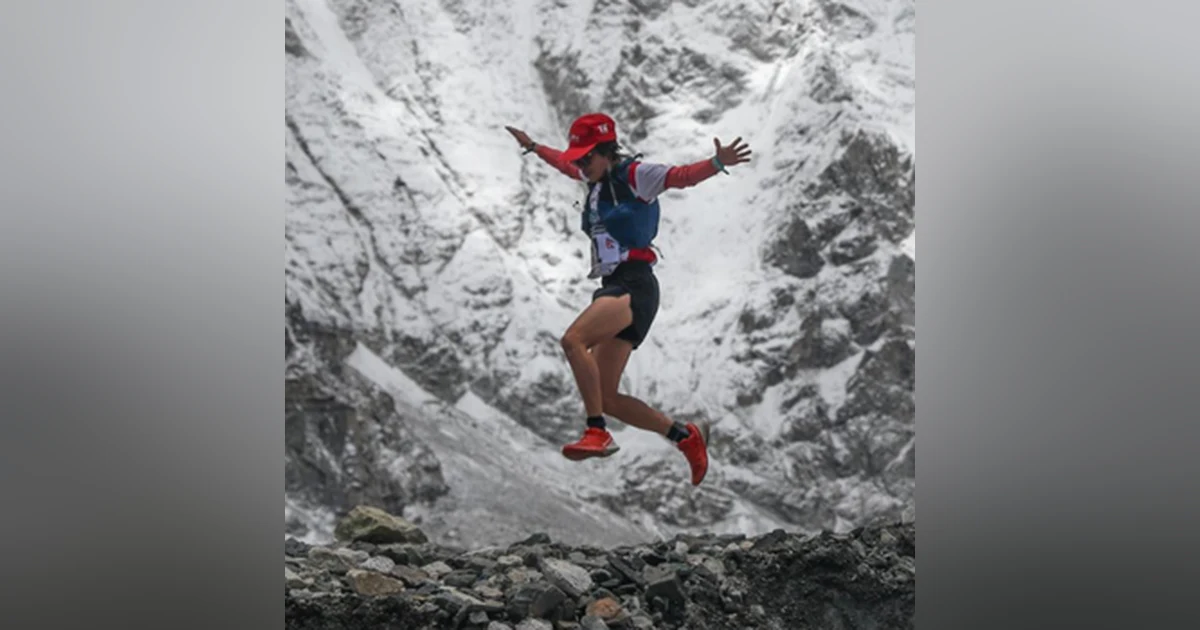
She served as a USAID contractor in Washington, D.C. She co-founded and directed half marathons for 10 years. Now she's also worked on the cutting edge of women's sports analytics. And somewhere along the way, she ran the Boston Marathon. And if that wasn't enough, she then ran the Mount Everest Marathon while in her first trimester of pregnancy. You know, as one would do.
Based in the Baltimore-Annapolis area and starting a family, Kristina has launched a podcast that brings together all of those points from her journey. Now Kristina's podcast is called The Running Unicorns. Now she has a very unique and clever way of getting her podcast conversation started. Now, what do I mean by that?
She uses a single word, drawn from sport, play, or recreation as a doorway to conversations about leadership, social impact, and the kind of civil, open-minded dialogue she believes our country is desperately missing. Amen to that. Now her mission, in her own words, is to open hearts, minds, doors, and wallets. All that said, please join me as I have my conversation with Kristina Townsend. Kristina, welcome to the show.
Kristina Southam Townsend (02:29.539)
Rick, thank you. That is an incredible introduction. Hey, I'm so flattered and thrilled to be here. And I feel tired just thinking about all that. So, I'm excited to have this conversation. Thank you so much.
Rick (02:39.16)
Ha ha. Yeah. There's a lot to break down into all those key points you've done in your life, and you're doing more still. So, give us a little bit of background for the audience about, you know, where you're from, how you got started into the field that you're in today. You know, when did you land on planet Earth?
Kristina Southam Townsend (03:06.885)
You know, it is a long winding road, and I appreciate you know appreciate the introduction because I think that does give some context of I at heart I'm a generalist. I like to have my hand in a lot of pots. but at the same time, there are these common themes. So, we'll get back to you, you know, it at I moved around a little bit as a kid, and then Ohio is where I really grew up. I was there since I was about five, and you know, all through elementary school and high school.
And I will just say it was such a special place. You know, from you we mentioned that the sports aspect, and there is an element that kind of affects where I've landed today because of that culture. But I was extremely fortunate to be in a very community-oriented place and just taught the value of people and connection. spent some time in DC, fresh out of college. I went to BYU, Brigham Young University, for those who are familiar with that. And
I've traveled all around the world, and we can dig into more of that. Lived abroad in Spain, Belize, Paraguay, and more. and then ended up in Utah back to DC. There's more where that came from.
Rick (04:13.96)
Wow, well I I know from doing some research on your travels, you've also been well not been, but you've lived in Spain, Paraguay, Belize. and then you've also visited about forty plus countries.
Kristina Southam Townsend (04:33.143)
It's kind of wild to think about, but yes, I it’s it's been a ride. If I have the opportunity, I'm going to go for it. I've slept on airport floors; I've slept everywhere to make it happen. A lot of that happened in college, and I still try to get out when I can at this stage of life, but it's been an adventure. There's so much of the world I still want to see. So that's just a midpoint there.
Rick (04:56.898)
Okay, okay. Well, I want to jump into your podcast and I guess the first thing that comes to mind why the name Running Unicorns? How did that come into play?
Kristina Southam Townsend (05:08.025)
That's a golden question, Rick. So, you know, there's a bit of wordplay in the podcast, as you mentioned, and I can share more about that. But when you hear running unicorns, it can mean a lot of things. And that's part of the point is that running could be running a business, running for office, literally running. Unicorns, we first often think of the cute creature, right? But it's also the symbol of the Boston Marathon and a name for a billion-dollar startup. So, the idea is that what looks and sounds like one thing.
I owe it so much more and I think sports is the same. It looks like stats and stadiums, and it is, and it's so much more. And you know, I'm a little biased to running. That's one of my first sports loves. And so, I kind of tease that it's running leaning. But we talk about sports of all different colors and backgrounds. but my goal is to bring people together through sports wherever that is.
I'm coming at it through the lens of a runner, and you know the sports I've touched on, but part of the fun is exploration. So, running unicorns is about sports, but the deeper side, again, from sports diplomacy to cultural impact to economic impact, it runs a gamut.
Rick (06:23.244)
Wow. So, when you mentioned you lived in Ohio, I know you described the Ohio State-Michigan rivalry earlier. I think if I remember right, you said it was a spark for your podcast. Can you expand on that story? Well, I mean, how did that come about?
Kristina Southam Townsend (06:45.177)
Yeah, great question. So my best friend is growing up, her name is Erin. So, in fact I need to do an episode with her at some point. But she or their family are die-hard Ohio State fans.
And we had moved to Ohio from Chicago back in Michael Jordan era, and so he was, you know, all the rage, the bulls were the best. And I was like Ohio State, what? And so, they converted us, and it was so fun being with friends and neighbors who were such die-hard Ohio State fans. And they literally would mow their lawn, and you know, my just everything, anything Ohio State you can imagine, it's like religion, and they were not the only ones.
Rick (07:08.736)
Yeah.
Kristina Southam Townsend (07:28.421)
Once. That's the thing. It's their religion there. You know, and I say that lightheartedly, but a little element of seriousness. And as I witnessed that rivalry growing up of Ohio State and Michigan, you know, there was also camaraderie.
And so, as I've continued to travel on, so for those who don't know, when I yell, you respond. And so I mentioned my travel background right and I'll be anywhere in the world.
I remember I was somewhere in Europe and I saw someone in Ohio State jersey on a game day and I yelled and they turned around and said I it's a so no matter they knew the assignment and but the same thing though when someone's wearing something from Michigan is I can razz them and I'll say you know go bucks and there's actually this instant connection that even though we can be on the other side of the world or a room full of people that rivalry actually is connection.
I went on, I mentioned I went to BYU. BYU and the University of Utah have a similar rivalry. In fact, BYU and Utah have done an actual whole campaign called Rival Right About It. So, here's a website, you can go check it out. But there's a similar relationship. They've been a little more intentional about how to have this rivalry and turn it into something good. So, we've done food drives in college and things like that, as part of this friendly competition. But the inspiration is getting back to the podcast, you know.
Know your question. I want to inspire people to value those friendly rivalries. We talk about it, but I think we underestimate that power. And just in the current climate, where you know tensions can be high, people have differences that come up, and social media makes it easy, with its rage bait, to just kind of get caught up and lose track of the bigger picture. And so, my goal is, whether it's sports or, you know, a difference of opinion.
Whether it's political or, you know, I don't know, something else you get hot about. Maybe it's baking, whatever it is, whatever it is. Parenting, that's another hot button. Whatever it is, how can we have these honest differences, have fun, appreciate the little competition and friendly rivalry, and shake hands at the end? And so just that connection of we're different, we're not a monolith. How do we have fun? How do we respect that? May we go at it a little bit, but let's make sure everyone shakes hands at the end. So that's where you bargain for. But that's the big picture. Little Pollyanna, but I'm here for it.
Rick (10:00.91)
Okay. No, that's a good concept. So, I got two questions. Let me ask this first one. Your tagline is open hearts, minds, doors, and wallets. Now, what does that mean in practice? How and how do you ask your guests to engage with that?
Kristina Southam Townsend (10:17.583)
You know, I think it's a good question. I ask them directly. I just say, what would you hope people would be open to? Minds, hearts, doors, and wallets. It can be all of them, any of them, and while I'm not endorsing anyone or anything, I always encourage people to do their own research. But I think there's value in just the thought exercise. There's a phrase I love: "I hear you," and that doesn't mean you're agreeing or disagreeing; it means you're holding space for someone to be heard. And I think a lot of people just want to be heard. So, when I asked that question, and with that aim of opening hearts, minds, doors, and wallets. I have had plenty of times where I've been wrong. I've been proven wrong.
And you know what? As a competitive person growing up, I probably was super obnoxious to play cards with. So, I will own it. I was one of those people who loved winning, and I still love winning, don't get me wrong. And I now have a new appreciation for being wrong. And I now try to find joy in that because in my professional life and other areas, it's an opportunity to improve. And when I work with athletes, they are some of the best colleagues because they know how to be coached, they'll work hard, they'll be good teammates, and they're coachable.
And then I want to be the kind of person in life who can go at it, because in sports you cannot hide your performance. Everyone saw if you flopped. So, all you can do is improve. The rest of us can hide behind our computers, we can, you know, keyboard warriors, whatever. But athletes don't get that luxury.
So, as I've evolved, you know, hopefully in my personal development and thinking, I want to err on that side, so with the inquiry into opening hearts, minds, doors, and wallets. I think, okay, how can I be confident and assertive and advocate for my interests and what I'm interested in, and be open to being wrong? And I think, you know, science is something that does that to us all the time.
We have one idea, and then we make a discovery, and wow, that's amazing. We have a new insight. So, I just think it's just good practice in life. So, I'm holding space for that.
Rick (12:28.3)
That's great. Now, going back to want to pivot back here, where you've been to forty plus countries, throughout all those travels and then taking into account what your goal is for your podcast, what have you noticed about the different cultures you came across? Cause I don't know how many or how long you spent in a country, per se, but there had to have been some things that kind of just hit you like, wow.
Now that's something we wouldn't do in the USA, or wow, I wish we could do this in the USA. I mean, can you give some examples?
Kristina Southam Townsend (13:06.597)
It's a good question; it depends on the country. I well one kind of fun sports, really a thing. I always try to see a sporting event when I'm traveling. I just think it's a cool experience. Soccer is usually my go-to, and it is just epic. So, if you have the opportunity and you're looking for a cool, cool travel experience, try to hit up a local soccer experience or sporting event, that's probably a favorite. But your question of what sticks out, I think to me, is seeing all the different types of joy.
And challenges. Because I grew up thinking happiness looked like one thing. And it did for me. And as I traveled, I saw, well, the Danes are really happy this way. And you know, the Thai are really happy this way. And the South Americans are really happy this way. And so, I think it opened my mind to realizing happiness can look like a lot of things to different people. And it doesn't have to be right or wrong. It's just, are you happy or not? And challenges.
And so I think the more I've seen other lifestyles, and I mean we have this at home in America too, right? It's such a diverse country. Whether it's, you know, from one neighborhood to another, or again to all these different places of the world, there are different types of government, there are different types of food, there are different diets, and that happens because of geography and literal borders. And so, you know, you can go from one country to the next and the road is changed and its better quality or worse, or the meals you maybe the food's or something's cheaper or not.
And I just think it's an interesting opportunity to say, okay, well, what do I like about this? Could we implement this at home or is this kind of unique to that region? I don't know. But what would be our version of that? So, I think for me it's just seeing different types of ways of being happy and functioning, and then maybe what doesn't work, also or what is unique to a region. I don't know. That's kind of what first comes to mind. But makes colorful
Rick (15:03.566)
No, that's good feedback. I think in part to your point, here in the USA, we may look at another country and as you called out, how can that be happiness? Well, we don't know that because we've never lived there. Maybe we will never visit there. So, to rush to judgment like that is to deny yourself to understand what is maybe we looked at as very sad, but it's not sad because, you know, for example, people might say, you know, like in Africa, people live in huts and they may think, gee, that's why they're so poor.
Well, how do you know they're poor? Maybe for them, that is happiness. So, it's all a matter of where you were raised, how you were raised, and how you've been taught to think in that particular region. So, I think to that end, we can learn a lot from that.
Kristina Southam Townsend (15:46.117)
Yeah.
That reminded me, some of the time I spent in Mexico and Guatemala. So, I actually got to spend some time with the running community, the Tarahumara, or some Rodado may is another name. But they're in the high mountains of Mexico in the Sierra Madre, and this was before the book Born to Run, just by the way. And I remember there's a reason I'm sharing this, but I remember these people were helping us carry our packs into the mountains, and they were leaping and wearing these shoes that looked like tires, and I was like, What is this?
Anyway, it was one we were absolutely in awe and inspired by, but I was actually doing a research paper on happiness at the time. And so, we had a very small group of us, and we were very much informed that we were guests. Our professors were very intentional about the fact that we are guests here. Treat this experience anyway, as a special opportunity that they're giving us access to talk to them.
And I remember talking to someone in that community, so they're very quiet, except when they have a party night, when they have Tesquino, and it turns into a party, but I remember talking to someone about happiness and something about more, and his response. This was just one person's perspective, but he said, Why would I want more? Because if I have more, that means someone else has less. And it was interesting, just a reaction, because I thought here are these people, they could just have a very strong sharing culture because they had to look out for each other. But that perspective of why would I want more because someone else has less just stuck with me. And I'm someone who kind of likes more sometimes. You know what I mean? So I'm not putting that down. But they were very happy, and so again ideas evolve, and people change, but at that point in time, it just struck me.
And so who am I to say that he's right or wrong? That if that brings him joy, cool, you know. so anyway, just one more example in a very specific instance of happiness.
Rick (18:04.81)
No, I mean that, ironically, one of the questions I wanted to ask you was when you took that trip down there, and that was when you were going to college.
Kristina Southam Townsend (18:12.291)
Yeah, I was in college. It was a study abroad. just a few weeks. So we spent time in Mexico and Guatemala. And you know, to be honest, when we're in Guatemala, so I was doing this research paper the whole time.
Probably, I would ask different questions at this point in my life. I was doing the best I could. We had a good program. But I remember I think it was in Guatemala, and maybe it was in Mexico. Anyway, at some point in our experience, someone said, I don't really have time to think about happiness. I'm just trying to get through the week, and I'm trying to get through the day. And I thought it's also kind of a luxury to think about happiness.
And that was his response. And who am I to say that I should change his opinion or mine, but he was like, I don't know, I don't think much about it. I'm just trying to feed my family. So even with that kind of response, I thought I was very much in the nuts and bolts, focused on what his goals were, and who am I to say it's right or wrong? It's just insightful. So just open my mind to some people, happiness is a luxury, you know?
Rick (19:20.896)
Right. I mean, in the time that you were there, if you had to bring it into just one concise sentence. What did you learn from that experience?
Kristina Southam Townsend (19:35.162)
Ooh, I learned that they didn't really need us. I wouldn't do it knowing. You know, like I'm like they didn’t know we brought some gardening tools to the Tarahumara people, and I'm like they could outwork us, they could outdo whatever. I'm like, we were bringing them, you know, some shovels and rakes, and they're like, Sure, you guys can get that spot, you know, but they didn't need us. So, it was a nice cultural exchange that allowed us to do this, and then we had a big meal together, and it was interesting, we were preparing this meal.
There was a huge line of pe I remember turning around, I was looking, getting the food ready, and I turned around and there was this massive line of people, and it was absolutely silent. It's like crickets. And I was like, where do they come from? And they are just, they're just truly a very it was just at that time, again, this is like two thousand eight or two thousand seven. Anyway, around that time, they were just very quiet. So, I think I think to myself, wow, here is a bordering country, right? We're so close, yet their lives are so different. And
And just, I don't know, it just didn't really make me want to be curious about my neighbors. there's a one or a little nugget on that. There's a book called Vagabonding, and it's about the art of long-term travel. It's one of my favorite books. And he talks about that at the end of the book, he talks about how we come home from a trip. And this is kind of alluding to your question a little bit. he talks when you come home from a trip, but you can't fully describe your experience to anyone else. They'll never understand.
You’ve seen things, and that goes to anyone again, whether it's at home or abroad. But he said, try to see your neighbors at home with just as much curiosity. Try to be just as interested in Joe down the street and Jenny down the street as you were about the tribes’ people that you were in interacting with. And it has just always stuck with me that I can walk down the street and be just as curious as I am, you know, across the world or a bordering country. But how can we really be just as curious about someone in a more exotic environment as we do our own neighbors?
Rick (21:41.177)
Sure. I mean, you described how you know, we're so close to that country, you know, borders, if you will. It's almost like that scene in The Wizard of Oz where Dorothy comes walking out of the house, everything's in black and white, but when she opens the door, everything's in color. It's like, this is different. But you know, I think that you're very interested. You've done a lot here.
Kristina Southam Townsend (22:07.075)
Yeah. That's one word for it.
Rick (22:10.286)
So, I want to talk about your work with USAID, and I think you described it as its mission as a quiet, kind of, you know, behind-the-scenes work. And I think in recent months we've seen USAID kind of diluted, so to speak, and its capabilities have now been reduced to almost nothing.
But I think in part, kind of getting back to communication. There are a lot of things that people were complaining about, but you know, the government spent too much money here and here and here. And the more I thought about that, and then I started seeing things were being taken down, other than USAID, was you know what? We, as the government, don't do enough to educate the public.
Well, here's what USAID does. And then when I started reading one story after another, I had no idea what the impact would be. And I think people get upset because, well, we never hear what they're doing said, because what they're doing is working, it's helping. Well, now you're hearing what's going wrong because we've taken USAID, as an example, out of the picture. But what was your experience working there? That must have been something.
Kristina Southam Townsend (23:36.558)
Yeah. It was sure, and I appreciate the opportunity to talk about it because I don't think a lot of people know who USAID was, what it meant to the country. So, for those who don't know, it was USAID, the United States Agency for International Development.
And I was an institutional contractor. And so, I was in a grant unit, which means we specialized in facilitating grants. And so, I was there between about twenty eleven and twenty thirteen. So, it was a little while ago before some of the recent events that have now made people more aware of USAID. And I want to say it's something that was interesting; they would always talk about USAID is who we are, and USAID is what we give.
I would say that was probably one of my first true introductions to the value of sports diplomacy. And I can talk about that a little bit. But I'll be one of the first people to admit USAID is not perfect. But neither is any other organization in the world. You know what I mean? Like show me perfection and I'll be wowed. But I think it's just that it had its imperfections, just as any other organization. But what I will say, and again I'm happy to talk more about this, but I know my team was so focused on really serving the American people, American interests, and representing our values and always remembering the mission, which was soft diplomacy and making connections.
Cause the idea is that this is a watered-down version, but as we build these relationships with our neighbors abroad, one, the self-interest is that they'll be there for us too. But also, when they are at peace, there are fewer issues, you know, as world peace goes, right? William Burns wrote a great book called The Back Channel, and he talks about world peace. And he said, "A lot of people want world peace; we might have to settle for managing conflict." He's more articulate.
But I thought it was an interesting point where a lot of the USAD mission, again, there are so many different bureaus. I was in the Bureau of Disaster, Conflict, and Humanitarian Assistance, and my program was called Food for Peace. And we were the immediate food relief after the disaster.
So, what would happen is let's say there's a hurricane in a particular place. And so, there'd be a team there in the first 24 to 72 hours, and they'd help someone. And so, then we would put out these requests for proposals, and we'd say, hey partners, like UNICEF, World Food Program, anyway, several of these that are w well known, Mercy Corps, we'd say, tell us, tell us what you got, what's your plan? And these, and you UNICEF would, well, we're going to look out for the kids, we're going to do this, this is our budget, this is what we're planning. And what I'll say is then when those came back, we would evaluate the grants, and we'd send them, you know, what was approved or not.
And the level of scrutiny to make sure that American dollars were being spent so carefully and so intentionally was heavy to me because there were some grants that I thought, well, this looks pretty good to me. And I remember, you know, someone more senior obviously, I was a junior, I was junior at that time. She said, “Well, they didn't answer this question. So, we're not funding it. And I thought, okay, it was a little harsh, but you know, but I now realize that was wisdom, right? It was that they were so careful and so intentional. And then the reporting. I remember if there were ever any concerns, we held people accountable.
And so I'll just share that. But I will say again, lots of room for improvement. Not perfect, but I did have a sense of pride in the level of integrity and focus that my team had and knowing that when people were in true disaster, we were there. We were there to help them get back on their feet. You know, there's a debate about how long we would stay in a country. There are question marks about that, and I think that's healthy questioning.
But the one more comment with that is, I think people take for granted the peace that comes because of initiatives like that. One example I know is Sesame Street, which came up in some of the current events, you know, funding in different countries. And, I just want to remind people that Americans consume TV made by other governments. Bluey, for example, is funded by the Australian government. PEPA by the British government.
And so I think people forget that we're all trying to kind of low-key influence each other because it's easier to negotiate or find common ground when we have shared values. So where do you start? You start with the kiddos. So, things like that, like something like Sesame Street, by exposing American values and ideas to other countries, it is in our interests because it's easier to negotiate with someone, we say, yeah, we want to be nice to our neighbors, or we want to do this.
So, I think someone else could probably have explained it better than I could, but there's a college try of kind of taking a big mission down to the everyday soft diplomacy and just good neighborly. So, debates about policy, sure. But at the end of the day, I think overall it was a very meaningful mission, and I'm honored to be a part of it.
Rick (29:08.31)
I'm sure it was. I mean, from what I've read about USAID, it's those little things that just add up tremendously around the world that I think people don't stop to think that by doing what we were doing there helps prevent you know, a trickle, become a tidal wave. And I think by not helping these individuals to at least get a running start to get back on their feet. Because it really does impact the whole world. I mean, the world is not flat. We're no longer well, they're on the other side of the world, so why should I care? Well, you'd better think about that again. Because it will impact us.
Kristina Southam Townsend (29:58.862)
Also, if I can add one more thing. American farmers, I will say Title II was something our team talked a lot about was a l a lot of the again there were so many different components, but one of the components was we would take food from American farmers and put it on US ships or US planes buy in US car you know, cars, and it was all very much still coming back to the US. And in fact, it probably was not as efficient, but it was to benefit US interests. Those were the goals. Will this advance US interests? And working with American farmers was a big part of specifically our food program. yeah, there you go.
Rick (30:37.26)
No, I mean no, those are good points. But I think, down the road, if we can, you know, get this country back together, and I mean, there are arguments on both sides. I could see why people would say, " Well, what is the government spending money on over here? Until we can spell it out to someone, and I don't mean this to be insulting, like they're a six-year-old. Now I understand. Now I get it because no one ever told me that.
Kristina Southam Townsend (31:09.699)
Yeah, I think when I mention the example of Bluey, which has taken over now Disney's licensed it, but when I remind people that our kids are all consuming content made by other governments, which I have no we love Bluey, we love all you know, there's kind of an aha moment of, this is happening every day and in my home and on my screen. And you know, and I think people forget how interconnected we all are, and that's both for better or worse, just as much as our adversaries are also using, you know, influence campaigns.
And tactics and things. And so there's the positive influence, and then there's the negative influence. And so, it's just being aware that everyone's trying to influence each other. So well again, whether it's good or bad, whether you're happy with that or not, just knowing it's out there, it's happening. And it happens every day. But yeah, so I think it's just good for people to be aware. But the value you mentioned, if I can just piggyback on that of explaining to me like I'm five, I think a lot of people forget how the government works on
Rick (31:46.506)
Yeah.
Kristina Southam Townsend (32:09.479)
Honestly, I mean, maybe you know, people took civics classes in grade school and college, you know, unless you're really in the everyday weeds. Something I've kind of said to people I love who kind of feel they almost kind of feel embarrassed when they're like, I don't know how a bill works? Or how does this or I didn't realize, you know. And my response is one, I'm a geek of this stuff. But two, you haven't had to pay attention to the level now required at this stage in the world.
And we kind of have been able to grow up feeling a little more comfortable, trusting our representatives, and sitting back to get back to our everyday lives. And now the world requires a higher level of attention to detail. And so, I think there's just a new, a new level of again, wherever you are on the political spectrum, just we all need to lean in a little bit more in a way that maybe we didn't have to as much when we weren't didn't have as much influence from the internet and all the things.
But the world's just evolved in a way that we do have to lean in a little bit more. And just remembering, you know, from there, there's also local and state governments. It's not all federal guys. But I think I remember in my grad program, one of my professors was talking about how the government was designed to be slow. And I, like Little Miss America Americana, was like, excuse me, what? And I remember thinking, I'm like, cause you know, so many people joke about the bureaucracy, and it's real, like it is real. But I remember when he first said it was designed to be slow, which was kind of an aha moment to me.
And it seems obvious now, but the way my professor described it, and it's one perspective, is you know, in a business, the private sector, you can change policies tomorrow if you want to. But when it's the government, it's the law. It's becoming a very permanent law or an amendment. And we need to be extra thoughtful about that. And that's why, you know, we have different terms for representatives, so it's really evaluated by multiple representatives over multiple years before something really becomes law. So, for what it's worth, those were few things that I didn't fully appreciate earlier in my career that I think I was more frustrated with some things and I still am don't get me wrong I still think there are a thousand ways of being more efficient than we are right now and I had a renewed appreciation of yeah that is very different when we're talking private sector versus public sector business versus laws policy versus laws yeah I want to be thoughtful about that.
Rick (34:49.666)
Well, you have a lot to say. I love it. No, this is all good. Well, you know, living in the Washington, DC area, you know, I guess to me it's sort of the heart of the polarization this country is going through. And, you know, I'd like to hear your thoughts. I guess because I would think this goes into par with your podcast.
Being in that environment daily, like with USAID, how does that, if at all, influence your podcast mission and the conversations you love to create?
Kristina Southam Townsend (35:36.9)
Yeah, a stellar question. So, part of my tagline I talk about, you know, it's from the lens of the DMV. Again, I have a global perspective, I have a national perspective, I have a Midwest and East Coast perspective, and all over.
Being here, so I live in Maryland in the DC area. And now I call myself a triple threat. I've lived now in all three of the DMV. I lived in DC in college. I lived in Virginia fresh out of college, and now I'm in Maryland. So I've hopped around, and I know the pros and cons of, you know, all the areas. But what I will say is that being here is a unique lens because the government is kind of a local biz for a lot of people. And so when you hear federal employees or contractors. It’s more than just that; there are a lot of transplants, and there are people from different areas. To me, that's fun. Again, I like the diversity. I love embassy days. I love all of it. But when you have that little Petri dish of different people and ideas
That can be great if we harness it and say, " Wow, how do we tap all these smart and bright ideas and people from different areas and bring that together for the best end result? Or how do we let it divide us?
And so I will just say with the podcast, kind of being on the forefront of that with my background, having worked for the government, my MBA, my love for sports, and you know, a lot of people watch the World Cup, which has been so fun to see, you know, people of all different backgrounds coming together. I think there's just a unique opportunity to say, you know what, we're not all going to agree, and not at the same time, but how do we have fun with it? How do we lighten the mood?
How do we take ourselves seriously when we need to? And then also live together. We are neighbors. Again, whether it's literally here or somewhere else, you know, newsflash, we share the same earth. So, how do we manage while we're here? And so I think people, because of the internet, honestly, it's so easy to forget there are borders, but my community.
Rick (37:40.174)
We share the same world. So how do we manage while we're here?
Kristina Southam Townsend (37:51.48)
I have borders of my county. You know, you have borders of your country. And there are different rules depending on when you cross that border; there's a different rule. Same thing with states. And so, I think in the virtual world, we've forgotten that in Maryland, I have a little border that's different than your California border. And as soon as we cross that, I get a whole set of rules. But because of our online world, where we have so much access to other people in different states and places and countries,
I think people have lost the appreciation for the physical geography that's different. And that affects a lot of I think a lot of policy. There are in Ohio, where I grew up, that I can understand, where I grew up in a rural community, where I can understand people's feelings about, you know, certain amendments there, and I can understand people's ideas of amendments here. And so, you know, and so there's just a different lived experience depending on rural or urban access or not.
And so, in DC, the unique part is that you get people deciding on policies about all that. So you got everybody from everywhere, you know, coming and going. Maybe they're here for two years during a term, their representative gets voted out or whatever else. But that cycle, it's DC is different. New York, it's kind of like everyone out for themselves, but that's what makes the community. And DC, you kind of know at some point you're probably going to have to work with that person across the aisle.
Whether you want her or not, like you're going to be on a committee together. and so that division doesn't last long.
So the division we see in the media, I don't think it can happen every day on Capitol Hill because you are on committees together, and it's in your interest to get something passed so you get reelected, right? Anyway, that's so I digress, but that polarization that can happen where some people see it as an advantage and some people don't,
I want to say how do we how do we take those differences, cool the polarization and just play hard, work hard, play hard, and use sports as a vehicle to remind people of that and say, yeah, I've had an I've had an opposition before, I've had an opposing team, and I might we might go out on the field, but then we're going to go get ice cream after it, you know? So, I think we just need to remember that energy when we run into situations where we disagree with people all the time.
It's not just politics, but it doesn't feel as intense. And there are reasons for that, sure. But we have that skill set. And I think and again, whether it's arts or music, whatever it is, we run into people and ideas that we disagree with all the time and at different levels of intensity. But how do we take those skills and apply them to other areas of our lives? I happen to choose sports. But I think that's a skill in all of us, and we just need to freshen it up a little bit, myself included. So I'm doing it, we're doing it through conversations at sports at Reading Unicards.
Rick (40:47.224)
Good. Well that's kind of a good subway because I think when we spoke earlier, and make sure I got this wrong right, you said that sports can help tame extremism in America. That's a pretty big claim. Can you walk us through that thinking?
Kristina Southam Townsend (41:06.489)
Yeah, you know what? I like audacious goals. I like to have something to eat. Yeah, yeah. And life is long, so why not? You know, I think it's really easy to be siloed. And again, I grew up in rural Ohio, and I remember I'm a person of faith. I'm a Christian, and I remember growing up, I first thought everyone went to my church. I just don't know, I just assumed everyone went to my church.
And then I remember I didn't see the kids from school on Sunday, and I was like, Why weren't you guys at church, you know? And my mom said, guess what? People go to different churches. And I'm like, what, or they don't go at all? And I was like, Excuse me. And so, I think it's easy to kind of get in our own heads and our own worlds, and when we don't have that exposure to other people, we kind of think we can follow, unfollow, subscribe, unsubscribe so easily in the digital world.
In a way that we can't in person. And I think that proximity pushes us to address those discomforts and to celebrate the differences and say, you know what? We are never going to agree on X, but we both can, you know, cheer for Ohio State. Even if it’s a lean into that. But I think I think it's easy, just those little individual areas where we don't ex get exposure to other people.
But I think sometimes we need something to pull us out of our shelves, pull us out of our communities, pull us out of our everyday. And I and again, I think sports is a way to do that. How do we, how do we again, whether that's virtually, whether that's in person, but something to kind of pull us out of our little world that we can build, our own little echo chamber and see and talk to someone else. But I had a thought about that, but I just think it's just an easy place to start.
It's harder to be angry at someone when you're looking them in the eyes. I don't know, maybe it's easier for some people, but I think that proximity, I know they're half the things I see online people would never say in person. So I say, okay, what's the solution? Let's spend more time in person or on camera. Here's one example. And again, my focus is sports, but there was a LinkedIn thread, and I hope I think this is okay to share, but there was an image of a woman who was pregnant or no, I think she had a newborn.
Anyway, it was kind of to me it was an image to celebrate this woman working, and here she had this newborn, and she was making it work. And as someone who's seen a lot of women and families and you know, working women, I want to see how that works.
And I thought, " Wow, this is it. I'm seeing it. She probably heard the phrase, " You can see, you can be it. In this thread, I hear I was celebrating this because I thought it was so cool. There was a woman who was black, and I'm white, and she made a comment like, " She deserves to rest. And I thought it was just kind of interesting to hear that. And so, I said, Hey, would you be willing to hop on a call so we could talk? I would love to hear your perspective because
It's so different than mine. And so, it was interesting. So, we and she's like, Yeah, I let's do it. And it was a very respectful exchange, but I really was sincere and she was too. So, we hopped onto Zoom, we said, Hi, I'm from here, and she's from there. And we talked about our coming from. And I was like, all right, let's talk about. Tell me about your thoughts on the picture. Tell me about your thoughts on the thread. And she said she shared some experiences of racial discrimination that she experienced right now.
I have not experienced her specific, you know, lived experience, right? And she said, you know, my people were forced to work right after they had babies. They had no break, they had no rest. And it was just kind of eye-opening because I thought I grew up in a very different background where I was told to stay home and stay, you know, a woman, and I'm summarizing, right? I'm very stereotyping. But
But women of my kind of background are supposed to be moms. Keep them, keep them safe. Keep them, you know, don’t put them in a soft, soft space to land. And I thought, I want to get out, like let me out of the kitchen. And it was just interesting that she felt this generational desire to rest and to deserve and enjoy that moment.
And I felt like don't hold me back, don't tell me I can't do this. And it was just cool. I mean, it was eye-opening, and it was cool to hear, " Wow, we can both want that. And it's because of our ancestors and the women who raised us, and we've landed on totally different ends of the spectrum. But she was told she couldn't rest, and I was told I couldn't do it. And so, again, I'm summarizing, right? I'm stereotyping, but it was just eye-opening, I think, for both of us.
To see where the other was coming from. Because online I'm like, why is she putting this woman down? You know, it was just so easy for me to be frustrated, like, this is so great, you know? And then, when I talked to her, I thought, Okay, yeah, makes sense. And even for her, she was like, " Makes sense. so I think there's this value in pausing and that curiosity.
And one being open to the conversation, being open to asking questions, and thankfully she was open too. And we both said, " Hey, we want this to be a good experience for both of us. Clearly, we have different backgrounds and perspectives, but we both carved out the time, and I don't know. So, it we haven't stayed in touch. I know we exchanged messages here and there, but it was meaningful, and if she listens to this, I hope it's okay to share it. But I think she'd be okay with it. But I now have tried to if there's
If there's someone who seems willing to have an honest discussion, I want to learn. I want to say, you know what, I only have access to my lived experience. Tell me yours. Tell me yours. And so I want to be exposed to more ideas. I might not agree. I cannot promise you I'm going to agree. But it c I can at least have more empathy. I can have more awareness. My husband and I got married later in life, and I have seen a lot of different parenting styles.
Rick (47:31.096)
Yeah.
Kristina Southam Townsend (47:49.506)
And I realized we have millions of people on this earth, and we've all been raised differently. We cannot be the only two people with the right answers. And so I remember when she was born, when I was expecting, I remember talking to several friends and family, saying, Hey, there's going to come a time when my child is not going to want to talk to me. She's probably going to be mad at me whatever it is. And I was like, and I said, Will you be in our village? Are you someone she can call? You know, I you're someone I trust.
And you think differently than I do. And you may be able to connect with her in a way that on whatever day, whatever time that is, she’s not going to be me. I'm not the only smart person in the world. And I might not agree with you, you know, but will you be someone we can trust in our village? And so, I remember kind of tapping some people we loved, appreciated, and respected, just saying, "Will you be in our village as we raise her?"-just someone, you know, a lifeline. And I want to raise her with the idea that
We are also just two people. When she goes to school, she's going to react in different teachers who do not are not authorities in the way that we are at home. They have different values and ideas, and I want her to be successful in the world, and I think the same thing in the workplace. We do not work with people who agree with us all the time. So how do we manage that? And so, this is a long way of getting there. But from the extremism, I think it starts at home of acknowledging I have some good ideas but I'm not the only one.
And it doesn't sound like rocket science to me. But trying to have that perspective myself, I'm just one person with a few ideas. Some of I think are pretty good, maybe some aren't. But that curiosity and humility and willingness to learn and be creative, and I'm trying to pass it on to her, and I'm trying to practice it myself and model that. When I engage with people, apologize when I've done something wrong.
And you know, b be confident when I feel right or advocate. But I think it's those little moments that can help us kind of tame extremism. Is this kind of all or nothing, this black or white, this right or wrong? I don't think there, if you've ever taken an ethics class, you can find an ethical philosophy for whatever you want to do.
You know, whether that's the greatest good for the great you know, or whether it's your decision's going to be on a on a billboard, but if you if you want to make a decision and find a way to explain it away, there's probably some ethical philosophy you can use. But if you'll humor me, one thing there's a full circle here. but I think with that extremism is helping us harness our ideas and say, okay, maybe I don't know I have all the answers.
Maybe this other person doesn't either, but what can we come together? And I think just those little moments of pulling it in. But if I can, I can share, if you hear me with this concept, from this MBA program, the great Marriott School of Business at BYU is great. I remember a professor saying, as we talked about all these different ethical practices and ideas, that there isn't always a clear answer. So, when there isn't a code of ethics, whether it's your company or university,
Or a situation you've just never been in, you need to have your own. And that stuck me. It's a powerful exercise. So, he had a s he had a whole exercise. We went through Aaron Miller, he's got a podcast which I got. It's called Better, Doing Better, Doing Good. I got to get it right, but Aaron Miller, the OE professor. and I remember we had an activity; we had to look at people we admired and then write down, I think it was about twelve values that they had. And then we kind of had to do it again, and then fine-tune it down to a few values that we really valued.
And then we had to write our own code of ethics. And then when we don't have a clear answer, we can go back to that. And I will just say I remember one doing that activity, and I had an ethical dilemma come up. And I'm probably not going to go into detail on that, but I will just say it was a story that went viral, it had millions of views, and I was a part of an element of that. And I had to figure out where I stood and what I thought about it.
And I was so grateful that I'd already done the homework to figure out what my values were and how I was going to handle that situation. And I had something to fall back on when I needed it. When the crisis arrived, I was ready. I don't know if I handled it perfectly, but I did the best I could. And I went back, and I looked at that assignment, and I reread my own personal code of ethics, and it was almost exactly as I remembered it. And it was just cool.
It was cool to know that it stuck with me when I needed it in this moment, when I was trying to figure out what to say, what I wanted to do, so that I could sleep at night. And anyway, and I, so I think sports is a great example of that. There are these kinds of agreed-upon rules, we kind of have these ethics and integrity, and even then, we don't have perfect refereeing. We don't have you-know-perfect organizations. But the structure is there, and we have referees in life.
And we have referees on the field, and so how do we take those skills back to the real world? There you go, Rick. That's why I've got my own podcast too.
Rick (53:16.398)
No, I think there are all good points, but I think what you said there is that it comes down to like if I cross this border, there are different rules. If I go over here, it's going to be different rules. And I think just taking the moment to have someone say, look, I don't agree with what you're saying. But let's sit down.
Talk to me because I don't know your background or what environment you grew up in. But I'm willing to hear you because at times you can find that okay, now I understand why you're angry about this question. Now, now I get it, because you must listen to what the person is saying, but you also have to probe a little bit deeper, like, okay, you said this, what do you mean by that?
And then as you start peeling the skin of the onion, you then start to understand and, to your point, become aware of why this person is thinking in this manner. And then when you explain to them why you think in this manner, they could say, Okay, I never would have thought about it that way, but now I see what you mean. And I think that’s where we're lacking, is that we don't
Kristina Southam Townsend (54:39.385)
Yeah. Okay.
Rick (54:42.946)
Take the time and just sit down and talk. We're in a world now where it's just too easy to embarrass someone on social media, and then you can just run away. Well, wow, that's that, yeah, that was brave, you know. But I think that's the world we're having to compete with, and I hope it doesn't, you know, tear us apart in the end. But people are now aware of those various attributes that it's out there, and you know it could get worse. I hope it doesn't.
But you know you strike me as someone as we've been talking and I think you said it yourself, you love a challenge. And you know, we talked about, you know, you’re coming down the Mount Everest Marathon while you were pregnant.
But then I saw that you climbed Mount Kilimanjaro with a broken toe. Do you, I mean, do you like doing things the hard way?
Kristina Southam Townsend (55:45.126)
You know so both of those are unplanned. A broken toe doesn't sound that special, but it was extremely painful. If anyone's ever had a broken toe, you can So that actually was a big deal. So, you know what's funny is that I hadn't planned on that, obviously. I mean, well, I don't know about you, the Everest Marathon.
I was already registered for it, and as someone who's doing some family planning or not, I knew I might be pregnant by the time I did it, so I thought, well, I'll just register anyway. And so, and then, and then the Mount Kilimanjaro, I was so I was actually a Belize that summer before I went, and that's what I was, I was a country director there with an organization, and I was walking along the beach, and I walked with purpose and confidence and broke my toe on a rock.
And so, it was very swift. It was extreme. Yeah, yeah, yeah, exactly. So, walking with purpose is extremely painful. So, that was just, like, two weeks. It was it was just right up before the experience. And so, I thought, well, I don't want to do something stupid and permanently injure myself, right? But can I do it? So, I had some good boots, and you know, and I made sure I was careful, and the same thing with the pregnancy.
You know, I talked to my doctor, and thankfully, I was living in Utah at a higher elevation at the time. And she said, " You’re conditioned, you're trained and so she said, just drink a lot of water.” Like, I mean, it's good for anyone, but just extra. And she said, just be okay quitting. You know, you're a runner, I know endurance athletes. She said, just be okay quitting.
And I remember being grateful for that advice because it kind of gave me permission to say that if something didn't feel right or I didn't know, everyone's pregnancy is so unique and different. But thankfully, I was pretty in tune with my body, and I felt good. I felt okay. And I did get sick, but I think it was some food we ate before, so it wasn't even pregnancy-related. because my husband got sick too. But we did it. It was pretty cool.
I think they had before the event, we did tell one of the doctors, I said, I am pregnant, just so you know, but I'm good, feeling good. And they're like, okay, cool. So, they had the doctor from the team. So they had seven groups, I think, of about 20 people each from different countries, which was really fun. We all, you know, landed in Nepal and Kathmandu and had our orientation. But we had a couple of doctors for the whole experience, and the Mount Everest marathon. It was really special group of people.
I'm still in awe and so grateful for those people who are with me. But our team was primarily Americans. We had a Canadian or two, but we gave them a pass. And I remember the doctor was behind me for much of the trek. And but it's about two weeks up, and then you got to sleep at base camp, which was neat. Only the marathon runners and proper trekkers get to do that. So that was a special experience. And then you run 26.2 down and
Running is a loose term but we you know we did it and my husband he's a hockey player and he wasn't going to do it and then he realized when we were trekking up they had us do kind of these little practice five K's just so we could know the course cause we were we were hiking up what we were going to come back down and you know one woman sprained her ankle and had to ride a donkey part of the way and then another guy got scraped up and tripped on some rocks because you're dodging yaks, you know.
This is a trail, not a road race by any means. And so as we saw these people getting injured on these practice 5Ks, my husband's like, Should I go with you? So, I'm the endurance runner. So, to his credit, it was his first marathon, and he didn't get a medal; he didn't get anything because he wasn't, quote unquote, registered for the marathon, but they said we'll give you an exception to go with her. So, kudos to him. It was our first little family marathon. But in the first half, he did really well.
We were above the tree line, so my asthma was just rough. I was just hacking halfway. and then, about a half-marathon point, 13.1 miles in. We're below the tree line, so I was starting to feel a little bit better. My endurance runner was waking up. But his hockey knees and joints were not prepared for the demands of endurance. And the thing about the Mount Everest marathon, I'll say it is kind of deceiving.
I mean, they do a good job of explaining it, but you don't appreciate it till you're there. You go up and down. There are a bunch of stairs. You go into valleys to get back up. So in theory, yes, it's an elevation drop, but you're going up to go down. So it was, it's a whole beast. But I remember him asking me, he was like, how many more hockey periods is this? And I was like, I think it could still be a good few hour. So, the first finisher was about four and a half hours, and they were local.
And then I think the first international person was about 6.5 hours. And we finished in about 11.5. So, it was getting pretty dark out, but we were in about the middle of the pack. So, we actually believe it or not, that was a decent time for that event. And so, we survived, and I did have to get some extra oxygen at the end, but we had a great time. It was, in fact, I was feeling pretty good by the end. I was like,
What's taking you so long, you know, but we had to be a family affair, and we finished, and my daughter is actually a little runner already today, so I feel extremely grateful that she was okay and unforgettable. Crazy and unforgettable.
Rick (01:01:32.59)
My god, you're amazing.
Kristina Southam Townsend (01:01:36.836)
I will. I do have to say I did ask them, I said, " Has anyone done this pregnant before? And they said one woman and she was Nepali and that was about ten years ago. So, I can say I'm the first international woman to do it that they know of, you know. So anyway, so really, really fun. But yeah, so it's kind of an accident. But the challenge, but thought again, at worst I quit, at worst I take a break, and I don't need to be a hero, but if I can do it, that's cool, you know, and I must give my sisters credit.
I have five older sisters, and I've seen them do all kinds of amazing things. And so, I felt like I remembered seeing them, you know, running when they were pregnant and all of that. And I just thought, if you can see it, you can be it. And I think women's bodies are amazing. And while yes, we need to be careful, there's also a lot we can do. So, so I do share that with you, know, hey, let's be smart, but also go ahead and be brave. You know, know your body.
Rick (01:02:48.46)
Yeah. I did have another question for you because I found it really interesting. You participated in a sports innovation lab. What was that all about?
Kristina Southam Townsend (01:03:00.121)
Yeah. Yeah. So, the Sports Innovation Lab was just a really fun startup. They've now been acquired by Genius Sports. And the coolest thing I will say, so speaking of podcasts, here's my plug. I was listening to an interview with Angela Rogero, a four-time hockey Olympian and a member of the IOC for, I think, about eight years. Just a really incredible athlete and leader.
And I was listening to her give this interview, I think it was 2021, about this groundbreaking report on the business of women's sports they'd done. And I thought, I love this. I want to be a part of this. And I wasn't looking for a new job at that point, but I reached out and I said, hey, I love what you guys are doing. And they said, we’re expanding our team, let's stay in touch. Six months later, I was hired. So you know there's something to be said, but you never know where you're going to make a connection.
But I was paying attention and said I let's just know I'm here and interested and so, they were one of the first groups to really put some numbers and data behind the conversation about the business side of women's sports in a unique way that I don't feel like we've really seen until recently. Now we're seeing a lot more conversation about the business side of women's sports.
But I really credit Angela because, you know, she was on the Wheaties box. Her hockey team was on the Wheaties box, back in the day, which is status; that says something. And there's so much opportunity. And I just remember her saying, she's like, people are leaving money on the table, whether you care about women or not, even if you want to care about the dollar signs, you're missing out. And so she said, if we can't move their hearts, let's move their minds. Let's bring the data, let's bring the research. And they found that some fans of women's sports are just different.
There's been kind of an attitude of shrink it and pink it, just make it a little smaller, a little more pink, and it'll work. And what they found was that by doing this research about fans of women's sports, they're extremely loyal. It's by the way, all in all, at that time it was about fifty-fifty of men versus women. It wasn't just women watching women or men watching women. It was a good, good mix. But they're extremely loyal, and they kind of had to be tech savvy because they couldn't find information.
Now, Google, you know, is better, and other search engines are better, but you had to be extremely motivated to find, you know, game times or team information. If you search for basketball, it's typically men who show up first. Or if you searched the player with the most goals, you get a male instead of a female. And it, and so there's just data that wasn't up to speed to where we are now. And so, I really credit Sports Innovation Lab as one of the leading voices in pushing that conversation.
So, they created this executive network, and they said, let's tap C-suite people across the sports industry, get them in the same room, and have conversations about how we can advance this conversation about the value of women's sports, the business side, and you know, share ideas and push each other to do more and do better. So I got to be part of that. It was cool to deliver data and insights to these executives and between people across the sports industry, get them in the same room, and have conversations about how we can enhance this conversation about the value we need. You know, share ideas and push each other to do more and do better. So, I got to be a part of that. It was really cool to deliver data and insights to just take those unique elements of the fans of women's sports and push them.
And Sports Innovation Lab did a lot, but that was my little, little part of the world of Sports Innovation Lab at that time. And that was just great. And I will say that I worked with a bunch of former athletes, and it was a remote team, but we just had a really special connection, and I credit that to the culture of a lot of former athletes and just people who could work hard but play hard. And there's something special about that.
Rick (01:06:43.082)
You must have loved that environment.
Kristina Southam Townsend (01:06:45.207)
It was. It was, yeah, it was. We worked hard, don't get me wrong, you know. But it was great that when we were all together, we could play hard. And I think that was the very obvious work ethic of these former athletes, and then just even sports fans, I don't know, it was cool to see it show up in work in a way that I hadn't in other places I've worked, and just that appreciation for work and play like the Boston Marathon.
We got that day off because our team was based in Boston. They said it's Patriots Day. We're all going to celebrate and watch the marathon. And so that was a company kind of holiday day, and it was cool. I think there was some other major soccer competition or sports event, and they said, we know you're all going to be watching it anyway. So, we're going to start, just we're going to know everyone's going to be offline for a few hours and join us later.
And so the play was kind of built in, and then it became something that created bonding for us rather than, you know, I'm Tracy, social media people trying to hide that they're watching something, and the team just embraced it. They said, okay, watch and enjoy, and then use it to help us, you know, turn out our next report, get more ideas, and what trends did you notice, and so the play advanced the work, which was cool.
Rick (01:08:00.109)
That's excellent. So, in your podcast, you've spoken to various ranges of individuals, you know, corporate executives, athletes, world cyclists, and so on. What's the one conversation that you haven't had yet that you would like to have?
Kristina Southam Townsend (01:08:21.765)
Ooh, man, Rick, so many, so many. I that's a big question.
I'm going to think about this one. We'll have to come back because I need you as a guest on my show, and I may have an answer for you. But that’s one of the conversations, Rick, is one of you on the reverse of the rules. But yeah, I don't know. I'm going to have to think about that. It's a great question. I'm extremely curious. Anyone and everyone, I want to pick their brain and ask all the questions. So yeah. I'll do that. You're my answer for now.
Rick (01:08:56.536)
Fair enough. You're my answer for now. Okay. I'll go with that. So, if sports is the language, what's the message you want people to walk away from with your podcast?
Kristina Southam Townsend (01:09:13.705)
I hope it inspires curiosity and an appreciation of learning and just how fun learning can be. My dad was a business management consultant. He had a PhD in organizational behavior. My mother's brilliant, also, just for the record. So, I was extremely fortunate to be raised by parents who value communication and learning.
And I remember my dad talking about a quote by a guy named Toffler, and he talks about how the illiteracy of this century will be it. I'm going to probably get this wrong, but the illiteracy of this century will be the inability to learn and unlearn. It is along those lines, but the idea is that there's actually value in unlearning as well.
So, I think I hope that when people are listening to Running Unicorns, that as we have conversations that open our hearts, minds, doors and wallets that we're willing to learn and then also unlearn and take that humility into our everyday and say, Okay, well I might not agree with this or think about that, or maybe, you know, again running's my sport and yours is football or whatever. How can I take these values and apply them to my circle of influence, to my everyday interactions?
What can I do and how can I make my little circle a little bit better? And one of my taglines is "decision makers from the kitchen table to the boardroom." So, whether you know, one of the episodes I really enjoyed was that, and I've got more published. They're coming, they're coming, Rick.
So, but I will say I think it was episode two in Human with Joe Flynn.
We're talking about how DC had an initiative to help girls get more sports bras. And they realized it wasn't even just one, but one to three, because by the end of the week, you need a fresh, clean one. And I just thought, what a cool, simple solution: this could be a community effort, a nonprofit, or a for-profit opportunity. So whether you're in the PTA, whether you're a neighbor, whether you're a nonprofit looking for a community initiative, whether you're a business and say, we love our logo on these sports bras.
And do that to girls, there's an opportunity there at all levels, or just check in on your neighbor and say, Do you have equipment you need to play sports? I've got some extra XYZ or I can find whatever. I use the one example just because females might live experience.
But there are lots of opportunities to help people participate. In the Aspen Institute, a big shout-out to them. They have an initiative called Project Play, and they've done a bunch of research on kids and youth sports and why they're not staying in or are staying in. And so I think that whatever your circle of influence is, try to engage there. So, whether it's learning or unlearning, what can you do? And if you have a lot of influence, cool. If you have talent, treasure, or time, use whatever influence you have to just think about how we can make the world a little bit better wherever we are.
Rick (01:12:27.852)
That’s great. Well said. As we discussed, I like to end my interviews with what I call speed-round questions. They’re short, but they still require some thought. I’ll ask you six; just say whatever comes to mind.
First: What was the best live concert you’ve ever attended, and why?
Kristina Southam Townsend (01:12:57.643)
Andrea Bocelli. So powerful. I'm a lifelong fan. I can still feel my heart pounding from that experience. It just makes me emotional just thinking about it. He is
He is an incredible voice, an incredible person, and there's just really something powerful and special about being in that room. And I felt like he carried the heritage of Italy and all of their opera with him. And so, it was just really incredible. So, Andrea Bocelli, there's a master, master at his craft.
Rick (01:13:36.354)
No, I totally agree. What do you wish you had more time to do?
Kristina Southam Townsend (01:13:42.134)
I think everything. I think, yeah, well, everything. I think if we're talking about literally today
I think it's just, honestly, spending more time with my friends and people far away and catching up. I am in Parenthood, which is the most awesome chapter I'm in. It's been an amazing experience, and I have built a life before my child that has been hard to keep up with socially. And so the good news is I have a lot of people I love. The challenging part is that the more people you add to that circle, the harder it is. And so I think I just would love to have like a really great phone call with about a bajillion people.
I'd love to go for a walk with all of them. So on a personal note, I'd love to just have one-on-one time with a bunch of people I love, and I'm doing my best I can, you know, right now. But then, beyond that, I think of service. I try to do service and volunteerism wherever I can, but I wish I had a little more time to invest.
Rick (01:14:56.652)
That's cool. What was your first paying job?
Kristina Southam Townsend (01:15:00.623)
So, this one's tougher. So, I think this was one of the hard questions. The first answer is the easy one is probably my first paycheck. My first real paycheck was as a camp counselor.
But my first job was in the gig economy before it was cool, when I was like nine. So, I was a banker, I was a therapist, I had a lemonade stand, and I remember the banker, though. I had a two-page contract, I gave my sister a loan, and I made $20 off of her. So, I made my Christmas money work for me. So, the first paycheck was probably from a camp counselor. I did bajillion jobs, you know, from lawns to cleaning dental offices and all the gamut of things.
But yeah, when I was nine, I was a little loan shark. So, I learned about interest, right? And I was interested. I now also learned to be more merciful, but at that time, I was like, She signed the contract, what can I do but take her money?
Rick (01:15:44.59)
Why am I not surprised?
So, here's one thing I can't wait to hear. If your husband wrote a book about you, what would the title be? And why?
Kristina Southam Townsend (01:16:05.329)
Ooh, it's a great question. This is probably the hardest one. Yeah, I know, I will just say he's actually a poet. So, he has some poetry anyway, some angle, but I don't know how poetic this will be. But I would probably have my first thought is something like the mysterious adventure or the adventure-filled mystique, or I don't know, I feel like something with adventure and the unknown.
When he proposed to me, he said, “Will you be my adventure partner for life?” And it's just really sweet. And so, I think that's a very common attitude and approach to life; it's just an adventure, for better or worse. Let's do it. So, let's climb that mountain, let's you know.
Rick (01:16:50.892)
That's great.
Okay, so you've had a hard day at the office, so to speak, and you come home and you just want to sit down and enjoy a good meal. So, what would be your favorite comfort food to kind of put the end to the day?
Kristina Southam Townsend (01:17:07.267)
Yeah. Chicken enchiladas from my mom. So, my mother's chicken enchiladas are probably the first go-to. Absolutely delicious. I can't remake it. I don't know. I think she's got a bunch of creamy stuff in there that's probably not good for me, but it's delicious. The cheese on top is the true, you know, it's the best. But that and then even fruit, I will say. There's nothing to me more sacred than really delicious fresh fruit. So, Mom's chicken enchiladas and fresh fruit are really special. Yeah, yeah. Gotta get bounce.
Rick (01:17:37.358)
That's a good combo. All right. Okay, so last question, I think this is a good one for you. What would you attempt to do if you knew you just couldn't fail? I mean, there were no boundaries, nothing. You just charge ahead and say, I want to do this.
Kristina Southam Townsend (01:17:55.898)
Rick, that's the golden question. I, you know, I think I'm still figuring that out. I've got a list of things I want to do. So, I guess I would if I knew I couldn't fail, it would be hitting my big list. I've got it all right. This is the explanation of this. I have goals for every decade of my life. So, between thirty-five to forty-five, forty-five to fifty-five, fifty-five to sixty five.
And it's even down to like maybe my sixties, I'll be like a silver sneakers coach or something. So, I've got different parts of those. If I knew I wouldn't fail, it would be hitting each of those goals for each decade I have kind of mapped out of my life. I think that'd be cool. And each of those, and I can go to work, but I think it's probably not as exciting, but I think if I can show it for myself, I think that's the biggest win.
If I can, if I can be there for me, but for my family, I feel like the rest I don't know, why put a limit on it, you know? That the rest is unlimited. But that's probably not as exciting, but I think it would be if I can show up for myself in my intentional goals, I think the sky's the limit. So, I don't know. I'm leaving the door open, Rick. I can't commit.
Rick (01:19:06.179)
Fair enough.
No, no, no. I've had people in the past when I've asked that question, and they didn't know quite what to say. And then eventually they did come out with an answer. But you know, it's a question that is not as easy to answer. And I think you know, to that end, I think that's why some people kind of struggle with it.
Kristina Southam Townsend (01:19:34.202)
I will say I've always wanted to run for office and I did in college, so I did student money officer stuff then, which was fun. But I would love to run for office. I think the challenge is where I can have the most impact and where I can do the best work for the people who would be interested in what I can offer.
So that that's one that I'm that I it's again that's a little more grounded. So if anyone wants to finance my campaign, just know I'm available. But I think I think figuring out where it can have the greatest impact. But starting with the podcast. So, there we go. If I go viral, I don't know, if I can change the world through people playing and having sport, we'll start with that. But yeah, I think it'd be cool to just serve people and try to be a better person while I'm at it.
It's basic, but it's real. There you go. That's right. That's right. That's right. let's see.
Rick (01:20:32.514)
Well, I'll be looking for your name in the future. I know her. Well, Kristina, this has been an insightful conversation, I have to tell you. Your feedback to the questions, your openness, your genuine sincerity. It's just that's you. And I think that how you express yourself.
And, you know, you have a lot of good thoughts to walk away thoughts from this conversation. I think a lot of people have heard things on this interview that, yeah, you know what? Kristina said something there that just really hit the nail on the head. Why didn't I ever look at it that way? So, I think to that end, this conversation has been more than I could have bargained for. And again, I'm being very sincere with you. This was a very interesting. And you're interesting.
Kristina Southam Townsend (01:20:46.853)
It's been a journey. Thank you.
Thank you, Rick. I sure hope so. It's been fun, that's for sure.
Rick (01:21:39.063)
So, to my audience who have stopped by to listen to this conversation, I hope you enjoyed yourself. And we look forward to seeing you again and take care. Thank you so much.
Kristina Southam Townsend (01:21:48.55)
Thank you so much.


