
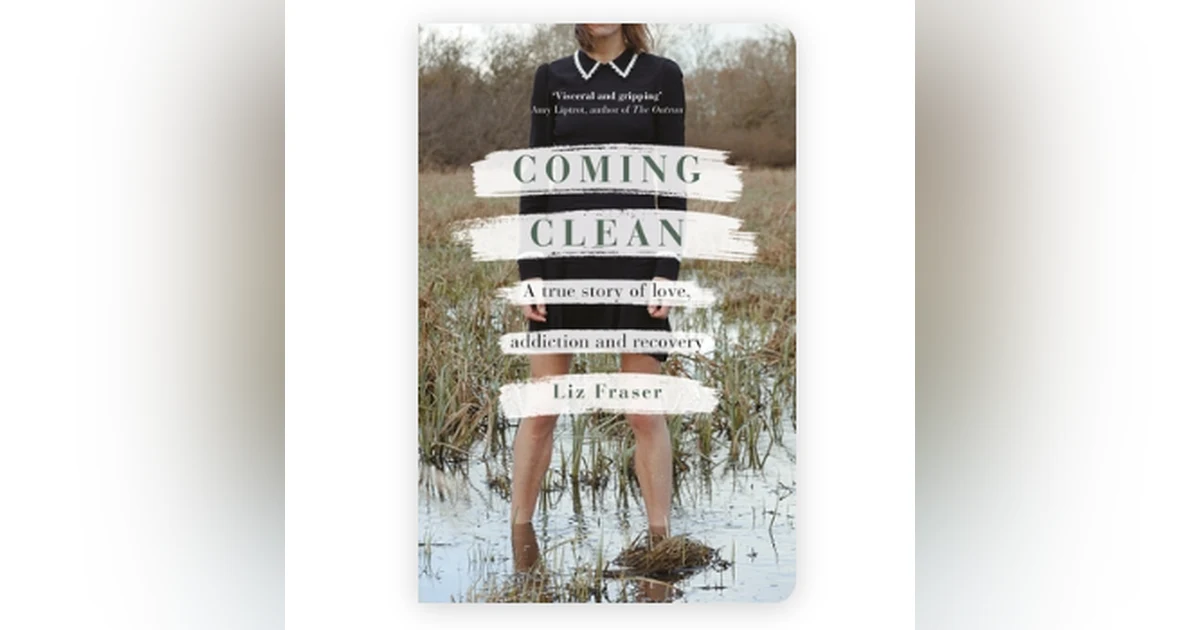
Book Review from Rick’s Library: Coming Clean by Liz Fraser

 Amazon Music
 Apple Podcasts
 Spotify
 iHeartRadio
 Youtube Music
 TuneIn
 Castro
 Audible
 RSS Feed
 Learn how Coming Clean is a powerful reminder that recovery is relational. It’s not just about the person with the substance use issue but about everyone whose life becomes entangled with it.
supporting links
1. Liz Fraser || writer, broadcaster [Website]
2. lizfraser1 [Instagram]
3. Liz Fraser [Twitter]
4. Coming Clean [Amazon]
5. What Doesn’t Kill You [podcast]
Contact That's Life, I Swear
- Visit my website: https://www.thatslifeiswear.com
- Twitter at @RedPhantom
- Bluesky at @rickbarron.bsky.social
- Email us at https://www.thatslifeiswear.com/contact/
Episode Review
- Submit on Apple Podcast
- Submit on That's Life, I Swear website
Other topics?
- Do you have topics of interest you'd like to hear for future podcasts? Please email us
Interviews
- Contact me here https://www.thatslifeiswear.com/contact/, if you wish to be a guest for a interview on a topic of interest
Listen to podcast audios
- Apple https://apple.co/3MAFxhb
- Spotify https://spoti.fi/3xCzww4
- My Website: https://bit.ly/39CE9MB
Other
- Music and/or Sound Effects are cour...
⏱️ 11min read
Imagine packing up your life, driving across Europe, and discovering the person you love is drowning—and so are you. In this book review, Coming Clean, Liz Fraser shares the moments of addiction, heartbreak, and rebuilding what remains.
Ready to begin? Let’s turn the page.
Welcome to That's Life, I Swear. This podcast is about life's happenings in this world that conjure up such words as intriguing, frightening, life-changing, inspiring, and more. I'm Rick Barron, your host.
That said, here's the rest of this story
1-Abstract of the book
Coming Clean: A True Story of Love, Addiction and Recovery is Liz Fraser’s candid and deeply personal true story about loving someone struggling with alcoholism, and finding her way through heartbreak, danger, and ultimately, recovery. The book opens with Fraser’s recognition of her own central truth: “My name is Liz, and I am the partner of an alcoholic.”
Fraser and her partner, Mike, had romantic dreams: they traveled across Europe in a van, ultimately settling in Venice with their baby daughter, leaving behind what they deemed unnecessary in pursuit of a simpler, more meaningful life.
But beneath the romantic idealism, Mike’s mental health and alcohol use were deteriorating. By the summer of 2019, his depression deepened into self-destruction, and his drinking spiraled. Fraser describes being left alone in a foreign country, renovating a house, raising their child, shouldering enormous financial burdens, and facing relentless emotional chaos.
As Mike’s alcoholism escalates, Fraser is caught in a tormenting loop: love and denial, hope and despair, loyalty and self-preservation. Her writing does not shy away from the acts of deception, verbal abuse, and gaslighting she endures. But as Mike inches toward recovery, she also confronts her own trauma, isolation, and sense of responsibility.
The book shifts between diary-like entries, travel reflections, and therapy-style insight. It charts Fraser’s psychological journey—from shock and exhaustion to the heartbreak of watching someone she loves unravel, to finally finding a community, speaking out, and rebuilding.
Coming Clean ultimately serves as both a testament to the devastation of addiction and a beacon of hope: she emphasizes that one does not have to walk such a journey in silence.
2-About the author
Liz Fraser is a well-known UK-based writer and broadcaster whose work spans magazines, radio, TV, and books. She has written for major publications like The Sunday Times, The Guardian, The Telegraph, Grazia, Marie Claire, Red, and Runner’s World. She holds a degree in Experimental Psychology from Cambridge University and brings both a sharp analytical mind and emotional honesty to her writing.
Fraser is a mother of four children and has long spoken publicly about mental health and family life. Over her career, she’s written multiple essays and narrative non-fiction books; Coming Clean stands out as one of her most raw and personal works. She also hosts a podcast called What Doesn’t Kill You, which focuses on resilience and trauma recovery.
Through her work, Fraser has become a powerful voice for people dealing with complex relationships, mental illness, and substance abuse—not just for those suffering, but for their partners and loved ones.
3-What drew my interest in reading this book?
Several things drew me to Coming Clean.
First, I was struck by the unusual vantage point: the story isn’t just about someone addicted to alcohol, but about their partner. There is surprisingly little popular writing about what it’s like to love someone with an addiction, especially to the depth Fraser describes. Her position as a writer and broadcaster, someone who thinks deeply about family and relationships, made me curious to see how she would unpack that experience. Reviewers also highlight how rare it is to read about the partner’s emotional journey.
Second, the geographic and emotional scope hooked me. Fraser and her partner move to Venice with their baby, renovate a house, and try to start fresh — but the romantic backdrop contrasts sharply with the grinding reality of addiction. That comparison felt like powerful narrative terrain.
Third, I was interested in her honesty and vulnerability. From interviews, she has said she wanted to give a voice to others in her situation, to break the silence around being “the other person” in addiction. I was drawn to reading something that doesn’t shy away from self-criticism, shame, and fear. Liz weaves a good story, doesn’t hold her punches, and is honest as hell.
Finally, from a podcast perspective, this book offers rich material to explore themes of love, mental health, trauma, and recovery. These are deeply human issues that many people experience but few publicly discuss with such clarity. Fraser’s story seemed like an opportunity not just to recount a challenging experience but to reflect on what it means to survive, heal, and rebuild.
4-What can we learn from this book? What's the take away?
Coming Clean offers several profound lessons, both for those who have been directly affected by addiction and for anyone interested in resilience, compassion, and recovery.
- Addiction Affects Everyone
Fraser’s memoir makes it painfully clear that addiction doesn’t just impact the person drinking — it seeps into every corner of their partners’ lives: emotionally, financially, psychologically. Her experience shows how love can coexist with chaos, and how people close to someone with addiction often suffer in silence. Through her story, readers understand that supporting recovery is not passive; it usually demands immense strength and boundaries. - Denial and Hope Are Complicated
One of the most difficult insights Fraser shares is how she stayed despite the pain. She describes believing in change repeatedly. This illustrates how hope and denial can be entangled, especially in loving relationships. The takeaway is not to shame those who stay, but to recognize the emotional difficulty of knowing when to hold on and when to let go. - Speaking Up Is Healing
Fraser found solace and power in connecting with others who had lived similar experiences. Her decision to write the book came from wanting to break her silence and help others who feel alone. The act of naming the pain, telling the story, and being heard becomes part of her recovery. Sometimes, revealing even the most brutal truths is the first step in healing. - Recovery Is Not Neat
The memoir does not present sobriety as an instant fix. Even when Mike begins recovery, Fraser’s journey continues — dealing with loss, damage, and shifting identity. She acknowledges that recovery is messy, unpredictable, and not a single moment but a process. This reminds us that healing, for both the person in recovery and their loved ones, comes in phases. - Self-Care Matters
Through the psychological and emotional tolls, Fraser illustrates why taking care of herself was essential. She had to rebuild boundaries, seek support, and find strength in her own voice. One of her central messages: you can’t save someone else if you’re losing yourself. Learning to prioritize her mental health ultimately becomes part of her recovery. - Community and Compassion
Above all, Coming Clean is a testament to empathy. Fraser doesn’t demonize her partner; she writes about him with compassion, even when he’s at his worst. She also shows how people who live close to addiction need understanding and community. For her, recovery is not just about stopping drinking, but about rebuilding trust and making space for honest conversations.
In closing, Coming Clean is a powerful reminder that recovery is relational. It’s not just about the person with the substance use issue but about everyone whose life becomes entangled with it. Fraser’s bravery in sharing her story brings visibility to a hidden struggle, and her message is both sobering and hopeful: you are not alone, healing takes time, and your voice matters.
Well, there you go my friends. That's life, I swear.
For further information regarding the material covered in this episode, I invite you to visit my website, which can be found on Apple Podcasts, for show notes and the episode transcript.
As always, I thank you for the privilege of you listening and your interest.
Be sure to subscribe here or wherever you listen to podcasts so you don't miss an episode.
See you soon.


