
What the Foreclosure Didn't Say: 3 Dead Bodies
Learn how Foreclosure auctions are built on uncertainty. Buyers gamble on homes they've never entered, trusting paperwork more than firsthand knowledge. Supporting links 1. California House Disclosures [AIDE] 2. 5 Things You Need to Know About Real Estate Disclosures [Zillow] 3. Selling a California Home: What Are My Disclosure Obligations? [NOLO] Contact That's Life, I Swear Visit my website: https://www.thatslifeiswear.com Tw...

 Amazon Music

 Apple Podcasts

 Spotify

 iHeartRadio

 Youtube Music

 TuneIn

 Castro

 Audible

 RSS Feed
Key Takeaways
- This story is really about the gap between what a house's paperwork says and what's actually happening behind its walls.
- Foreclosure law protects occupants' right to stay in their homes throughout the process, a sensible safeguard for families in crisis, but it also means courts and bidders can be legally barred from ever looking inside until a sale is final.
Learn how Foreclosure auctions are built on uncertainty. Buyers gamble on homes they've never entered, trusting paperwork more than firsthand knowledge.
Supporting links
1. California House Disclosures [AIDE]
2. 5 Things You Need to Know About Real Estate Disclosures [Zillow]
3. Selling a California Home: What Are My Disclosure Obligations? [NOLO]
Contact That's Life, I Swear
- Visit my website: https://www.thatslifeiswear.com
- Twitter at @RedPhantom
- Bluesky at @rickbarron.bsky.social
- Email us at https://www.thatslifeiswear.com/contact/
Episode Review
- Submit on Apple Podcast
- Submit on That's Life, I Swear website
Other topics?
- Do you have topics of interest you'd like to hear for future podcasts? Please email us
Interviews
- Contact me here https://www.thatslifeiswear.com/contact/, if you wish to be a guest for a interview on a topic of interest
Listen to podcast audios
- Apple https://apple.co/3MAFxhb
- Spotify https://spoti.fi/3xCzww4
- My Website: https://bit.ly/39CE9MB
Other
- Music and/or Sound Effects are cour...
⏱️ 9 min read
Hi everyone, and welcome to my podcast, That’s Life, I Swear. I’m your host, Rick Barron
Foreclosure auctions are built on uncertainty. Buyers gamble on homes they've never entered, trusting paperwork more than firsthand knowledge.
But in Burlington, Connecticut, that uncertainty concealed something no bidder imagined possible.
When the winning buyer finally unlocked the front door, he discovered three bodies—and exposed a troubling blind spot in the foreclosure system that had allowed death to remain hidden in plain sight for months.
Welcome to That's Life, I Swear. This podcast is about life's happenings in this world that conjure up such words as intriguing, frightening, life-changing, inspiring, and more. I'm Rick Barron, your host.
That said, here's the rest of this story :
This is the story of a house nobody walked through. It was site unseen.
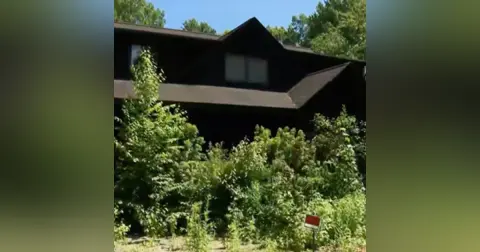
Edward Marchion never crossed the threshold of a house sold because of foreclosure. He never smelled the stale air trapped behind two acres of overgrown hedges, never noticed the "Keep Out" sign nailed to the door, never wondered what waited on the other side of a $525,000 gamble. He simply signed, won, and walked away from the courthouse steps believing he'd bought a bargain. He had no idea he'd bought a tomb.
When Marchion finally let himself into the four-bedroom Cape Cod on a quiet, tree-lined street in Burlington, Connecticut, the silence told him something was wrong before his eyes did. It was an eerie feeling that came over his body.
Dust hung undisturbed in shafts of afternoon light. And then, room by room, he found them: three sets of skeletal remains, hidden inside a house that had been untouched for months while an entire town assumed its owners had simply moved on.
Well, they didn’t.
Connecticut State Police have identified two of the bodies as Sally Anne Cash, who would have been 54 in 2026, and her son Brian, who would have just turned 23. A third body remains unidentified, pending DNA analysis by the state's Chief Medical Examiner.
Nobody yet knows how long they had been there, how they died, or why no one came looking sooner. Police say only that they believe the deaths were isolated — a phrase that offers little comfort to a town suddenly forced to reckon with the idea that death had been sitting quietly behind drawn curtains for the better part of a year, completely unnoticed.
The foreclosure case was unusual from the beginning. The 2,800-square-foot, Cape Cod-style home sat on more than two acres and was worth at least twice the amount remaining on its mortgage.
Why would anyone walk away from that?
The house itself seems to have been waiting for it to be found. Sally Anne Cash and her husband bought the property in 2019. By late 2024, the roughly $3,000 monthly mortgage payments stopped.
The bank filed for foreclosure after getting no response to their complaints. No contact. No explanation. Court records show only silence, the kind that in hindsight looks less like abandonment and more like a warning nobody thought to read.
That silence should have been the first clue. Attorney Christopher Thogmartin, appointed by the court to oversee the sale, visited the property and found it consumed by overgrowth, the kind of neglect that usually signals a house has been empty for a long, long time.
Under normal circumstances, that would have been enough to call a locksmith and let bidders inside for a proper look. But when Thogmartin returned weeks later, someone had nailed up two new signs: "Keep Out." "Owner Occupied." Fresh paint on old warnings. Someone — or something — did not want anyone coming in.
"I had reason to believe someone might be inside," Thogmartin recalled thinking. He had no idea how right he was.
So, the auction went forward the way foreclosure auctions almost always do: blind. Later on, roughly two dozen bidders circled the property on foot, peering through windows they weren't permitted to open, guessing at what lay beyond the walls based on peeling paint and a choked, wild lawn.
Six bids later, the gavel fell in Marchion's favor. He had won a house that, unknown to everyone standing on that lawn, was still holding its dead.
It is an oddity of the foreclosure system that makes moments like this possible. Homeowners and tenants are legally entitled to remain inside their properties throughout the foreclosure process, and courts rarely force an inspection unless a home is unmistakably abandoned.
That legal protection — designed to safeguard families on the brink of losing everything — can also become a kind of accidental shroud, concealing whatever, or whoever, remains behind the door long after payments stop and the paperwork goes quiet.
Real estate professionals who work foreclosure auctions for a living say the unknown is simply part of the business. Kenny Olson, a broker in Foxborough, Massachusetts, who attends several auctions a week, has opened homes to find abandoned animals, drug operations, and, on one memorably unsettling occasion, what he still describes only as "kinky stuff."
But twice in 37 years, Kenny has also opened a door to find a former owner's body waiting inside — proof that Burlington's discovery, however shocking, is not without precedent. Last year, a Texas buyer near Dallas made a similar discovery: a 69-year-old woman, dead of natural causes for roughly nine months, undiscovered until a stranger bought her house and turned the key.
That case prompted local officials to create a welfare-check program for isolated residents and to ask postal workers to flag overflowing mailboxes — small, practical safeguards against the very human tragedy of dying unnoticed. Burlington, a wealthy town of fewer than 10,000 people known more for rolling hills than mystery, may soon face the same reckoning.
For now, the house sits at the center of an open investigation, its closing delayed at Edward Marchion's request until police finish their work. Neighbors like Matt Turner, who has lived in Burlington his whole life, are left turning the same question over and over: how does something like this go unnoticed for so long, in a town where everyone supposedly knows everyone?
"It seemed like the type of thing where somebody would go into the house and at least make sure there are no dead bodies," Turner said.
Nobody did. And that, more than anything else, is what makes this story so unsettling — not just what was found inside that quiet Cape Cod on a hill, but how ordinary the silence looked from the outside the whole time. [900 words]
What can we learn from this story? What's the takeaway?
This story is really about the gap between what a house's paperwork says and what's actually happening behind its walls. Foreclosure law protects occupants' right to stay in their homes throughout the process — a sensible safeguard for families in crisis — but it also means courts and bidders can be legally barred from ever looking inside until a sale is final.
That gap can hide neglect, decay, or in rare and tragic cases, exactly what happened in Burlington. The broader lesson extends past real estate: isolated people can go unnoticed for alarming stretches of time, and it often takes a stranger — a mail carrier, a buyer, a neighbor — to notice the silence.
Towns like Addison, Texas responded with welfare-check programs and mail-monitoring; Burlington may now face the same question of how to catch these situations sooner.
Well, there you go, my friends; that's life, I swear
For further information regarding the material covered in this episode, I invite you to visit my website, which can be found on Apple Podcasts, for show notes and the episode transcript.
As always, I thank you for the privilege of you listening and your interest.
Be sure to subscribe here or wherever you listen to podcasts so you don't miss an episode.
See you soon.


