
From War Zones to Corn Rows
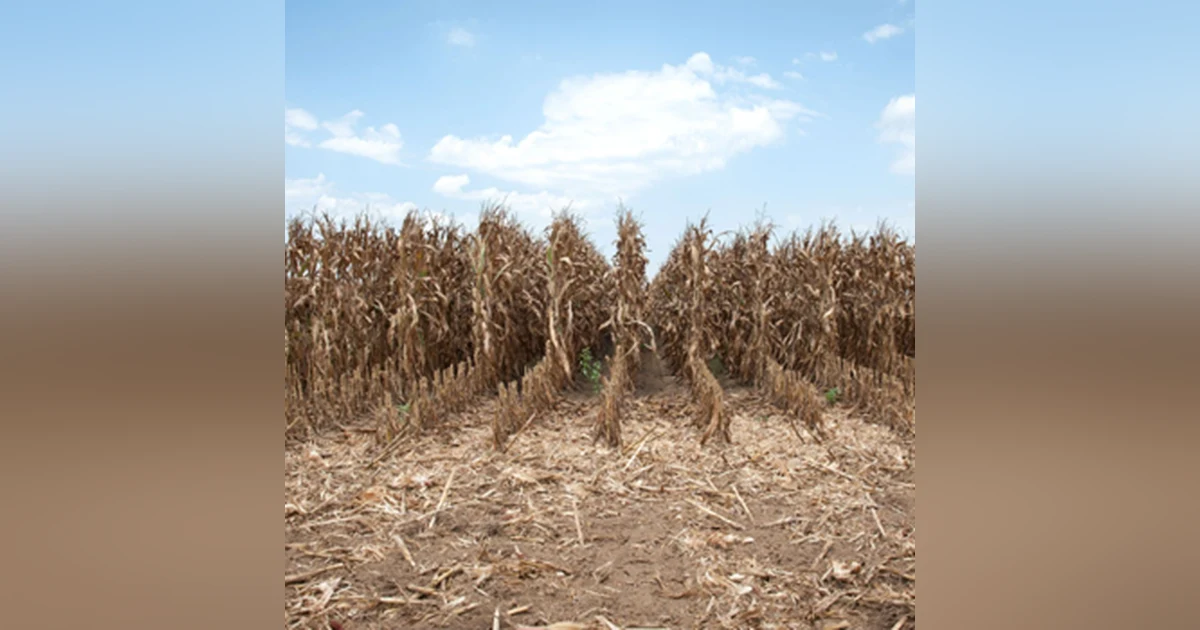
Agriculture is deeply exposed to global shocks, and farmers survive by being flexible, not fixed. Supporting links 1. Trade concerns, crop input costs driving farm revenue worries [Nationwide] 2. U.S. Farmers are in Crisis [Time] 3. Donald Trump is crushing America’s farmers [Th Economist] Contact That's Life, I Swear Visit my website: https://www.thatslifeiswear.com Twitter at @RedPhantom Bluesky at @rickbarron.bsk...

 Amazon Music
 Apple Podcasts
 Spotify
 iHeartRadio
 Youtube Music
 TuneIn
 Castro
 Audible
 RSS Feed
 Agriculture is deeply exposed to global shocks, and farmers survive by being flexible, not fixed.
Supporting links
1. Trade concerns, crop input costs driving farm revenue worries [Nationwide]
2. U.S. Farmers are in Crisis [Time]
3. Donald Trump is crushing America’s farmers [Th Economist]
Contact That's Life, I Swear
- Visit my website: https://www.thatslifeiswear.com
- Twitter at @RedPhantom
- Bluesky at @rickbarron.bsky.social
- Email us at https://www.thatslifeiswear.com/contact/
Episode Review
- Submit on Apple Podcast
- Submit on That's Life, I Swear website
Other topics?
- Do you have topics of interest you'd like to hear for future podcasts? Please email us
Interviews
- Contact me here https://www.thatslifeiswear.com/contact/, if you wish to be a guest for a interview on a topic of interest
Listen to podcast audios
- Apple https://apple.co/3MAFxhb
- Spotify https://spoti.fi/3xCzww4
- My Website: https://bit.ly/39CE9MB
Other
- Music and/or Sound Effects are cour...
⏱️ 15 min read
Hi everyone, and welcome to my podcast, That’s Life, I Swear. I’m your host, Rick Barron
The war is thousands of miles away—but on farms across America, it’s already in the soil.
From Iowa to North Dakota to Kentucky, farmers are making high-stakes decisions before a single seed hits the ground—planting fewer acres of corn, cutting back on fertilizer, and betting on soybeans and cattle just to stay afloat. The reason isn’t weather or tradition. It’s the rising cost of everything it takes to grow food, driven in part by conflict in the Middle East.
This season, the biggest gamble on the farm isn’t what will grow. It’s whether the math will still work.
Welcome to That's Life, I Swear. This podcast is about life's happenings in this world that conjure up such words as intriguing, frightening, life-changing, inspiring, and more. I'm Rick Barron your host.
That said, here's the rest of this story
Across the American heartland, a quiet recalibration is underway—one that stretches from the windswept plains of North Dakota to the rolling farmland of Kentucky. It is not driven by innovation or abundance, but by necessity. Farmers who manage millions of acres are rethinking nearly every decision they once considered routine:
1. What to plant
2. How much fertilizer to use
3. How many seeds to plant
4. and ultimately, how to survive another season defined by rising costs and shrinking margins.
This year’s planting season does not carry the usual sense of renewal. Instead, it arrives with unease. Global conflict, particularly in the Middle East, has disrupted fertilizer markets, sending prices sharply upward. At the same time, diesel fuel—the lifeblood of tractors, combines, and irrigation systems—has become more expensive, further tightening already strained budgets. For many farmers, these overlapping pressures have turned what was once a calculated business into something closer to a gamble.
The adjustments being made are subtle on the surface but profound in impact. One of the clearest shifts is happening in crop selection. Corn, long the dominant crop in American agriculture, is losing ground to soybeans. The reason is simple: soybeans are cheaper to grow.
Unlike corn, which demands heavy applications of nitrogen fertilizer to reach full productivity, soybeans have a biological advantage. As legumes, they can draw nitrogen directly from the atmosphere and deposit it into the soil. This natural process significantly reduces the need for expensive inputs, making soybeans an attractive option in a year when every dollar counts. According to early projections from the U.S. Department of Agriculture, American farmers plan to plant 84.7 million acres of soybeans in 2026, marking a notable increase from the previous year.
Yet this shift is not a sign of optimism—it is a reflection of constraint. Corn remains the nation’s most widely planted crop, but it is increasingly unprofitable. Estimates suggest that corn growers could lose nearly $150 per acre this season. That reality has forced difficult decisions across the agricultural community, as farmers weigh tradition and expertise against the harsh arithmetic of rising costs.
Surveys reveal the depth of the strain. Nearly all farmers—94 percent—report that their financial situation has either worsened or remained stagnant compared to last year. The sense of pressure is widespread and unmistakable. Even federal officials acknowledge it. “It’s clear our farmers are feeling the pinch,” Agriculture Secretary Brooke Rollins remarked recently, summarizing a sentiment that echoes across rural America.
Behind these statistics are individual stories—farmers confronting uncertainty with a mix of pragmatism, resilience, and, at times, reluctant compromise.
On a 1,000-acre farm in eastern Iowa, just west of the Mississippi River, Dave Walton is making adjustments he never expected to consider. In a typical year, Walton divides his land evenly between corn and soybeans, maintaining a balance that reflects both market conditions and soil health. This year, that balance has shifted.
Instead of a 50-50 split, Walton plans to dedicate 60 percent of his acreage to soybeans. That change alone represents an additional 100 acres of soybeans, a move driven almost entirely by the rising cost of fertilizer. For Walton, the math is unavoidable. Corn requires significant nitrogen input, and with fertilizer prices surging, those costs have become difficult to justify.
The timing of this crisis has made matters worse. Farmers usually lock in their purchases—seeds, fertilizer, pesticides—months in advance, often in the fall, to secure better prices. But this year, uncertainty led many, including Walton, to wait. There was hope that prices might stabilize or decline. Instead, they climbed.
Now, Walton estimates that his overall farming costs have increased by roughly 20 percent compared to last year. Faced with these higher expenses, he is cutting back wherever possible. One of his most significant decisions is to reduce fertilizer use dramatically—applying it to only half the acres he typically would.
It is not a decision made lightly. Fertilizer plays a crucial role in crop yields, and reducing its use introduces risk. Walton knows that lower input could mean lower output. Still, he is betting on favorable weather conditions and residual nutrients left in the soil from previous seasons to carry him through.
There is a sense of calculated hope in his approach, but also a recognition that much is out of his control. “We’re probably fertilizing half the acres we normally would,” he admits. “We’re betting fertilizer prices will go back to normal next year.”
At the same time, Walton is looking beyond crops for stability. He plans to expand his cattle herd from 80 to 100 head, drawn by the rare bright spot in agriculture: soaring beef prices. Livestock, at least for now, offers a path to profitability that row crops do not. It is a diversification strategy born not of ambition, but of necessity.
Further north, in northeastern North Dakota, Greg Amundson faces a similar set of challenges on a much larger scale. His 3,000-acre operation requires significant investment each season, and the margins have always been tight. In recent years, both corn and soybeans have managed to break even, but little more.
This year, even that modest balance is under threat. The cost to plant an acre of corn has risen from about $480 to $540, driven largely by fertilizer expenses. Soybeans, while cheaper to plant at around $325 per acre, do not offer enough return to generate meaningful profit.
For Greg Amundson, farming has become an exercise in maintaining equilibrium. “We have $1.2 million going out and $1.2 million coming in,” he explains, describing a business model that leaves little room for error.
Unlike some farmers, Amundson is reluctant to alter his crop rotation significantly. Instead, he is choosing to cut back on inputs. He plans to apply less fertilizer rather than pay inflated prices, accepting the potential impact on yields. Additionally, he is reducing the number of seeds planted per acre—a move made possible, he hopes, by advances in seed technology that promise higher productivity even at lower densities.
Still, these adjustments carry uncertainty. Weather remains an unpredictable factor, and a wet spring could introduce new costs, such as fungicide treatments. Each decision feels like a trade-off, with no guarantee of success.
Amundson’s situation reflects a broader reality in agriculture today: the margin for error is shrinking. Farmers are being forced to operate with less—less fertilizer, fewer seeds, tighter budgets—while facing risks that remain as large as ever.
In Kentucky, Timmy Jones is navigating similar pressures on a smaller but no less challenging scale. His 400-acre farm in Marion County has traditionally been split between corn and soybeans, a straightforward approach that balanced cost and return. This year, however, that balance is shifting.
Jones plans to divert about 20 percent of his corn acreage into hay production, supporting a growing cattle herd that has become one of his few reliable sources of income. Another 15 percent of his land will transition to soybeans, reducing his reliance on expensive fertilizer.
The numbers behind these decisions are stark. The price of urea, a commonly used nitrogen fertilizer, has surged dramatically—from about $520 per ton in January to more than $850 in just a few months. For Jones, that increase is not just a statistic; it is a direct hit to his bottom line.
“We’re getting stuck with high prices now,” he says, capturing the frustration shared by many in his position.
To manage costs, Jones is even considering returning unused corn seed to his supplier—a step that underscores how fluid and uncertain this season has become. Plans that were once set in stone are now subject to change, dictated by market forces beyond any farmer’s control.
Taken together, these stories illustrate a broader shift in American agriculture—one defined not by growth or expansion, but by adaptation under pressure. Farmers are making difficult choices, trimming costs, and rethinking long-standing practices in an effort to stay afloat.
Yet beneath these adjustments lies a deeper tension. Farming has always been an industry shaped by uncertainty—weather, markets, and global events have always played a role. But the current convergence of factors feels different. Costs are rising across multiple fronts, while returns remain uncertain or, in some cases, negative.
For many farmers, the question is no longer how to maximize profit, but how to minimize loss.
And still, the work continues. Fields are prepared, seeds are planted, and machinery rolls forward, powered by both diesel fuel and determination. There is no pause button in agriculture, no way to wait out unfavorable conditions. Each season demands action, regardless of the risks.
In this environment, resilience becomes both a necessity and a burden. Farmers must adapt quickly, make difficult decisions, and hope that the variables they cannot control—weather patterns, global markets, geopolitical events—will align in their favor.
But hope, as many know, is not a strategy. It is simply what remains when certainty disappears.
As the 2026 planting season unfolds, America’s farmers are doing what they have always done: adjusting, enduring, and pressing forward. Yet the weight they carry feels heavier this year, shaped by forces far beyond their fields. Their struggle is not always visible, but it is deeply felt—in every acre replanted, every input reduced, and every calculation made with the understanding that even the best decisions may not be enough.
What can we learn from this story? What's the takeaway?
The story cuts against a common assumption—that farmers simply “plant what they’ve always planted.” In reality, they’re constantly recalibrating like portfolio managers under pressure. What you’re seeing here is adaptation in real time.
The big takeaway: agriculture is deeply exposed to global shocks, and farmers survive by being flexible, not fixed.
When conflict in the Middle East drives up fertilizer and fuel costs, it doesn’t stay “over there.” It reshapes decisions across millions of acres in the U.S. almost immediately. That ripple effect is the first lesson: global events quietly but powerfully determine what ends up on your dinner table.
A second takeaway is about cost structure driving behavior. Corn is more profitable in good times—but it’s input-heavy, especially with nitrogen fertilizer. Soybeans, by contrast, are less dependent on fertilizer because they naturally fix nitrogen from the air. So when fertilizer prices spike, farmers don’t stubbornly stick with corn—they pivot. It’s not ideology; it’s math.
Third, there’s a clear theme of risk management under uncertainty. None of these farmers are making confident bets—they’re making calculated gambles:
- Cutting fertilizer and hoping soil nutrients carry over
- Planting fewer seeds and relying on better seed technology
- Expanding into cattle because it’s one of the few profitable areas
This is not optimization—it’s survival. They’re trading certainty for cost control.
Well, there you go, my friends; that's life, I swear
For further information regarding the material covered in this episode, I invite you to visit my website, which can be found on Apple Podcasts, for show notes and the episode transcript.
As always, I thank you for the privilege of you listening and your interest.
Be sure to subscribe here or wherever you listen to podcasts so you don't miss an episode.
See you soon.


