
Built Last Year, Gone in a Minute

 Amazon Music
 Apple Podcasts
 Spotify
 iHeartRadio
 Youtube Music
 TuneIn
 Castro
 Audible
 RSS Feed
 We cannot control where the storm goes, but we can control how prepared we are, how we respond to a crisis, and how we help one another rebuild afterward.
Supporting links
1. Tornado [Wikipedia]
2. Fujita scale [Wikipedia]
3. Understanding Tornado Insurance Basics [Hippo]
4. Tornadoes in the United States [Wikipedia]
5. Inside a Tornado [Curious Beat]
6. Tornado Life Cycle [National Weather Service]
Contact That's Life, I Swear
- Visit my website: https://www.thatslifeiswear.com
- Twitter at @RedPhantom
- Bluesky at @rickbarron.bsky.social
- Email us at https://www.thatslifeiswear.com/contact/
Episode Review
- Submit on Apple Podcast
- Submit on That's Life, I Swear website
Other topics?
- Do you have topics of interest you'd like to hear for future podcasts? Please email us
Interviews
- Contact me here https://www.thatslifeiswear.com/contact/, if you wish to be a guest for a interview on a topic of interest
Listen to podcast audios
- Apple https://apple.co/3MAFxhb
- Spotify https://spoti.fi/3xCzww4
- My Website: https://bit.ly/39CE9MB
Other
- Music and/or Sound Effects are cour...
⏱️ 11 min read
Hi everyone, and welcome to my podcast, That’s Life, I Swear. I’m your host, Rick Barron
So, think about this. What can you do in a minute? Let’s see, check your calendar for the day, do 20 jumping jacks, record a quick voice memo, light a candle, or refill your water bottle.
Well, hold that thought.
For Christina Parden, her ‘one minute’ was about to change her life. Let me explain.
Her groceries had barely made it into the kitchen. Milk sat in the refrigerator for the first time in Christina's brand-new Nebraska home, and dinner ingredients waited on the counter for a quiet Sunday evening with her daughter.
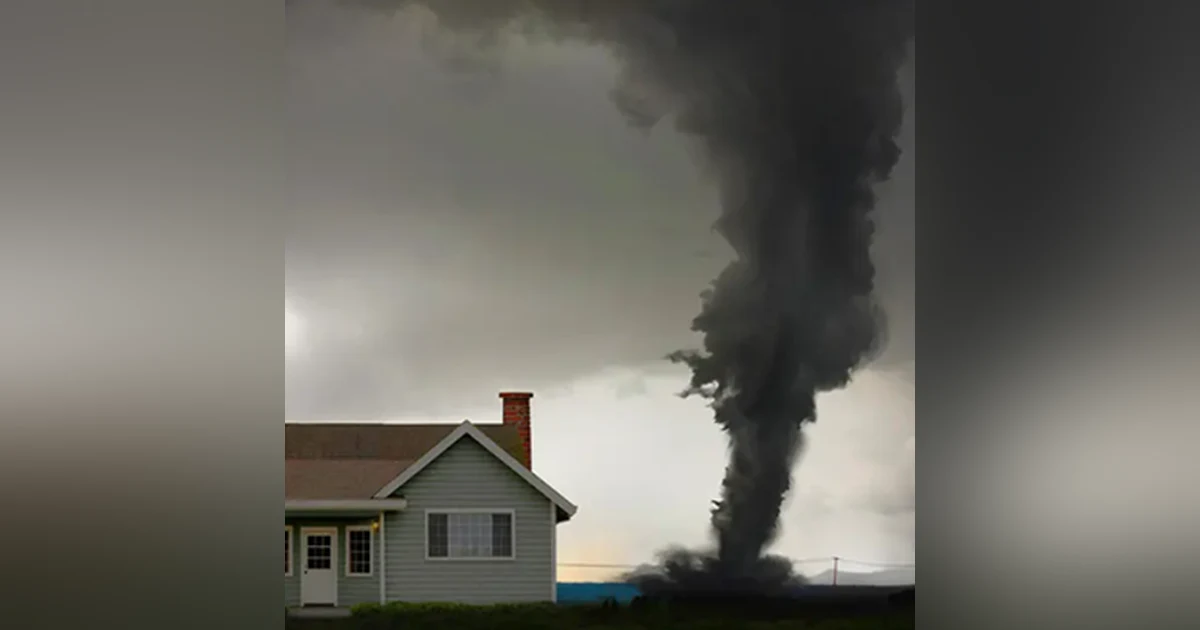
Then, in less than a minute, a tornado erased everything above the basement — turning a fresh start on a rural dirt road into a pile of splintered wood, twisted metal, and unanswered questions about what comes next.
Welcome to That's Life, I Swear. This podcast is about life's happenings in this world that conjure up such words as intriguing, frightening, life-changing, inspiring, and more. I'm Rick Barron, your host.
That said, here's the rest of this story :
The potatoes were still in the bag.
Christina Parden had set them on the counter maybe twenty minutes before everything she owned ceased to exist. She remembers that detail with strange clarity — the plastic grocery bag, slightly damp from the cooler section of the store, sitting right next to the dish soap and the bottle of Clorox spray she'd bought to clean a bathroom that no longer had walls.
That's the thing about sixty seconds. It doesn't announce itself. It doesn't give you the courtesy of feeling significant while it's happening. One minute you are a woman putting groceries away in a brand-new house you saved years to build, and the next minute you are standing in a basement open to the sky, holding two small dogs, listening to the silence that follows total destruction.
Christina had spent most of her forty-eight years in Nebraska. She knew about storms. She'd grown up watching the western sky turn the color of a bruise and learned early what that greenish tint in the clouds meant. Tornado season in late May is just a fact of life out here in Nebraska, like the way the fields smell after rain, or the way the wind never really stops. You get alerts on your phone constantly. You learn to measure concern carefully, not too much, not too little.
That Sunday had been a good day. A full day. She and her daughter Graci, twenty years old and just weeks away from her June wedding, had gone to church in the morning and spent the afternoon shopping — picking up supplies for the centerpieces Graci was planning to make that evening, along with everything they needed for a simple supper of baked potatoes with sour cream and bacon. The kind of meal that feels like home. The kind of evening that feels like an ordinary gift, it actually is.
The house itself was still new enough to feel like a dream. Christina had purchased a three-acre lot in a small rural subdivision called Dirt Road, a quiet cluster of four properties carved out among the cornfields and farmland north of Grand Island in Howard County.
She had spent close to $350,000 building the house — the antique chandelier she'd fallen in love with, the double front doors she had absolutely splurged on, and didn't regret for one second. Every detail had been chosen deliberately. Every room still smelled faintly of fresh paint and new beginnings.
She was unloading groceries when the ordinary afternoon began to shift.
It's almost impossible to explain how quickly the world can change texture. One moment the day is warm and slightly overcast, neighbors leaning on porch railings and squinting at the western horizon the way Midwesterners have always done. The next moment the atmosphere itself seems to tighten, like something vast is drawing a breath.
Christina's phone had been chirping with alerts — not unusual, barely worth pausing for. But she drifted toward the kitchen window that faced west, drawn by something she couldn't quite name, some animal instinct that doesn't have a word in English but that anyone who has ever lived near open plains understands deeply.
What she saw stopped her cold.
A dark wall was moving toward her. Not drifting, not approaching — moving, with a kind of violent intention that defied the countryside setting around it. There was green embedded in it, the particular green that means hail, that means rotation, that means run like hell. She could see debris already airborne — what looked like a metal pole turning lazily in the air, chunks of wood moving sideways as if gravity had simply resigned. Across the small rise nearby, her neighbor's house appeared to shudder on its foundation, trembling like something alive and frightened, beginning to rise.
Then her ears popped. That sudden, pressurized equalization you feel in an airplane climbing hard, the sensation that always means the air around you is doing something it shouldn't.
She screamed. That's the honest word for it — not called out, not warned, but screamed — and grabbed Samantha and Finn, her two small dogs, tucking them under her arms and taking the basement stairs in what felt like a single movement. She was shouting for Graci, who was in the shower, and Graci heard something in her mother's voice that required no interpretation. She stepped out, wrapped herself in a towel, and ran.
They made it downstairs and waited, and waited, and then…
Christina folded herself over her daughter on the basement floor. They were crying. They were praying. They were asking out loud, in voices they could barely hear over the shrieking of metal somewhere above their heads, to please be kept safe, to please let this pass, to please let them have another minute, another hour, another ordinary Tuesday.
And then, as suddenly as it had arrived, the roaring stopped. It was a silence that pierced the air.
Light fell into the basement from above — not the light of ceiling fixtures, but actual daylight, open sky, the kind of brightness that has no business being in a basement. The tornado had been on the ground for eleven minutes total, crossing just over six miles of Howard County.
It had touched down with winds of one hundred and sixty miles per hour. It had found the small subdivision called Dirt Road and removed it from the earth with surgical, indifferent completeness. All four houses, each built within the previous year, were gone. I mean, there was nothing left to indicate that four homes had been there a few minutes ago.
The potatoes were gone. The antique chandelier was gone. The double front doors Christina had loved were somewhere in a cornfield or weren't anywhere at all.
Everyone survived. Every family in Dirt Road had gone to their basements, and every one of them walked out.
That fact deserves to sit alone for a moment, because it is genuinely extraordinary. One minute of contact with that storm — sixty seconds of wind moving faster than most people will ever travel in a car — and four homes were reduced to foundation slabs. The people inside them lived because they listened, because they moved, because they decided in the compressed and terrifying space of a few seconds.
By Tuesday, Christina was already trying to reckon with what comes next. The insurance company hasn’t called back yet. No big surprise there. The lot was still hers. The land beneath all that destruction remained exactly as she had purchased it.
"Today I just feel a lot more grief," she said quietly. "Like, what do I do next?"
Her daughter is still getting married in June. The centerpieces still need to be made.
It took but one minute to take the house. It didn't take anything else.
What can we learn from this story? What's the takeaway?
One of the deepest takeaways from this story is how quickly ordinary life can change. One moment, Christina Parden and her daughter were unpacking groceries and planning dinner; minutes later, their new home was gone. The story is a reminder that disaster rarely announces itself in dramatic fashion at first — it often arrives in the middle of routine life.
But the story is not only about destruction. It is also about preparedness, instinct, and survival. The family survived because they acted quickly and took the storm warnings seriously. In tornado country, experience can sometimes create complacency, but this story underscores why warnings matter and why emergency planning saves lives.
Another lesson is the fragile nature of what we build — materially and emotionally. Christina had invested money, hope, and personal dreams in that house, from the chandelier to the wedding preparations happening inside it. The tornado destroyed the structure, but not the people, relationships, or resilience underneath it.
There’s also a powerful human truth running through the story: communities recover because people do. Emergency responders arrived within minutes. Neighbors survived together. And even in grief, Christina was already talking about rebuilding. That reflects a resilience common in disaster zones across the Midwest and elsewhere — people mourn deeply, but they keep moving forward.
The broader takeaway may be this:
We cannot control where the storm goes, but we can control how prepared we are, how we respond to a crisis, and how we help one another rebuild afterward.
Well, there you go, my friends; that's life, I swear
For further information regarding the material covered in this episode, I invite you to visit my website, which can be found on Apple Podcasts, for show notes and the episode transcript.
As always, I thank you for the privilege of you listening and your interest.
Be sure to subscribe here or wherever you listen to podcasts so you don't miss an episode.
See you soon.


