
Vanishing Lifelines: The Hidden Cost of America’s War on Rural Health Care
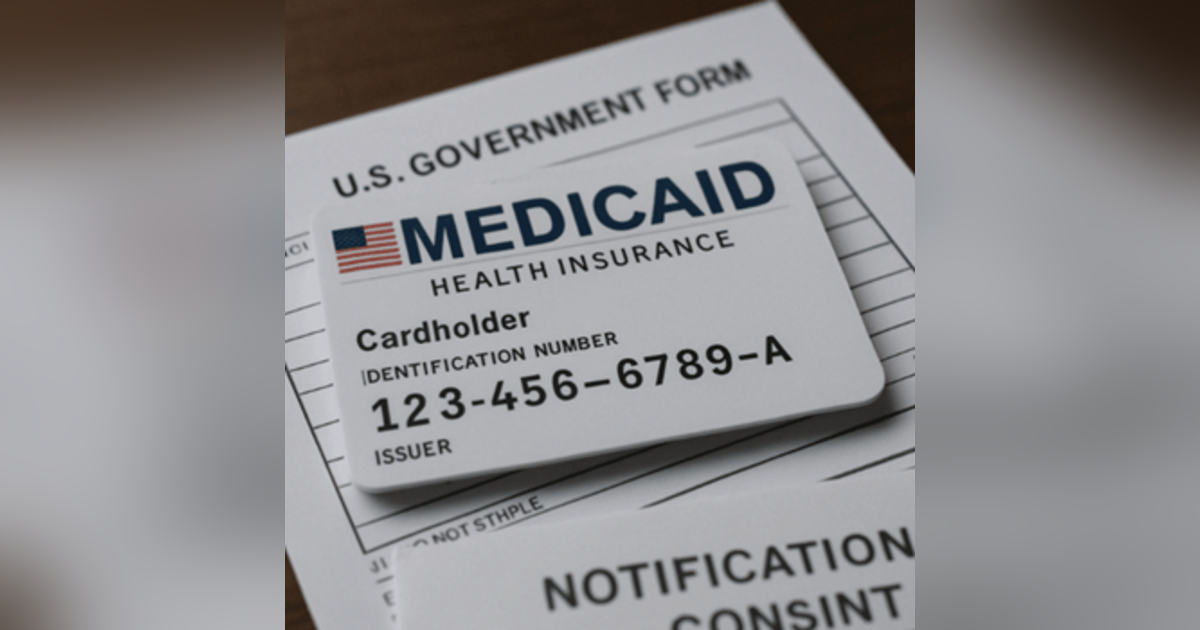







Learn how Health care access shouldn’t depend on your ZIP code, your income, or the politics of your state. This story is a reminder that when ideology drives health policy, it’s everyday people — not politicians — who pay the price.
Supporting links
1. 759 hospitals at risk of closure, state by state [Becker’s Hospital Review]
2. Rural US town outraged as only hospital forced to shut [Guardian]
3. First responders detail the deadly cost of rural hospital closures [ABC NEWS]
4. The Crisis in Rural Health Care [Saving Rural Hospitals]
Contact That's Life, I Swear
- Visit my website: https://www.thatslifeiswear.com
- Twitter at @RedPhantom
- Bluesky at @rickbarron.bsky.social
- Email us at https://www.thatslifeiswear.com/contact/
Episode Review
- Submit on Apple Podcast
- Submit on That's Life, I Swear website
Other topics?
- Do you have topics of interest you'd like to hear for future podcasts? Please email us
Interviews
- Contact me here https://www.thatslifeiswear.com/contact/, if you wish to be a guest for a interview on a topic of interest
Listen to podcast audios
- Apple https://apple.co/3MAFxhb
- Spotify https://spoti.fi/3xCzww4
- My Website: https://bit.ly/39CE9MB
Other
- Music ...
⏱️ 15 min read
There’s a freeze on Medicaid Payments that is forcing cuts to rural health care.
The clinics in rural areas of the United States represent lifelines for thousands of people who live hours away from major hospitals. When funding disappears, it’s not just “services” that vanish — it’s the only place some patients have to turn for cancer screenings, diabetes care, or even basic physicals. This story underscores how precarious rural health care is, and how one policy change can ripple through entire communities.
The Trump administration has cut off funding for certain providers around the country whose offerings include abortion. Patients in Maine are among those who will feel the fallout. This is their story.
Welcome to That's Life, I Swear. This podcast is about life's happenings in this world that conjure up such words as intriguing, frightening, life-changing, inspiring, and more. I'm Rick Barron, your host.
That said, here's the rest of this story.
When Rural Maine’s Lifeline Falters: The Human Cost of a Political Battle Over Health Care
On the far edge of Maine’s rocky coastline, in a small clinic surrounded by pine forests and quiet harbors, a woman received devastating news. The cancer she had once fought so bravely had returned. In another place, the delay for such a diagnosis might have stretched for months. But at this modest family planning clinic, the staff acted swiftly, performing a biopsy that confirmed what the patient had feared most. Within a week, the woman was sitting in a specialist’s office in Portland — a life potentially saved by a timely diagnosis.
“This is what lifesaving care looks like,” as one nurse at the family clinic said, knowing that her ability to provide such care was in danger.
The clinic is part of Maine Family Planning, a small but vital network of 19 health centers scattered across some of the most rural corners of the state. For thousands of Mainers, these clinics are not just one option among many — they are the only place where consistent medical help is within reach. Yet the very existence of these clinics is now under serious threat.
A Political Decision With Human Consequences
In July of 2025, the federal government — under directives from the Trump administration — stopped Medicaid payments to reproductive health care providers that both offered abortion services and received substantial Medicaid funding. The decision, framed by supporters as a matter of “protecting taxpayer dollars,” placed an enormous strain on the fragile infrastructure of rural health care.
Although the policy was widely viewed as targeting Planned Parenthood, two smaller organizations — Maine Family Planning and Health Imperatives of Massachusetts — were collateral casualties. Together, they served tens of thousands of patients who relied on Medicaid for basic medical needs.
For Maine Family Planning, the financial blow has been devastating. The organization has been losing roughly $165,000 a month since the funding freeze took effect. Its attempt to challenge the decision in court failed, and the network now faces an impossible choice: to continue running at a loss or to begin shutting down essential services.
On October 31, 2025, the Maine Family Planning was forced to discontinue its primary care services — a decision that rippled across entire communities already struggling with physician shortages and hospital closures.
“This is not a theoretical loss,” said Olivia Pennington, the group’s advocacy director. “We’re talking about people who will have to drive hours for a doctor’s visit or go without treatment entirely. We’re talking about preventable illnesses that will go untreated.”
The Backbone of Rural Health
Maine’s vast geography, with its long stretches of forest and farmland punctuated by small towns, means that access to health care is always fragile. For many residents, the local family planning clinic doubled as their only consistent source of medical attention. Patients came in for birth control or cancer screenings. Still, they ended up receiving far more: treatment for diabetes, blood pressure management, asthma medication refills, and even basic physical exams required for work.
About 30,000 patients across Maine depend directly or indirectly on this network. More than two-thirds of them qualified for free or reduced-cost care based on income, and Medicaid covered half. These were not luxuries! They were the most fundamental of services for people who live paycheck to paycheck, often too far from the nearest hospital to make emergency care a realistic option.
Yet because abortion services were provided at a handful of locations, the entire organization became a political target. The irony was not lost on the health care workers: federal law already disallowed Medicaid from paying for abortions in all cases. The Medicaid funding in question has always gone toward non-abortion services — the kind that keep people alive and out of emergency rooms.
The Domino Effect of a Single Decision
If the funding cutoff becomes permanent, and many clinic leaders fear that it will, the effects will be catastrophic. Maine Family Planning’s president, George Hill, said that the network’s budget relied heavily on a combination of Medicaid and Title X funding, which together made up about 40 percent of its income. State aid covered only about 10 percent. Without replacement funds, he warns, clinic closures will follow.
Unlike wealthier states or large urban centers, Maine does not have a deep donor base to lean on. Let’s be real, they’re not New York. Maine doesn’t have millions in private philanthropy waiting in the wings to keep them afloat.
The threat goes far beyond Maine. Planned Parenthood warned that 200 of its 600 clinics nationwide could be forced to shut down due to similar funding losses. The closures would disproportionately hit low-income and rural communities where medical deserts are already forming.
In some Republican-led states, the effects are already visible. Planned Parenthood shut down its last remaining clinics in Louisiana and several in Ohio, citing both state-level abortion bans and the federal funding cuts. Meanwhile, Democratic-led states like California, Oregon, Washington, and Hawaii are racing to fill the funding gap through emergency appropriations and private donations.
Washington’s governor pledged $11 million in state support to offset the federal cuts, but even that measure faces uncertainty amid budget shortfalls. States are not going to see federal attacks lessen; if anything, they’re going to intensify.
The Fragile Web of Care in Rural Maine
In Maine, the divide between urban and rural health access is stark. In the southern cities, hospital systems and private clinics offer a range of specialized care. But travel north toward Aroostook County, where the forests stretch endlessly toward Canada, and the medical landscape changes dramatically. There, Maine Family Planning’s small outposts are often the only healthcare available for dozens of miles in any direction.
In Maine, access to health care varies widely between the state’s more populous southern cities and its vast northern reaches. Rural residents have poorer health overall and are less likely to have insurance, research has found.
Two of the clinics most affected by the Medicaid cutoff are in Aroostook County, one of the most medically underserved regions in New England. The area covers 6,800 square miles — roughly the size of Rhode Island and Connecticut combined — but lacks even basic access to primary care in many towns.
In Ellsworth, clinic staff work closely with the local homeless shelter to provide mental health counseling and medical care for unhoused residents. In Thomaston, a medical team was preparing to launch a substance-use treatment program, a lifeline for residents battling addiction in a region plagued by opioid misuse. That initiative is now indefinitely on hold.
The people in Maine are simple. They are hauling lobster traps, fixing roofs, caring for other people’s summer homes. They are working hard — and yet they’re being punished by a political decision that had nothing to do with them.
A Van, a River, and the Last Mile of Care. What I mean?
Picture this, if you will. A van parked near a bridge overlooking the Kennebec River. It looks normal from the outside, but inside is a miniature medical lab — the newest addition to the Maine Family Planning network.
The mobile clinic, staffed by a nurse practitioner and EMT, became a traveling lifeline for people who have fallen through the cracks. The EMT remembered spending an hour and a half persuading a man with a badly infected leg to accept treatment, slowly earning his trust. Over the past year, the team’s steady presence began to stabilize the health of their patients — many of whom live in tents or shelters nearby. When the program started, it felt like every case was in constant crisis mode. Today, the number of emergencies is lower because consistent care is being provided. That’s what makes a difference — consistency.”
Even this small victory is precarious. The health care system in Maine is so fragile, and this is just the state of Maine. Think of the others.
Systemic Strain and Growing Fear
Maine’s overall health care system is already under intense stress. Early in 2025, Northern Light Health, one of the state’s largest providers, shut down a hospital in Waterville and a clinic in Bangor, eliminating 300 jobs. A bitter contract dispute in 2026, with one of the state’s major insurers, now threatens to push 30,000 patients out of the network. For residents in remote towns, it could mean starting over with entirely new doctors — if they can find any.
For people like Ashley Smith, who works in the restaurant industry and pays for her care out of pocket, Maine Family Planning has been a lifeline. The clinic treated her for a rare hormonal condition and provided the physical exam she needed to start a new job. “They gave me peace of mind,” she said. “I don’t know where I’d be without them.”
At the Ellsworth clinic, longtime nurse Bethany Jarvis has spent decades caring for the same families, which are sometimes three generations of them. Now she faces the agonizing task of preparing her patients for what comes next. “I haven’t started those conversations yet,” she admitted quietly. “It’s too painful. These people trust us. They’ve built their health around this place.”
The Takeaway: A Warning for the Future
What’s happening in Maine is not an isolated incident. It’s a warning about the fragility of rural health care systems that depend on small, mission-driven clinics to fill enormous gaps. When political decisions ripple through this delicate network, the consequences land squarely on the shoulders of working families, the elderly, and the medically vulnerable.
Behind every statistic is a person like the woman on the coast whose cancer was caught in time — because there was a clinic nearby that cared enough, and could afford, to see her. What happens when that clinic is gone?
For now, Maine Family Planning continues to fight — in courtrooms, in the Statehouse, and in the hearts of the patients who depend on it. But unless funding is restored or new lifelines appear, the state’s most rural communities may soon find themselves facing a grim reality: that in the battle over reproductive rights, their access to basic health care itself has become collateral damage.
The story I’ve shared with you is just for the state of Maine.
As of this recording, 759 rural U.S. hospitals are at risk of closure due to financial problems, with about 40% of those hospitals at immediate risk.
The counts are drawn from the Center for Healthcare Quality and Payment Reform’s most recent analysis, based on hospitals’ latest cost reports submitted to CMS and verified as current through August 2025. The study identifies two distinct tiers of rural hospital vulnerability: those at risk of closure and those facing an immediate risk of closure. Stay tuned.
What can we learn from this story? What's the takeaway?
Health care access shouldn’t depend on your ZIP code, your income, or the politics of your state. This story is a reminder that when ideology drives health policy, it’s everyday people, not politicians, who pay the price.
Well, there you go, my friends; that's life, I swear
For further information regarding the material covered in this episode, I invite you to visit my website, which can be found on Apple Podcasts, for show notes and the episode transcript.
As always, I thank you for the privilege of you listening and your interest.
Be sure to subscribe here or wherever you listen to podcasts so you don't miss an episode.
See you soon.