
Trapped in Student Debt: How Gen X Lost the Promise of College
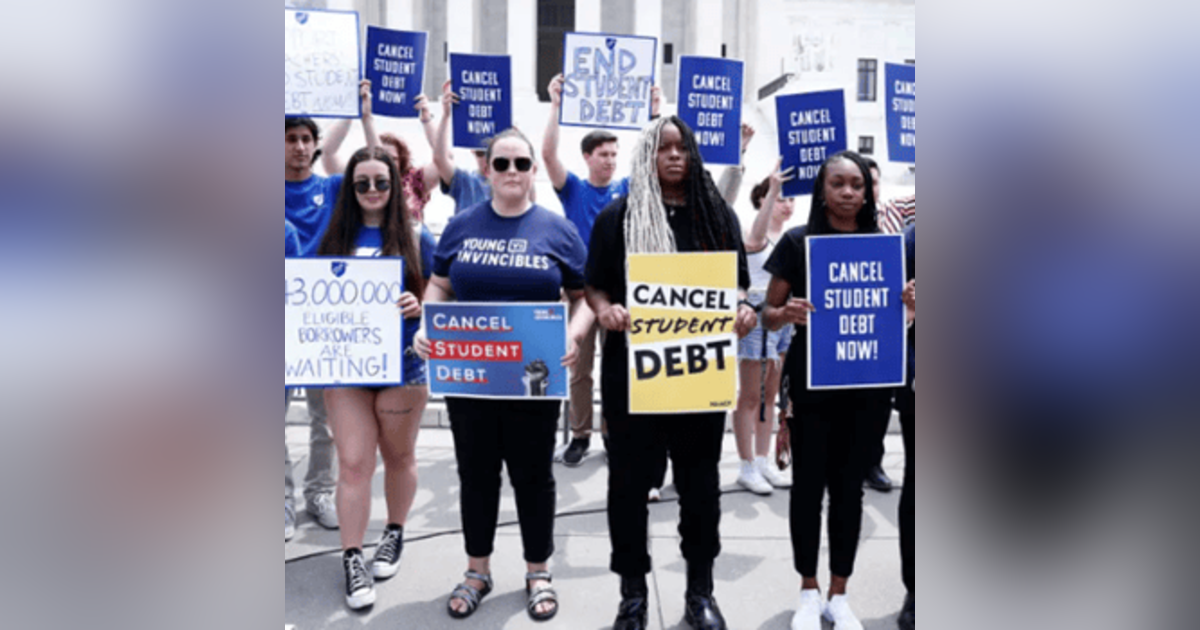


Learn the sobering lesson about the long-term consequences of student debt, especially for Generation X—a generation that bought into the promise of higher education as the surest path to success, only to find that promise transformed into a financial trap.
Supporting links
1. Workers Without Access to Retirement Benefits Struggle to Build Wealth [PEW]
2. Student Loan Debt by Generation: 2025 Debt Levels by Age [Student Loan Planner]
3. Higher Education Act of 1965 [Wikipedia]
4. Student-Loan Debt Is Strangling Gen X [The Journal Podcast]
5. Student Loan Debt by Generation [Student Loan Planner]
6. How Gen X Compares Financially to Other Generations [FINRA]
7. Which Generation Has the Most Debt? It's Not Millennials [MONEY]
8. The Debt Albatross Around Gen X’s Neck [Next Avenue]
Contact That's Life, I Swear
- Visit my website: https://www.thatslifeiswear.com
- Twitter at @RedPhantom
- Bluesky at @rickbarron.bsky.social
- Email us at https://www.thatslifeiswear.com/contact/
Episode Review
- Submit on Apple Podcast
- Submit on That's Life, I Swear website
Other topics?
- Do you have topics of interest you'd like to hear for future podcasts? Please email us
Interviews
- Contact me here https://www.thatslifeiswear.com/contact/, if you wish to be a guest for a interview on a topic of interest
Listen to podcast audios
- Apple https://apple.co/3MAFxhb
- Spotify https://spoti.fi/3xCzww4
- My Website: https://bit.ly/39CE9MB
Other
- Music ...
⏱️ 18 min read
Imagine paying for your college degree… for the rest of your life. For millions of Gen X Americans, that nightmare is real—decades of payments, ballooning interest, and a retirement slipping out of reach.
Free-flowing student loans promised upward mobility. Instead, they left the ‘forgotten generation’ with a mountain of debt and regret.
Today, I’ll talk about how the promise of education became a lifetime of debt—and what it means for the future of college in America.
Welcome to That's Life, I Swear. This podcast is about life's happenings in this world that conjure up such words as intriguing, frightening, life-changing, inspiring, and more. I'm Rick Barron your host.
That said, here's the rest of this story:
They were promised a future. Instead, they got a lifetime of debt.
They did everything right. That's what haunts Gen Xers the most today.
They listened when they were told college was non-negotiable. They happily signed on the dotted line when they were promised that a college education would be their ladder up. They believed the system existed to help them, not destroy them. And now, if you're a Gen Xer, you're watching your debt multiply while your dreams die.
So, as you know, a Gen Xer is born between 1965 and 1980
For many Gen Xers, student loans have been their longest relationship. We’re talking 20 to 30 years and still counting. Some students borrowed anywhere from $80,000 to $100,000 for graduate school. Fast forward to today, some of these Gen Xers owe $300,000 or more!
You read that correctly. Some of these Gen Xers are in their mid-50s, staring at a balance that quadrupled despite paying back the entire original amount.
Why, may you ask? Every penny they paid vanished into interest, which keeps compounding, punishing, and denying them things like a home-equity loan. For some, their retirement savings sit at a pathetic $200,000—barely a fraction of what financial advisors say they should have by now.
This is the Gen X generation. All they did was believe in the system, and look what happened.
Some say the Gen X generation was the perfect target.
Over six million Gen Xers between 50 and 61 are carrying student debt into what should be their retirement years. The average balance is nearly $48,000, the highest of any age group. Today, Gen Xers are telling their children and grandchildren to run from higher education like it's on fire, because they learned the hard way that "college for all" was a scam designed to extract wealth from the middle class for decades.
Gen Xers were born at precisely the wrong time. The oldest among them arrived in 1965; the same year the modern student loan system was created. Their parents, the boomers, graduated with minimal debt, if any. Their kids—the Millennials, [born between 1981 to 1996]—at least grew up hearing warnings about the debt trap. But Gen Xers? They walked right into it, because for one brief, shining moment, everyone told them student loans were the key to everything they wanted.
Back then, college was a must. You were either going to college or sweeping floors.
So, they went. They borrowed. They trusted.
And now they're drowning.
The Promise Was a Lie
Decades later, the promise is an albatross for many, thanks in part to years of student-loan policy changes, conflicting information from servicers, and system backlogs. And it’s becoming more worrisome as the instability of America’s student-loan apparatus comes into sharp focus.
The Education Department under President Trump has threatened to confiscate wages from millions of borrowers if they haven’t made payments since the pandemic, when the Biden administration extended the pause on student-debt repayment. A new tax-and-spending law, signed in July of 2025, restricts some borrowing and repayment plans, marking a retreat from federal student lending.
“Repaying federal student loans is not a political football—it’s the law,” an Education Department spokesperson said. “The Trump Administration is providing borrowers with clarity and consistency.” Citing record-high loan defaults and delinquencies, the department announced in early September 2025 a new initiative to educate borrowers about the benefits and risks of federal student-loan borrowing.
It has been a particularly jarring shift from the Biden era, when monthly loan payments for low-income borrowers were reduced and a sweeping student-loan forgiveness plan briefly raised hopes for a reprieve before it was blocked.
Ten to fifteen years ago, it was widely accepted that student loans were a good form of debt.
Yeah. A lot has changed for Gen Xers. They’re older, poorer, and frankly, pissed off. The debt hasn't changed. It just keeps growing.
They Sold You Hope and Delivered Chains
The federal student loan balance has exploded from $516 billion to $1.66 trillion in less than twenty years. For millions, the loans helped them earn degrees that lifted their earnings potential, making the debt burden more than worth it. But for others, the loan debt kept them buried alive, and the ground still keeps shifting beneath their feet.
When President Johnson signed the Higher Education Act in 1965, the idea sounded noble: money shouldn't stop anyone from getting an education. But college costs skyrocketed while loan access expanded, and Gen Exers got caught in the machinery.
Perhaps you were a first-generation college student whose parents couldn't help financially. You got a full scholarship for undergrads, but beyond that, graduate school was another step on the educational ladder to the promised land. Yep, you guessed it, it required another loan.
Gen Xers were told about what a graduate degree would allow them to achieve. They weren't thinking about the money because they were told not to worry about the money.
That money is free-flowing for a Gen X student. Federal loans went from being a tool for Lower-income families have to find a standard way to pay for higher education.
If you were a student during the 1980s and 90s, you saw everything change. A 1981 law extended loans to graduate and professional students. The government introduced what was called direct lending. They added unsubsidized loans, which means interest piles up even while you're in school. You qualified for higher borrowing limits and maxed them out, because why wouldn't you? This was your future. This was the system helping you.
Now, what is direct lending? Let me provide an analogy here:
Imagine you need money to expand your small business. Typically, you’d go to a bank, fill out forms, and hope they approve your loan.
But with direct lending, it’s like a group of wealthy neighbors — say, a teacher’s pension fund, a university endowment, and a big insurance company — decide to skip the bank and lend you the money themselves.
They each chip in some cash, agree on the terms directly with you, and you pay them back with interest.
They get a steady income (your loan payments), and you get money faster and with more flexibility — no bank in the middle.
Interest: The Punishment That Never Ends
There have been reports of former students being told by their loan service to pause federal payments and focus on getting their business running. Reasonable advice for someone who wanted to be an entrepreneur, as that was the thing back then. Turns out that sound advice was rather lame. Some people went five to ten years cycling through forbearance, deferment, and sporadic payments. Sure, make a payment when things are good, but pause when money gets tight. The balance never moved. Interest kept compounding.
Companies such as Navient—later banned by federal regulators for misleading borrowers, processing payments incorrectly, and steering people into forbearance when they qualified for better options. Navient paid $120 million in fines but admitted no wrongdoing.
You were always on an income-driven plan. You paid what they told you to pay. It was never enough to beat the interest. You accepted that you'd die with this debt.
In 2006, the federal government once again expanded borrowing, allowing graduate and professional students to take out loans up to the total cost of attendance, including tuition, room and board, and books.
As more adults returned to school in search of better futures, classrooms began to fill with students who didn’t fit the traditional mold — older workers, parents, and full-time employees chasing the promise of a degree.
Among them was Christopher Fausone, who went back to college in his 30s, hoping education could open new doors. He earned a bachelor’s in applied behavior analysis, thinking it would help him support his son with autism during homeschooling. Years later, he pushed even further, completing an M.B.A. in the belief that it would finally lead to the higher-paying career he’d dreamed about.
But the opportunities he imagined never arrived. The jobs that matched his degree all seemed to demand experience he didn’t yet have, leaving him shut out despite his credentials.
Now 49, Fausone lives in Marysville, Washington, working in commercial pest control. His salary is around $80,000, but the shadow of his education lingers — $130,000 in student loans he still hasn’t managed to escape.
During the pandemic, when federal payments were paused, he shifted his focus to other debts — his car loan, his bills, anything he could eliminate. But when the pause ended and the monthly statements started again, he couldn’t bring himself to resume payments. His credit score tanked more than 200 points, and a message soon followed: he was six months behind. Desperate for a breather, he placed the loans into a short forbearance.
Another financial term definition, short forbearance: A short forbearance is a temporary loan agreement that allows you to pause or reduce payments for a brief period, typically up to 12 months, due to financial hardship. It's a short-term solution to help you avoid delinquency during a difficult time. Still, it's not a long-term fix because interest usually continues to accrue on the loan balance during the forbearance period. When the forbearance ends, you will be required to resume making payments and repay any missed or reduced amounts.
Christopher is far from alone. Millions of borrowers are now falling behind, and for those in their 50s and beyond, the weight is often heavier. According to federal data, older borrowers are among the most likely to slip into serious delinquency, their balances chasing them into what should have been their retirement years.
Fausone calls his graduate degree one of his biggest regrets. He has no retirement savings, no realistic path to homeownership, and now, after his credit hit bottom, even refinancing his car is out of reach.
With forbearance ending again, he fears what comes next — that his monthly payments will become impossible, and the government will start taking a slice of his paycheck. By law, up to 15% can be garnished from borrowers in default.
It’s a future he can already see: endless work, no relief, no finish line.
“I’ll be working until the day I die,” he says, resigned.
Crushed from Every Direction
For many Gen Exers, student loans aren't their only debt. You're juggling credit cards, car payments, and personal loans. Some are caring for their aging parents and supporting adult children who can't afford to move out. Student loan payments fall to the bottom of their priority list because other creditors are more aggressive.
The Gen X generation carries the highest median non-mortgage debt: $26,207, according to a LendingTree analysis of people in the largest 100 metro areas. The highest credit card debt: $9,557, according to Experian. They’re being squeezed from every angle.
Let me share one more story here.
Every month, Courtney Greenstein watches her paycheck disappear almost as soon as it arrives. Credit card bills, a personal loan, rent — they all demand their share. On top of it, she’s still helping her two grown children, who live under the same roof. There’s never much left once everyone else has been paid.
At 50, Greenstein works full-time as a senior employee-benefits analyst, earning a six-figure salary that somehow feels like it buys less security. Her $40,000 in student loans remain untouched — a debt that has lingered since she finally earned her business degree in 2018, decades after her first attempt at college.
She once dreamed of becoming a pharmacist, enrolling at the University of Connecticut as a young woman. But after just a year, she realized the path wasn’t for her — and by then, her grades had collapsed. It would be years before she tried again, this time balancing coursework with raising children on her own.
To keep everything afloat, she borrowed as much as she could.
“Every loan I took wasn’t just for tuition,” she said quietly. “It was survival — it paid for food, for my kids, for a life I was trying to build.”
Now, even with a $123,000 salary, she can’t seem to get ahead. Retirement savings are almost nonexistent. The thought of wage garnishment — the government taking a slice of her paycheck for missed payments — fills her with dread.
If that happens, she admits, she’ll need a second job to cover the basics.
Despite all her effort and years of working and studying, the math of her life no longer adds up.
For many Gen Xers, the idea of building a comfortable retirement has always felt just out of reach. They began their working lives in a shifting landscape — as steady pensions disappeared, replaced by 401(k)s they alone had to fund and manage. Then came recessions, layoffs, and a corporate world reshaped by globalization and automation. Each new decade brought a new kind of uncertainty. And for those burdened with student loans, the climb toward stability only grew steeper.
A 2023 study from the National Institute on Retirement Security confirmed what many already felt: yes, a college degree brought higher paychecks and better access to employer-sponsored retirement plans — but for those who borrowed to get that degree, the numbers told a different story. Their net worth lagged behind their debt-free peers, their futures weighed down by the very loans meant to secure them.
The federal government has tried to throw lifelines — policy tweaks, forgiveness programs, and new repayment options. Under the Biden administration, long-term borrowers and those misled by servicers were told help was coming. Some even qualified for one-time forgiveness after decades of payments.
Worse yet, when people consolidated their loans to meet the requirements for forgiveness, the unpaid interest was added to their principal, thereby ballooning their balance.
For his generation, debt was supposed to be a bridge to something better. Instead, it became a trap that never loosens — a lifetime of payments for a promise that never quite materialized.
What can we learn from this story? What's the takeaway?
This is not just a story about money—it’s a story about trust. Gen X trusted the system. They pursued education to better their lives and their families. But instead of a springboard, they got a lifelong anchor.
If the goal of education is empowerment, the student loan system has failed. Reform isn’t just financial—it’s moral.
Well, there you go, my friends; that's life, I swear
For further information regarding the material covered in this episode, I invite you to visit my website, which can be found on Apple Podcasts, for show notes and the episode transcript.
As always, I thank you for the privilege of you listening and your interest.
Be sure to subscribe here or wherever you listen to podcasts so you don't miss an episode.
See you soon.