
The Next Flood May Not Be Kind: New York’s Climate Reckoning
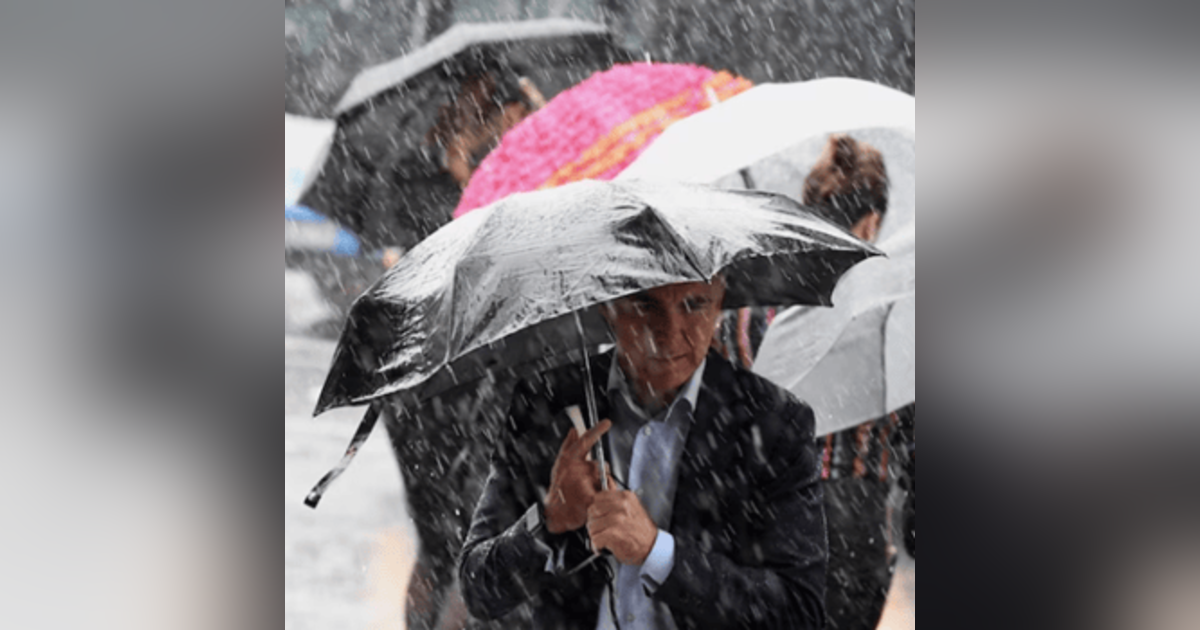







Learn how flooding used to be framed as a coastal problem or a once-in-a-generation disaster. This story shows that’s outdated thinking.
Supporting links
1. New York City’s Next Superstorm [YouTube]
2. Superstorm Sandy/New York [YouTube]
3. What Do Hurricane Categories Actually Mean? [Time]
Climate Resiliency [NYC Planning]
Contact That's Life, I Swear
- Visit my website: https://www.thatslifeiswear.com
- Twitter at @RedPhantom
- Bluesky at @rickbarron.bsky.social
- Email us at https://www.thatslifeiswear.com/contact/
Episode Review
- Submit on Apple Podcast
- Submit on That's Life, I Swear website
Other topics?
- Do you have topics of interest you'd like to hear for future podcasts? Please email us
Interviews
- Contact me here https://www.thatslifeiswear.com/contact/, if you wish to be a guest for a interview on a topic of interest
Listen to podcast audios
- Apple https://apple.co/3MAFxhb
- Spotify https://spoti.fi/3xCzww4
- My Website: https://bit.ly/39CE9MB
Other
- Music ...
⏱️ 16 min read
New York City looks unshakable — steel, glass, and skyline rising from the water like it owns the future.
But this city is built on islands… over buried streams… on land that used to be wetlands. Water has always been here.
Now, there’s a problem: the water is rising.
From the ocean. From the sky. From sewers that can’t keep up. Flooding isn’t just a coastal threat anymore — it’s hitting neighborhoods that were never told they were in danger, filling homes and subways in minutes.
The next disaster might not be a monster hurricane. It could be a weaker storm arriving at the wrong moment — high tide, extreme rain, nowhere for the water to go.
And when surge and sky collide, a quarter of the city could be underwater.
This isn’t about a distant future.
It’s about whether New York City can adapt… before the water makes the decision for it.
Welcome to That's Life, I Swear. This podcast is about life's happenings in this world that conjure up such words as intriguing, frightening, life-changing, inspiring, and more. I'm Rick Barron, your host.
That said, here's the rest of this story
The city appears solid from a distance, a dense lattice of steel and stone rising from the water. But beneath that confidence lies fragility. New York is not one landmass but a constellation of islands, stitched together by bridges and tunnels and hemmed in by rivers that breathe with the tides. Water defines it, shapes it, and — increasingly — threatens it.
On most days, the harbor’s slow rise and fall is barely noticed. The rivers glide beneath ferries and highways, obedient to the moon’s pull. But when a powerful storm arrives from the ocean, the balance collapses. A hurricane does not simply lash the city with wind; it lifts the sea and drives it inland, forcing saltwater into places it was never meant to go. Streets become channels. Basements become traps. What once seemed permanent begins to float.
New York learned this lesson during Superstorm Sandy, on October 29, 2012, when water slammed through neighborhoods and subway tunnels, shutting down the city and killing dozens. That storm was once described as rare, an abnormality. But the climate that produced it is no longer unusual. As oceans warm and expand, and as ice sheets melt far from the city’s shores, sea levels rise inch by inch, year by year. Each inch raises the baseline from which storm surge begins.
When hurricanes arrive now, they bring more water with them — from below and above. Storm surge rides higher, pushing farther inland and flowing upstream through tidal rivers. The city’s geography, once an asset for trade and growth, becomes a liability. Channels that carried commerce now carry floodwater deep into the urban core.
Yet the ocean is no longer the only menace. A warming atmosphere holds more moisture, releasing it in intense bursts that overwhelm drainage systems designed for a different century. These downpours strike suddenly, often miles from the coast, turning ordinary rainstorms into deadly events. In recent years, people have drowned in basement apartments and submerged cars — not during hurricanes, but during cloudbursts that arrived with little warning.
New York’s sewer system, much of it laid down over a hundred years ago, cannot keep up. Water backs up into homes and subway tunnels, spilling into neighborhoods that were never included in evacuation maps. In one October storm of 2025, two people were killed by flash floods in areas that residents believed were safe.
Sandy demonstrated the destructive power of storm surge. The remnants of Hurricane Ida that took place in 2021, revealed how lethal extreme rainfall could be. Scientists now warn that the next major storm may combine both threats — the ocean rising from below while the sky collapses from above.
What is key here is that it does not need to be a catastrophic hurricane. Experts say even a relatively weak storm could devastate New York City under the right conditions. A Category 1 hurricane, drifting northwest from the Atlantic and slowing as it approaches land, could unload sheets of rain while pushing seawater ashore. That combination — rain falling faster than drains can carry it away, while storm surge blocks the water’s exit — creates the most dangerous scenario of all.
Climate researchers have modeled exactly that possibility. In one projection, a modest hurricane follows a path similar to Sandy’s, making landfall near New Jersey during high tide. Rain falls at an extreme rate — four inches an hour — while the ocean piles up against the coast. The results are alarming.
In this scenario, storm surge alone reaches sixteen feet, surpassing Sandy’s by two feet. When combined with relentless rainfall, floodwater spreads across a quarter of the city. Entire neighborhoods disappear beneath brown, fast-moving water.
Today, scientists say, such a storm might be expected once in a century. But climate change is rapidly compressing those odds. What was once extraordinary is becoming increasingly plausible — even likely.
The flooding would not respect borough lines or iconic skylines. In Lower Manhattan, water would spill into Chinatown, SoHo, and the financial district, filling streets where global capital moves each day. In Midtown, water would pool over long-buried streams, flooding the theater district and surrounding Madison Square Garden. In the Bronx, floodwater would wrap around Yankee Stadium, rising more than ten feet in places.
Highways skirting Manhattan would be overtaken by water, transforming into impassable channels. Farther north, a low stretch of the Cross Bronx Expressway could vanish beneath tens of feet of floodwater, cutting off one of the city’s most vital transportation arteries.
Still, Manhattan and the Bronx would fare better than the boroughs that face the open ocean. Brooklyn, Queens, and Staten Island — with miles of flat terrain, low elevation, and aging drainage — would absorb the majority of the damage. More than 80 percent of the flooding would strike these communities.
The financial toll would be staggering. Property losses could exceed $20 billion, eclipsing the devastation of Sandy. And unlike previous storms, this damage would not be confined to coastal blocks. It would reach deep inland, into neighborhoods that never imagined themselves at risk.
City leaders are currently working on how to respond. Plans for flood barriers, raised shorelines, and expanded drainage systems are under discussion. But these projects are enormous, expensive, and slow-moving. Many remain years away from approval. Urban planners warn that piecemeal solutions will not be enough. What is needed, they argue, is a mobilization on the scale of a national emergency — an effort as urgent and comprehensive as wartime construction. Without it, the city is running out of time.
The danger is not evenly distributed. Certain neighborhoods, shaped by ancient geology and modern development, are especially vulnerable.
In Brooklyn, a long ridge known as the terminal moraine cuts through the borough. Formed when a glacier halted its advance thousands of years ago, the ridge rises above surrounding land, offering scenic views and a measure of protection. But where the land slopes downward, water rushes and gathers.
In Bedford-Stuyvesant, just north of the ridge, floodwater could rise more than eleven feet. Tree-lined streets of brownstones — some worth millions — would become reservoirs. Ground-floor apartments would fill rapidly, trapping residents and destroying homes. South of the ridge, in East Flatbush, nearly eight feet of water could inundate the streets.
Residents there have seen versions of this future already. During Hurricane Ida, rainwater poured in from every direction, overwhelming drains and transforming roads into rivers. In a more recent storm, a basement apartment filled so quickly that a man drowned before help could reach him.
One longtime resident, who has lived in the neighborhood for half a century, remembers wading through chest-deep water to escape her home, carrying her pets as rain continued to fall. Mold crept through the walls afterward. Repairs required taking out a massive loan. She had no flood insurance — her home was not in a designated flood zone.
When another storm arrived months later, it destroyed the replacement boiler, leaving her without heat. She was still grieving her neighbor’s death when she realized she might not be able to afford repairs again. She felt helpless, overwhelmed, and exposed — caught between rising water and rising debt.
In eastern Queens, the risk is even more extreme. Neighborhoods like Kissena Park sit in natural depressions — bowls where water funnels and has nowhere to escape. Built atop former wetlands and buried streams, the area also lies above a major sewer artery responsible for carrying a significant share of the borough’s stormwater.
When heavy rain hits, that system becomes a bottleneck. Water backs up violently into streets and homes. During Ida, this deadly convergence killed three people.
One resident returning from moving his car to higher ground found his street transformed into a torrent. He tried to swim, but the current dragged him under. Only by grabbing a fence did he survive.
Fixing the problem would require massive sewer expansion, a project estimated to cost billions and take decades. A natural drainage project designed to store excess water temporarily is in development, but it will not be completed for another ten years. Until then, the neighborhood remains dangerously exposed.
Farther south, near Kennedy Airport, entire communities sit atop former salt marshes. In places like Hamilton Beach, the water table is so high that flooding occurs even without rain. When tides rise, water pushes up through storm drains and spills into streets.
Flooding there has become routine. Residents roll up their pants and move their cars on clear evenings. Garbage bags float past front doors. Sump pumps groan continuously.
I swear, is this any way to live?
Local leaders warn that even storms hundreds of miles offshore can trigger flooding now. A direct hit, they say, could send water climbing toward second-floor porches.
Nearly one million New Yorkers live on land that was once wetland. The water, experts note, is reclaiming its space.
The city is investing billions to expand drainage in southeast Queens, constructing enormous pipes beneath highways to carry stormwater to Jamaica Bay. Officials acknowledge that if the wetlands had never been filled, such infrastructure would not be necessary. Even once complete — decades from now — the system will address only part of the problem.
Transportation infrastructure is also at risk. Many subway yards were built on former marshland. Nearly half are vulnerable to storm surge. Some now have flood walls and improved drainage, but others remain exposed, waiting for upgrades that may not arrive before the next major storm.
Along the coast, fear lingers. In Coney Island, floodwater could rise six feet, washing out roads and isolating the peninsula. Sandy devastated the area, opening sinkholes beneath homes. Residents who rebuilt with their life savings now worry they will not survive another storm.
New development continues, even as evacuation routes remain limited. Elevated buildings may protect themselves, but residents fear they will push water into older homes nearby. The sewer system, already strained, may not cope with the added load.
On Staten Island, modest bungalows damaged during Sandy have been repaired and relisted at low prices. Buyers without mortgages are not required to carry flood insurance. Some could lose everything in the next hurricane.
Real estate agents say denial remains common. People continue to buy in flood zones, drawn by affordability and hope. They assume disaster will not strike twice.
The models say otherwise.
Floodwater depths visualized in this article are based on a flood model produced by First Street, a group based in Brooklyn that models climate risks. For this article, First Street estimated floodwater levels across New York City if a Category 1 hurricane would hit the city on a path similar to Superstorm Sandy’s, combined with rainfall at a rate of four inches per hour.
The model shows streets erased, neighborhoods submerged, systems overwhelmed. They show what happens when a modest hurricane arrives under the wrong conditions — high tide, extreme rainfall, rising seas.
The storm has not arrived yet. But the city is already living in its shadow.
What can we learn from this story? What's the takeaway?
The future of cities isn’t just about stronger storms. It’s about whether systems, policies, and human choices can evolve fast enough to keep pace.
We are no longer preparing for a possible disaster — we are already living in the early stages of a permanent shift, and the places built for yesterday are paying the price first.
Flooding used to be framed as a coastal problem or a once-in-a-generation disaster. The story shows that’s outdated thinking.
Well, there you go, my friends; that's life, I swear
For further information regarding the material covered in this episode, I invite you to visit my website, which can be found on Apple Podcasts, for show notes and the episode transcript.
As always, I thank you for the privilege of you listening and your interest.
Be sure to subscribe here or wherever you listen to podcasts so you don't miss an episode.
See you soon.