
The Great Escape: Why Three Nuns Fought to Return Home


The story of the Austrian nuns reminds us that aging with dignity isn’t about rules or institutions, it’s about home, belonging, and the power of community to stand by us when it matters most.
Supporting links
1. nonnen_goldenstein [Instagram]
2. Defiant nuns flee care home for their abandoned convent [BBC]
3. Goldenstein Castle Abbey [Histouring]
4. Christina Wirtenberger [Alexandra Stoddard]
Contact That's Life, I Swear
- Visit my website: https://www.thatslifeiswear.com
- Twitter at @RedPhantom
- Bluesky at @rickbarron.bsky.social
- Email us at https://www.thatslifeiswear.com/contact/
Episode Review
- Submit on Apple Podcast
- Submit on That's Life, I Swear website
Other topics?
- Do you have topics of interest you'd like to hear for future podcasts? Please email us
Interviews
- Contact me here https://www.thatslifeiswear.com/contact/, if you wish to be a guest for a interview on a topic of interest
Listen to podcast audios
- Apple https://apple.co/3MAFxhb
- Spotify https://spoti.fi/3xCzww4
- My Website: https://bit.ly/39CE9MB
Other
- Music ...
⏱️ 15 min read
After 60 years of teaching, praying, and living side by side, three aging nuns were told to leave the only home they’d ever known. But instead of fading quietly into a retirement home, they found the courage—and the community—to fight for their dignity."
Was it an escape, a protest, or simply a desperate bid for dignity in old age? Today, we uncover the extraordinary true story of the Austrian nuns who broke back into their convent… and into the headlines around the world."
INTRO: Welcome to That's Life, I Swear. This podcast is about life's happenings in this world that conjure up such words as intriguing, frightening, life-changing, inspiring, and more. I'm Rick Barron, your host.
That said, here's the rest of this story:
Prologue: In Which We Meet Our Unlikely Heroes
In the rolling hills outside Salzburg, where Mozart once composed music and 'The Sound of Music' tourists still frolic, a recent event occurred that was so extraordinary it left church officials scratching their heads and reporters camping in abbey courtyards with the dedication of medieval pilgrims seeking indulgences.

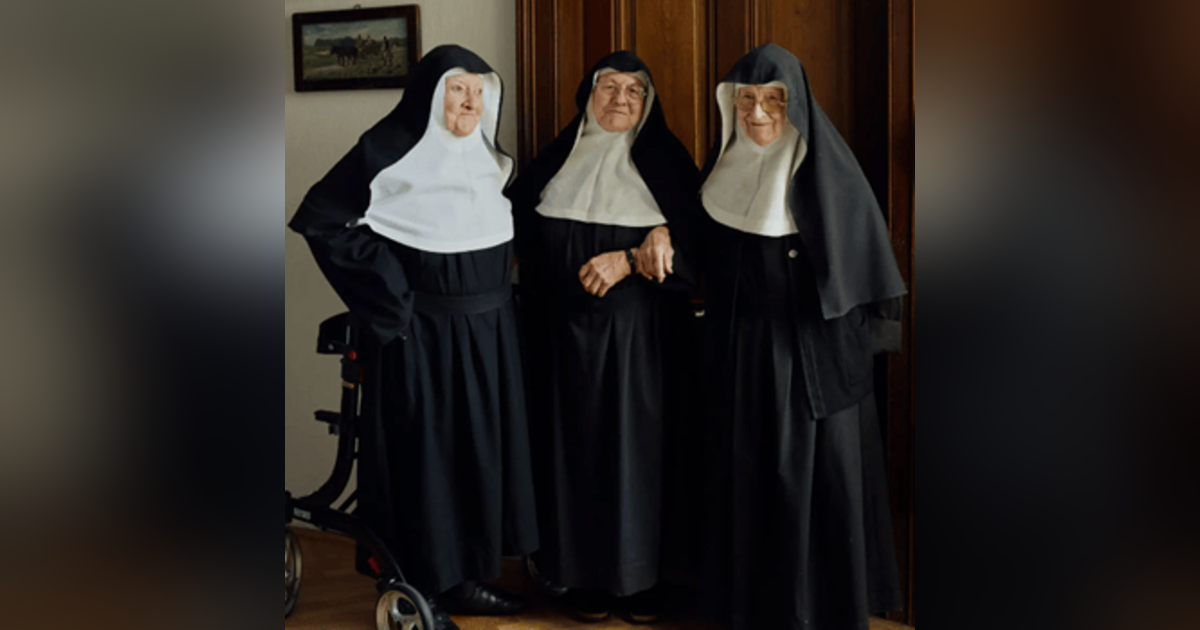
From left to right: Sister Rita, Sister Regina, and Sister Bernadette. Courtesy of BBC
Our story concerns three remarkable women of the cloth who, having dedicated their lives to serving the Almighty, found themselves engaged in what can only be described as the holiest heist since the Crusades. Sister Rita, Sister Regina, and Sister Bernadette—names they wear with the dignity of battle-tested generals—had spent decades in peaceful contemplation at Goldenstein Castle Abbey. But peace, as any seasoned cleric will tell you, is often the prelude to the most divine of disturbances.
At this moment, these same hands were trembling slightly—not from age alone, but from something else entirely. Defiance. Hope. The quiet courage it takes to say, simply: This is where I belong.
They'd watched their community shrink over the decades. One by one, sisters passed away or transferred elsewhere. The trio adapted, their bond deepening as their numbers dwindled. They became more than housemates; they became each other's family, finding completeness in their trinity.
Then came the letter that would change everything.
The Gathering Storm
The trouble began with a change in management. Enter one Markus Grasl, an abbot armed with canonical law and what he undoubtedly considered the best of intentions.
The document quickly cut to the chase:
Canon law was clear: religious communities needed at least six members to remain viable. Three was simply not enough, no matter how devoted those three might be. The abbey, beautiful as it was, had become impractical. The retirement facility he'd chosen offered modern amenities, regular meals, medical care nearby. On paper, it made perfect sense.
But a home isn't something you can calculate on paper.
The sisters, who had been living quite contentedly as a trinity (surely the most theologically sound number of all), found this logic less than compelling. Sister Bernadette, at 88 and possessed of the kind of spiritual fortitude that comes from decades of dealing with unruly students, was particularly unimpressed. She had joined the abbey in 1955 when it housed 35 nuns and had watched their numbers dwindle with the philosophical acceptance of someone who understands that all earthly things are temporary—except, apparently, one's attachment to one's home.
The retirement facility to which they were relocated was, by all accounts, perfectly adequate. It featured modern amenities, regular meals, and the company of retired male clergy. This detail must have felt rather like being transferred from a contemplative monastery to a theological boarding house. The sisters adapted with the grace expected of their calling, which is to say they smiled politely and plotted their return with the strategic acumen of seasoned campaigners.
Sister Regina, once a mathematics teacher, calculated the odds of escape. Sister Rita, the gardener among them, probably dreamed of her greenhouse while staring at the institutional walls. And Sister Bernadette, former home economics instructor and disciplinarian extraordinaire, undoubtedly began formulating a plan with the methodical precision she once applied to lesson planning.
The Conspiracy of Former Pupils
Every great escape requires a network of conspirators, and providence provided these nuns with perhaps the most motivated accomplices imaginable: their former students. At a class reunion that October, one can picture the scene, complete with faded photographs and nostalgic reminiscences—the conversation turned to their beloved teachers' plight.
Former student, Christina Wirtenberger, now 65 and apparently possessing both a driver's license and a rebellious streak that would have made her teachers proud, emerged as the mastermind. One imagines her addressing the gathering with the same authority she might have once used to organize a school bake sale: "Ladies and gentlemen, our sisters are in distress. Something must be done."
The plan they hatched was breathtaking in its audacity. They would stage what amounted to a kidnapping—except the victims were willing participants and the crime scene was a medieval abbey. A WhatsApp group was established (surely the first time in history that instant messaging has been used to coordinate a convent liberation), and some 200 supporters rallied to the cause with the enthusiasm of a digital-age Children's Crusade.
The beauty of their scheme lay in its transparency. Rather than sneaking about in the dead of night like common criminals, they invited the press. This was to be a public relations coup disguised as a rescue mission, a media event with divine sanction. After all, what authority would dare oppose three elderly nuns surrounded by reporters and armed with nothing more dangerous than rosary beads and righteous indignation?
The Great Escape
At precisely 2 PM on September 4, 2025, one suspects, for maximum dramatic effect, the operation commenced. Picture the scene: a black Opel sedan (the automotive equivalent of a nun's habit) pulling up to the retirement home, followed by a white moving truck and a convoy of journalists who had clearly never covered a story quite like this one.
Sister Regina and Sister Rita, who had apparently been spreading word of the escape plan with the discretion of town criers, emerged from the facility with the dignity of queens departing for a coronation. The third member of their order, Sister Bernadette, completed their holy trinity of rebellion.
The drive to Goldenstein Castle must have felt like the most righteous road trip in Austrian history. Fifteen minutes through familiar countryside, past landmarks that held decades of memories, toward a building that housed not just their belongings but their very souls. The convoy arrived to find the abbey dark and empty, with utilities disconnected and stairlifts removed, resembling a medieval castle after an extensive siege.
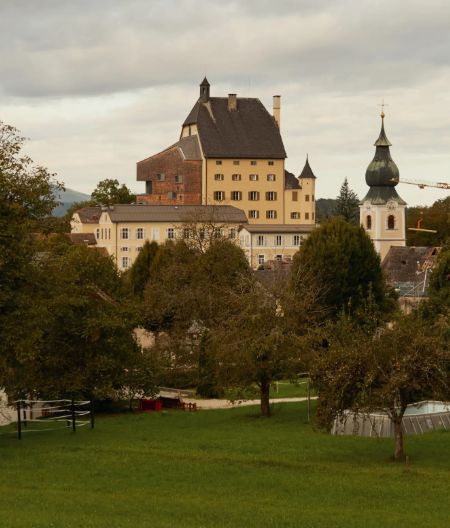
Goldenstein Castle. Courtesy of BBC
But here our heroines demonstrated the kind of practical faith that has sustained religious orders through centuries of adversity. A locksmith had been arranged (surely the first in history to be called for a holy breaking-and-entering), and the sisters climbed four flights of stairs to their former rooms with the determination of pilgrims ascending to a shrine.
It wasn’t long before the police arrived, called by officials reporting three missing nuns. When they arrived, they were faced with a scene not expected. Before them were three elderly women sitting calmly at their kitchen table, surrounded by their supporters.
How does one arrest three elderly religious women who insist they haven't broken into anywhere, but have simply come home? Oddly enough, one of the responding officers happened to be a former student who greeted the sisters with hugs rather than handcuffs.
The Siege of Goldenstein
Within days of their return, the abbey was transformed from an empty castle to a bustling headquarters of what can only be described as a grassroots canonization campaign. The WhatsApp group swelled to 200 members, each more eager than the last to assist in what they surely saw as a sacred cause. Electricity was restored, new appliances appeared, and security cameras were installed with the efficiency of a Vatican renovation project.
The media attention grew exponentially. The BBC picked up the story, and CNN followed suit; reporters from across Europe descended upon Salzburg like theological tourists. A German journalist set up an inflatable mattress in the abbey, preparing to cover the story with the dedication of a war correspondent. An Instagram account appeared, documenting the nuns' daily lives with a follower count that would make influencers weep with envy.
Through it all, our three protagonists maintained the composure of seasoned celebrities. They held court at their antique wooden table, unfolding their white tablecloth with the practiced precision of liturgical ritual. Sister Regina, the mathematician-turned-internet sensation, would often doze peacefully during interviews. Sister Bernadette, the former disciplinarian who had once struck fear into student hearts, displayed a sweetness that suggested enlightenment—or perhaps simply the satisfaction of a plan well-executed.
The Theological Standoff
As the weeks passed, the situation evolved into something resembling a medieval standoff, complete with castle, siege conditions, and two sides claiming divine authority. Church officials found themselves in an unprecedented position, dealing with rebel nuns who dared to be both elderly and sympathetic. How does one discipline three women whose only crime was wanting to die in the place they had served God for decades?
The abbot's spokesman, one Harald Schiffl, found himself attempting to explain why the church had relocated three popular elderly nuns from their beloved home to what critics characterized as ecclesiastical exile. His position, while canonically correct, suffered from the public relations disadvantage of making the church appear to be bullying grandmothers. It was perhaps the most challenging theological communications crisis since Galileo suggested that the Earth might not be the center of the universe.
Meanwhile, Sister Rita spoke wistfully of taming the overgrown greenhouse, as if returning to the simple work of coaxing life from soil might heal the rift that had opened in their religious community. Her hope for reconciliation with the abbot revealed the kind of Christian charity that makes excellent copy for journalists and uncomfortable reading for church bureaucrats.
The Eternal Question
Our story ends with the sisters remaining in their beloved abbey, surrounded by supporters, blessed by media attention, and presumably enjoying the most excitement they've experienced since their teaching days. Their story has become something larger than a simple dispute over housing arrangements—it has evolved into a meditation on home, belonging, and the elderly's right to choose their own path toward eternity.
The Vatican, in its infinite wisdom, has maintained a diplomatic silence that suggests this theological crisis requires more prayer than policy. Church officials find themselves caught between canonical law and public opinion, between practical considerations and the romantic appeal of three elderly women who wanted to go home.
Perhaps the most remarkable aspect of this entire affair is how it has captured the imaginations of people far beyond Austria's borders. In an age of global conflicts and existential crises, the world has paused to follow the adventures of three nuns who staged what might be history's most polite revolution. Their rebellion asks fundamental questions about authority, autonomy, and the meaning of sanctuary that resonate far beyond ecclesiastical circles.
The sisters themselves seem largely untroubled by the theological implications of their actions. They have returned to their prayers, their routines, and their greenhouse dreams with the contentment of those who have fought the good fight and found themselves victorious. Whether their victory will be permanent remains a matter for canon lawyers, Vatican officials, and perhaps divine intervention to determine.
But for now, in a medieval castle outside Salzburg, three elderly women sit at their antique table, unfold their white tablecloth with practiced precision, and demonstrate that sometimes the most profound acts of faith involve the simple courage to insist on going home.
No matter what anyone says, no matter what the rules might be, sometimes, you know where you belong.
What can we learn from this story? What's the takeaway?
At its heart, this is a story about the universal human need for home, dignity, and agency in the face of aging and institutional change. It’s also about how collective memory and community can give people strength when larger systems fail them.
Home is more than a building — it’s memory, identity, and belonging. For the sisters, the abbey wasn’t just walls and halls; it was the rhythm of their lives, their community, and their legacy.
Well, there you go, my friends; that's life, I swear
For further information regarding the material covered in this episode, I invite you to visit my website, which can be found on Apple Podcasts, for show notes and the episode transcript.
As always, I thank you for the privilege of you listening and your interest.
Be sure to subscribe here or wherever you listen to podcasts so you don't miss an episode.
See you soon.