
Climate Change in Pacific Nations: Survival & Struggle
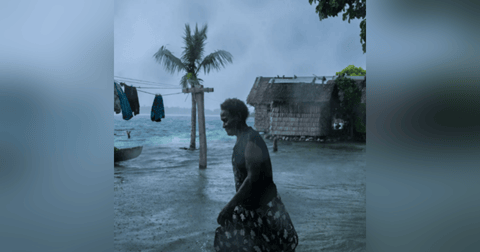


Learn how nations or individuals, relying on external saviors, can be precarious. Change often starts locally, with people finding ways to adapt, resist, and build resilience while pushing the world’s powers to do more.
Supporting links
1. Tuvalu [Climate Change Report]
2. Solomon Islands Renewable Energy Projects [The Borgen Project]
3. The Human Cost of Disappearing Beaches in Solomon Islands [Human Rights Watch]
4. U.S. Yo-Yo Policy in the Pacific Islands [Center For Climate and Security]
What is the Pacific Islands Forum? [Wikipedia]
Contact That's Life, I Swear
- Visit my website: https://www.thatslifeiswear.com
- Twitter at @RedPhantom
- Bluesky at @rickbarron.bsky.social
- Email us at https://www.thatslifeiswear.com/contact/
Episode Review
- Submit on Apple Podcast
- Submit on That's Life, I Swear website
Other topics?
- Do you have topics of interest you'd like to hear for future podcasts? Please email us
Interviews
- Contact me here https://www.thatslifeiswear.com/contact/, if you wish to be a guest for a interview on a topic of interest
Listen to podcast audios
- Apple https://apple.co/3MAFxhb
- Spotify https://spoti.fi/3xCzww4
- My Website: https://bit.ly/39CE9MB
Other
- Music ...
⏱️ 13 min read
So, there you are, pulling up a map from your mobile phone. The map you open is of your childhood — the beach where you played, the trees that once lined the shore, the dunes you raced across. Now, imagine zooming in… and finding nothing but ocean. That’s the reality for people in the Solomon Islands, where rising seas have erased the very landscape of their youth.
With each tide creeping higher, villagers fear their island may soon become uninhabitable.
This is the frontline of climate change in the Pacific — where small island nations fight for survival, caught between disappearing coastlines and the tug-of-war of global superpowers.
Pacific island nations have seen American pledges and attention come and go with geopolitical winds. Recent U.S. pullbacks are met with disappointment but not surprise.
This is the story of the inhabitants facing this change every day.
Welcome to That's Life, I Swear. This podcast is about life's happenings in this world that conjure up such words as intriguing, frightening, life-changing, inspiring, and more. I'm Rick Barron your host.
That said, here's the rest of this story
Vanishing Shores: The Pacific Islands Confront Climate Change and Global Uncertainty
The beaches of Hulavu once seemed endless. Children running in and out of the surf, banana trees stretched along the shoreline, and sand dunes stood like guardians against the tide. For the people who grew up in this small Solomon Islands village, those memories are vivid but fragile. Today, when opening Google Earth on their mobile phones, the familiar landmarks of their childhood have disappeared beneath the sea. What was once a playground is now the ocean floor.
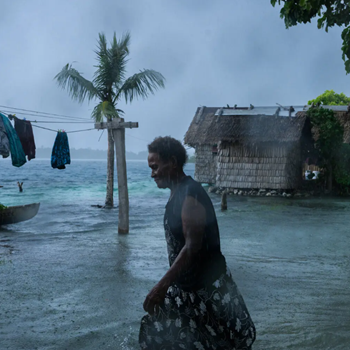
A resident of a Pacific island, walking in the pouring rain. Courtesy of New York Times
The loss of coastline in Hulavu is tough to absorb. It is a warning for an entire region. Across the Pacific, rising seas and shifting climates are rewriting maps, swallowing ancestral lands, and threatening food and water security. The people of these islands stand at the front line of a global emergency they did little to cause.
For those who grew up on the coast, the changes are undeniable. These thoughts echo the lived reality of thousands of families who have watched beaches vanish, gardens turn brackish, meaning water that contains more dissolved minerals than normally acceptable for municipal, domestic, and agricultural uses, and storms intensify with terrifying speed.
The Gathering of Vulnerable Nations
Leaders from 18 Pacific Island nations and territories gather only a few miles away in Honiara, a small community in the Solomon Islands. Their annual meeting, the Pacific Islands Forum, is not an ordinary diplomatic ritual. For these nations — many of them poor, small, and isolated — the forum is one of the few platforms where they can speak collectively about their survival.
This year, in 2025, the agenda is dominated by climate change and the looming sense that the world’s most powerful nations are more concerned with rivalry than with rescue. For years, Pacific leaders have described climate change as their “single greatest threat.” Yet pledges from wealthier nations have repeatedly faltered, leaving communities exposed.
Promises Deferred
The United States has played a particularly complex role. Washington has, at times, recognized the Pacific’s predicament and pledged support for adaptation and disaster preparedness. But policy swings from one administration to another have created instability. The Trump administration’s withdrawal from the Paris Agreement, the shutdown of the U.S. Agency for International Development’s regional presence, and cuts to aid programs left projects stranded and trust eroded.
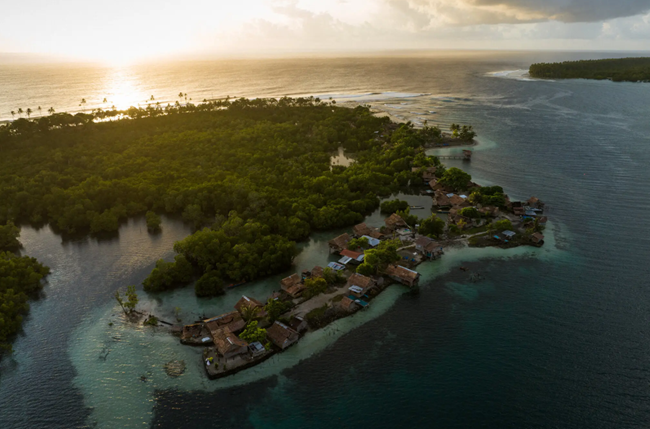
One of many small villages located in the Solomon Islands. Courtesy of New York Times
One senior Pacific official privately described American engagement as a “yo-yo policy” — present one year, absent the next. That inconsistency is devastating for nations like Tuvalu, where fewer than 10,000 citizens live in a homeland that may become uninhabitable within a generation. For these islanders, climate change is not a distant prospect but a daily emergency.
China Steps Forward
Into the vacuum left by the United States, China has stepped with carefully measured moves. Beijing has positioned itself as a dependable partner, offering development assistance and presenting climate cooperation as a cornerstone of its diplomacy. In May of 2025, Chinese officials gathered foreign ministers from 11 Pacific countries and announced funding for 100 “small and beautiful” climate projects over three years.
The scope of these projects remains modest. A recent agreement provided solar equipment to remote parts of the Solomon Islands, but Pacific leaders know that true resilience requires large-scale investment. Still, China’s steady presence contrasts with American inconsistency. A gap has been left with the U.S. withdrawal, and China is moving quickly to fill it.
Geopolitics Overshadowing Survival
Geopolitical rivalries often eclipse the existential conversations Pacific leaders wish to prioritize. The history of the Pacific Islands Forum is peppered with moments when climate urgency was sidetracked by disputes over Taiwan, diplomatic recognition, and military presence. Last year’s forum ended in discord when language affirming ties with Taiwan provoked Chinese backlash, forcing revisions.
This year, the Solomon Islands government barred all external powers from attending — including China, Taiwan, and the United States — to reclaim the focus. That decision drew criticism from Australia and New Zealand, but many island leaders welcomed the opportunity to discuss homegrown solutions without the noise of global competition.
Seeking Self-Reliance
With or without superpower attention, the Pacific is moving to chart its own path. Leaders discussed:
1. The creation of a regional climate fund free from the bureaucratic delays that slow international financing.
2. They debated a declaration opposing militarization of the Pacific, mindful that their fragile region risks becoming a pawn in broader conflicts.
3. And they sought to build on a groundbreaking international court ruling brought by Vanuatu. This nearby island affirmed that nations failing to act on climate change can be held accountable.
Still, ambition requires resources. Pacific nations lack the financial resources to fund adaptation projects independently. They continue to rely on external partners even as donor attention shifts elsewhere — from the war in Ukraine to global economic turbulence.
Broken Projects, Broken Trust
The consequences of sudden policy reversals are visible in communities across the Pacific. Vanuatu’s climate change minister recalls how the abrupt closure of U.S.A.I.D. programs derailed essential projects. On one remote island, water tanks and pipes had been delivered through a grueling effort involving ships, trucks, and manual labor. Then the funding vanished, leaving infrastructure to rot until Australia stepped in with emergency support.
For the people experiencing these ups and downs, such experiences confirm a painful truth: The U.S. has always been out of the picture anyway in terms of ambition. Skepticism is widely shared among Pacific leaders who must plan not for election cycles but for the rising tides threatening their nations’ existence.
Local Action Amid Global Inaction
Despite international uncertainty, people on the islands refuse to wait idly. True resilience must begin at the community level.
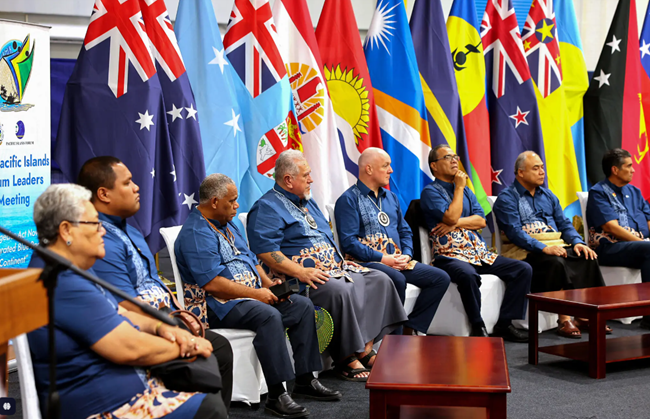
TEAM members meet to plan their futures. Courtesy of New York Times
On their own initiative, people from Hulavu have jumped in to rebuild part of the coastline where many used to play. They’ve constructed a jetty, restored stretches of white sand, and begun envisioning the area as a potential eco-tourism site. In a country with limited jobs, such projects not only restore land but also create livelihoods.
These efforts may seem small against the immensity of climate change, but they embody the spirit of the islanders often missing from international narratives. Their thinking is if outside powers want to help, they will. If not, they will keep going.”
The Human Security Crisis
For Pacific Islanders, climate change is not an abstract environmental issue but a human security crisis. Rising seas threaten to displace entire populations, forcing questions about migration, sovereignty, and cultural survival. Saltwater intrusion contaminates crops and drinking water, undermining food security. Stronger storms destroy homes and schools.
The risk extends beyond physical survival. Losing ancestral lands severs cultural identity, eroding the deep connection between Pacific peoples and their environment. For Tuvaluans, the idea of relocation carries not only logistical challenges but spiritual anguish. For them, the land is who they are. Without it, they’re lost.”
Regional Voices, Global Stakes
The Pacific Islands’ struggle is not theirs alone. The region contributes to negligible greenhouse gas emissions yet suffers disproportionately. Their plight underscores the moral failure of wealthier nations whose emissions drive the crisis. At the same time, their resilience offers lessons for the world: collective action, cultural continuity, and determination to survive against daunting odds.
International courts and climate justice campaigns spearheaded by Pacific nations are shifting global conversations. By framing climate change as a matter of human rights and international law, they are pressing the world to recognize that inaction is not just irresponsible but unlawful.
A Future in the Balance
Back in Hulavu, the sea continues to advance. The jetty built offers a fragile defense, but no single community can hold back the tide indefinitely. Without large-scale adaptation — seawalls, renewable energy grids, resilient agriculture — the region’s future remains precarious.
And yet, amid the uncertainty, there is determination. The Pacific Islands Forum closes with a declaration: they will not wait for global powers to save them. They will seek support where it is offered but will continue to innovate, organize, and adapt on their own terms.
For families watching their homes slip beneath the sea, these commitments are more than political gestures. They are promises of dignity, continuity, and hope.
Conclusion: Front Line of a Global Battle
The Pacific Islands are sounding an alarm for the planet. Their shrinking coastlines and vanishing beaches forecast the fate of low-lying regions worldwide. If the international community fails to act decisively, what is happening in Hulavu, Tuvalu, and Vanuatu today will unfold in Florida, Bangladesh, and Venice tomorrow.
The story of the Pacific is not simply about islands at risk. It is about humanity’s shared future in an era of climate disruption. Safeguarding these small nations is to protect the moral compass of the global community.
And in that determination lies the Pacific’s greatest strength.
What can we learn from this story? What's the takeaway?
Vulnerable communities are at the mercy of global powers.
Pacific nations contribute very little to global emissions, yet they face existential threats. They depend on outside aid and promises, but those promises often stall as political priorities shift in Washington, Beijing, or elsewhere.
The “yo-yo” nature of U.S. involvement illustrates how unreliable superpowers can be when domestic politics override long-term commitments.
“When global powers waver, the Pacific shows us that survival depends on local action, resilience, and refusing to wait for others to save you.”
Well, there you go, my friends; that's life, I swear
For further information regarding the material covered in this episode, I invite you to visit my website, which can be found on Apple Podcasts, for show notes and the episode transcript.
As always, I thank you for the privilege of you listening and your interest.
Be sure to subscribe here or wherever you listen to podcasts so you don't miss an episode.
See you soon.