
Book Review from Rick’s Library: Wings: The Story of a Band on the Run by Paul McCartney
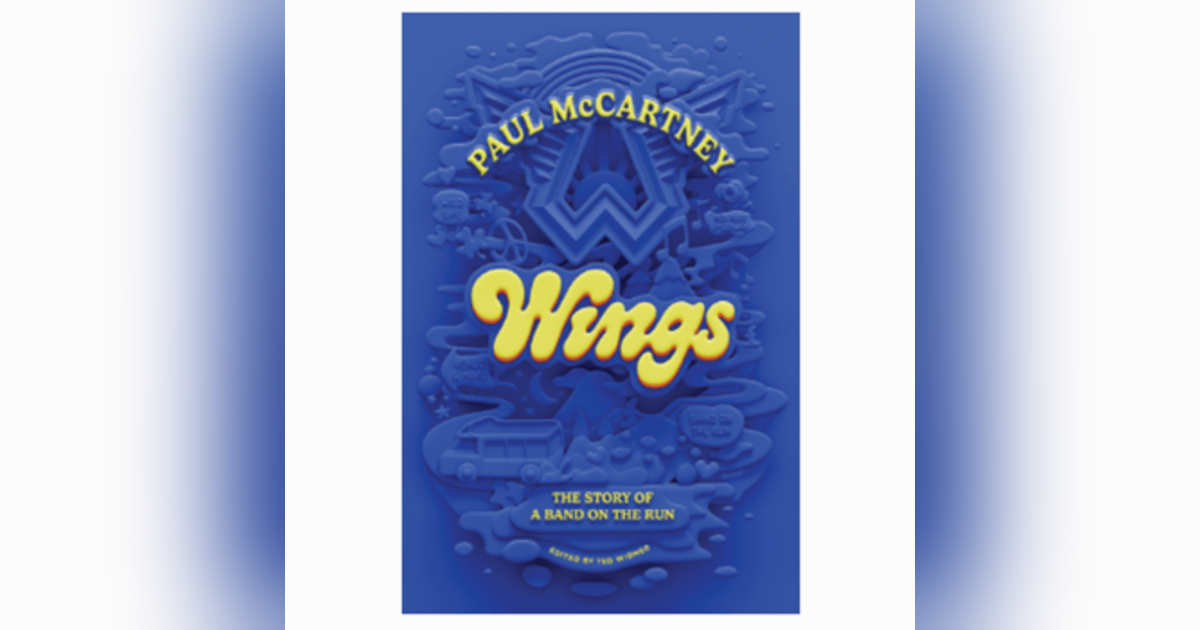


Learn how reinvention is a practice, not a moment. Wings was not just a band—it was a way of running toward the future, refusing to let the past define the possibilities ahead.
supporting links
1. Paul McCartney [Website]
2. Paul McCartney [Wikipedia]
3. Paul McCartney [Instagram]
4. Wings [Paul McCartney website]
5. Linda McCartney [Website]
Contact That's Life, I Swear
- Visit my website: https://www.thatslifeiswear.com
- Twitter at @RedPhantom
- Bluesky at @rickbarron.bsky.social
- Email us at https://www.thatslifeiswear.com/contact/
Episode Review
- Submit on Apple Podcast
- Submit on That's Life, I Swear website
Other topics?
- Do you have topics of interest you'd like to hear for future podcasts? Please email us
Interviews
- Contact me here https://www.thatslifeiswear.com/contact/, if you wish to be a guest for a interview on a topic of interest
Listen to podcast audios
- Apple https://apple.co/3MAFxhb
- Spotify https://spoti.fi/3xCzww4
- My Website: https://bit.ly/39CE9MB
Other
- Music ...
⏱️ 13 min read
In this episode today, I’ll walk you through a book review that takes us behind the curtain of one of the most daring reinventions in rock history. Long after the world assumed Paul McCartney had already written his legacy when the Beatles broke up, he packed up his family, formed a scrappy little band, and hit the road—determined to prove that creativity doesn’t retire just because a legend ends.
In Paul’s new book Wings: The Story of a Band on the Run, he invites us into the chaos, charm, and courage of rebuilding a band—and a life—from the ground up.
We’ll dive into stolen tapes, desert-heat recording sessions, runaway critics, family tours, and the unstoppable heartbeat of a musical artist who refused to stop flying.”
Ready to begin? Let’s turn the page.
Welcome to That's Life, I Swear. This podcast is about life's happenings in this world that conjure up such words as intriguing, frightening, life-changing, inspiring, and more.
I'm Rick Barron, your host.
That said, here's the rest of this story
1. Abstract of the Book
Wings: The Story of a Band on the Run is Paul McCartney’s collection of memories of the post-Beatles era—a period often overshadowed by the mythology of his earlier band but no less remarkable in creativity, chaos, and reinvention. In this book, McCartney pulls back the curtain on how Wings emerged not as a polished supergroup but as a scrappy, seat-of-the-pants family band built on instinct, improvisation, and an unwavering belief in the power of melody.
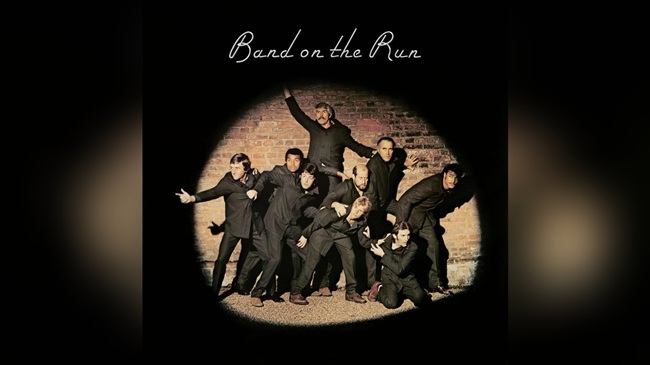
First album for Ban on the Run. Courtesy of Thuringer Allgemeine
The narrative unfolds as a behind-the-scenes story of the 1970s: an era marked by experimentation, personal grief, relentless media scrutiny, and a desperate desire to prove there was life after the Beatles’ breakup.
Told in a timeline that follows McCartney, RAM, and the nine albums that shaped Wings, the story opens with a 27-year-old musical icon retreating from the chaos surrounding him. Battling lawsuits, fractured friendships, and even bizarre rumors of his own death, he escaped with his newlywed wife, Linda, to an isolated sheep farm in the wilds of Scotland. The rugged landscape and seclusion, though challenging, offered him rare breathing room. In that quiet refuge, the seeds of a new musical venture began to take root.
McCartney writes with emotional candor about the creative partnership he shared with his wife, Linda, whose steadfast loyalty, artistic curiosity, and pure courage underpin some of the book’s most memorable passages. Readers witness the band’s many reinventions—lineup changes, financial struggles, early critical dismissal, world tours, triumphant returns, and the unexpected happenings that produced megahits like Band on the Run, Live and Let Die, and Jet.
At its heart, the book is not merely about a band—it’s about perseverance. McCartney captures the pressure of rebuilding an artistic identity while being chased by the cultural shadow of The Beatles. The book is loaded with anecdotes: smuggling recording equipment into Nigeria, dealing with bandmates who walked out mid-session, raising a young family on the road, and forging a new sound in the face of doubt. But woven through the adventure is a gentle philosophy: creativity survives through motion. You run, you make music, you show up—even when critics, circumstances, or the past threaten to overshadow you.
Wings is both a celebration and a meditation: a vivid remembrance of a band that soared higher than expected and a portrait of Paul McCartney redefining himself under the weight of history.
2. About the Author
Paul McCartney is one of the most important and prolific musical figures in modern history—a songwriter, virtuoso, cultural icon, and creative force whose work has shaped generations. Born in Liverpool in 1942, McCartney first rose to global fame as a founding member of The Beatles, where his musical curiosity and collaborative spark helped revolutionize popular music. Yet what makes McCartney’s authorship in Wings particularly compelling is that he writes not only as a legend but as a witness to his own vulnerability.
After the Beatles ended in 1970, McCartney confronted a personal and professional void. The world expected perfection; critics predicted failure. Writing from this vantage point decades later, he brings wisdom, warmth, and self-awareness to his storytelling. His prose is conversational and unpretentious, reflecting his lifelong belief that music is fundamentally about connection—not prestige. As an author, he is reflective without being heavy-handed, humorous without deflecting emotion, and open without nostalgia.
McCartney has published lyrics for numerous albums, children’s books, poetry, and autobiographical reflections, but this book stands out because it occupies a specific and often misunderstood chapter of his life. His extraordinary recall enhances his authorship: he remembers the texture of the Nigerian heat during the Band on the Run sessions, the shock of bandmates quitting mid-tour, the joy of creating harmonies with Linda, and the fumbling innocence of raising children while trying to outrun the ghost of The Beatles.
His writing showcases a man who has lived several lifetimes inside one. He is a storyteller who thrives not on mythmaking but on demystifying creative life. That sense of honesty defines this book: McCartney tells his story not as a rock deity but as a musical artist who kept experimenting, failing, regrouping, and trying again.
As an author, Paul McCartney reveals what many fans have long suspected: beneath the legend is a craftsman. Beneath the fame is a family man. And beneath the enduring success is someone who refused to stop making music.
3. What Drew My Interest in Reading This Book?
What first drew me to Wings: The Story of a Band on the Run was the curiosity that many music lovers share but rarely articulate: What happens after a legend ends? We know the Beatles’ mythology by heart, but the story that followed—McCartney’s risky leap into a new band with his wife and a rotating cast of players—has always lived in the shadows. I was fascinated by the idea of Paul McCartney starting over, even though the entire world assumed he had nowhere left to go but down. That tension alone made the book irresistible.
Another reason was that Wings’ history has often been told about McCartney, not by him. Critics in the 1970s dismissed the band as lightweight or indulgent, yet millions of fans embraced their songs with unshakable enthusiasm. I wanted to hear the truth from the person who lived it: the doubts, the studio disasters, the last-minute miracles, the family road trips disguised as world tours, and the creative partnership with Linda that defied the industry’s critics.
I was also drawn to the book as someone fascinated by the creative process. How does an artist revive their confidence after the breakup of the most celebrated band in music history? How do you lead a group while also grieving, rebuilding, and raising young children? McCartney’s journey promised insight not only into music-making but into reinvention.
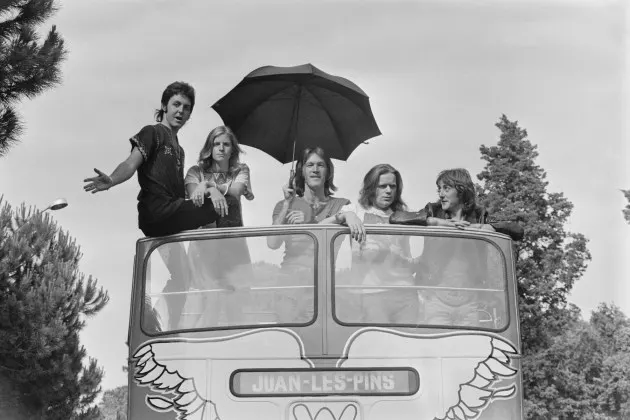
Band on the Run early days. Courtesy of Yahoo! Entertainment
And then there’s the sheer adventure of it all. Recording in Lagos, Nigeria, under threat of robbery. Touring in a bus that doubled as a childcare center. Navigating fame but choosing scrappy efficiency over rock-star excess. It’s a story with the unpredictability of a road movie and the emotional stakes of a memoir.
In its quest to reinvent the past, this book doesn’t just revisit history—as if on a magical mystery tour, sketching an almost mythical “Wings gospel” of its own making. With Paul McCartney himself offering a warm, personal introduction, the pages unfold like a treasure chest packed with150 photographs in both vivid color and nostalgic black-and-white, many of them never before revealed to curious eyes. Add to that a tapestry of timelines, a tour-by-tour roundup, and a comprehensive list of every note the band ever pressed into vinyl. Wings: The Story of a Band on the Run takes flight as a dazzling, feather-light creation—an imaginative new shape of storytelling that flutters somewhere between history, art, and magic.
Ultimately, what drew me most was this: Wings represents a rare chance to study a legend at his most human. Not the Beatle in the spotlight—but Paul McCartney in the trenches, fighting to prove that creativity doesn’t expire with a band breakup. The book offered that window, and it did not disappoint.
4. What Can We Learn From This Book? What’s the Takeaway?
The central takeaway from Wings is that reinvention is not glamorous—it’s gritty, uncomfortable, uncertain, and often misunderstood. But it is also essential. McCartney shows that starting over, even at the height of fame, requires humility, courage, and a willingness to keep moving when the world is pointing backward. His story becomes a blueprint for resilience in any creative or professional pursuit.
One of the book’s major lessons is that greatness doesn’t always arrive with fanfare. Wings was not universally praised at first; in fact, the early years were marked by doubt and even ridicule. But McCartney’s perseverance, his insistence on learning through failure and pushing through doubt, reminds readers that the path to meaningful work often begins in the uncomfortable zone where belief outpaces approval.
Another lesson is the power of partnership. McCartney’s collaboration with Linda stands as one of the book’s most profound themes. She wasn’t a trained musician, but she brought intuition, harmony, and emotional ballast. Their story challenges conventional ideas of expertise and highlights the value of trust, curiosity, and shared joy. It teaches us that creative success isn’t always about technical perfection; it’s about chemistry, courage, and the willingness to try.

Paul McCartney is doing what he loves. Courtesy of UDiscovermusic
Finally, the book invites us to reconsider narrative itself. History has long framed Wings as “Paul’s post-Beatles project”—a footnote rather than a phenomenon. But through this memoir, readers learn how narratives can distort reality, and how looking beyond the headline can reveal something richer, more layered, and more human.
The ultimate takeaway? Reinvention is a practice, not a moment. Wings was not just a bandit; it was a way of running toward the future, refusing to let the past define the possibilities ahead.
Well, there you go my friends, That's life, I swear.
For further information regarding the material covered in this episode, I invite you to visit my website, which can be found on Apple Podcasts, for show notes and the episode transcript.
As always, I thank you for the privilege of you listening and your interest.
Be sure to subscribe here or wherever you listen to podcasts so you don't miss an episode.
See you soon.